Health & Fitness
The Roots of Bristol's Fourth of July Celebration: PART XII
Although the official bonfire has fizzled out, unofficial bonfires reminiscent of the 19th century have never become obsolete. Each year Bristol's shoreline is aglow with private blazes.
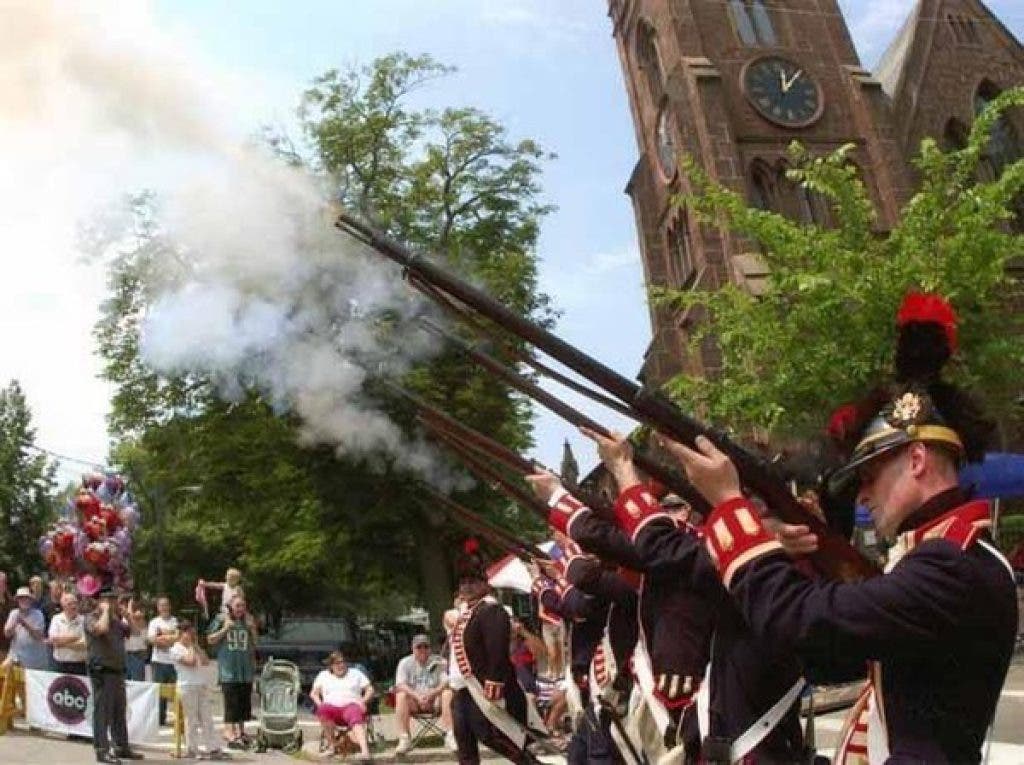
Among the many traditions surrounding the celebration of Independence Day in Bristol is that of the bonfire. This aspect of the celebration is as old as any other element in our town’s long history of patriotism and revelry. Unfortunately, because the bonfire was such a common occurrence, little was made of it in the local press.
During the 19th century, much to the chagrin of the volunteer firefighters, “young bloods” from the various neighborhoods made it their business to keep the town aglow on the night before the Fourth. The firemen were kept busy running from one end of town to the other extinguishing the many blazes. It may be because of all the impromptu and dangerous fires set around town, that the Committee for Arrangements inaugurated an “official” bonfire.
One of the earliest records about a town-sponsored bonfire concerns the 1892 celebration as reported by the Phoenix: “In the evening, bonfires were lighted on the common; there was a good display of fireworks and the Middleboro Band gave a concert....”
Find out what's happening in Bristol-Warrenfor free with the latest updates from Patch.
The tradition of torching a huge pile of scrap wood on the town common at midnight in conjunction with setting off fireworks seems to have been an annual affair that lingered until about 1936. The following Phoenix clippings graphically reveal how this long-running custom was carried on and eventually died out.
1916: The bonfire on the south side of the common opposite Pierce Avenue, the night before the Fourth, attracted a large crowd. The pile of barrels, boxes, etc., about 20 feet high, was ignited just before midnight. The shade trees in the vicinity where the light reflected on the under sides of the branches produced a beautiful effect.
Find out what's happening in Bristol-Warrenfor free with the latest updates from Patch.
1928: On the “morning after the night before” the junk dealer was kept busy carting away from the common the iron and tin which was all that was left of that great heap of bonfire fuel.
1929: Shortly before midnight, a crowd estimated to number ten thousand people, went to the common where a towering pile of boxes, barrels, and combustible material was assembled, augmented by a liberal supply of gasoline. It was touched off at exactly the hour of midnight.
1936: Before the celebration kick-off, a letter from the Reverend Thomas J. Gillan, pastor of St. Mary’s Church to the town council, protested the explosion of pyrotechnic bombs on the common. This letter may have been the spark that questioned the wisdom of using the common as the site for future bonfires.
For the 1936 and ensuing celebration, fireworks displays were presented at different places around town. The bonfire lingered on the common for several more celebrations.
1939: The Fourth was ushered in at midnight at its accustomed spot on the common. Three hundred railroad ties and hundreds of wooden boxes were torched for the annual spectacle. A march composed by John A. Sousa, for the Portuguese Independent Band, opened the concert. The band played for three hours, until shortly before firefighters ignited of the “Monster Bonfire.”
Eventually, the monster bonfire on the “night before” was forced off the centrally located Town Common. For the next 25 years the official bonfire became a tradition without a permanent site as it roamed from place to place around the outskirts of town. Ultimately, beginning in the early 1960s, site controversy again threatened the continuation of this part of the celebration.
1948: The huge bonfire was torched at midnight Sunday, the Fourth; it cast its reflection on the crowds of people who lined the large areas of open ground surrounding the old Wood Street dump (Wood Street extension that borders Silver Creek). The committee used this area as a trial—they thought that the place might be good for future fireworks displays.
1955: Other than a neighborhood bonfire at Bristol Narrows, there was no official bonfire to usher in the Fourth. Fire Chief Oscar Rishe, bonfire committee chairman, said the loss of the annual conflagration was due to many reasons: traffic, dangerous sparks and neighborhood objections. The planned site was the State Street Wharf, but that was called off at the last hour before the scheduled torching because of a prevailing southwest wind. Chief Rishe said he would not take a chance with the old waterfront buildings and the Wardwell lumberyard so close by.
“The best solution is a barge in the harbor,” said the chief. “It looks like we have run out of safe places on the shore.” Disappointed by cancellation of the official bonfire, rapscallion boys set a fire, early, on Monday morning in hurricane debris on the west side of Mill Gut.
1961: As late as Tuesday, June 27, the committee had not chosen a location for the fireworks display; but the bonfire was planned to the town beach, the same site as in 1960. The fireworks were also set off at the town beach.
1962: The bonfire ran into more trouble when it was scheduled for a lot on the south end of Gooding Avenue. Neighbors protested loudly, and the town council moved it to the town garage on Mt. Hope Avenue. So, for the time being, the bonfire was on again—at the town garage. Frank Balzano, bonfire chairman, said his life was being made miserable by the numerous complaints he was getting from Mt. Hope Avenue residents. Balzano said he was all for calling off the blaze. However, other members of the committee persisted, saying, “... the bonfire will proceed as planned.”
The lives of town council members were also being made miserable by phone calls protesting the bonfire. Realizing there was no other town land available for the bonfire the council rescinded its previous vote to allow it. Thus, a traditional part of the celebration was seemingly put to official rest.
1981: Like the mythical Phoenix, the bonfire rose from its ashes to again become a heated town issue. Fire Chief Edward R. Borges and his department of volunteer firefighters were ready for any emergency at the newly chosen site—Independence Park. Four fire trucks were on hand with members of the US Coast Guard Aids to Navigation station standing ready to assist the firefighters. The bonfire was built three stories high, topped off with an anonymous dummy seated on top of the pile in an old kitchen chair. Billed as one of the largest pyres ever built, the success of the event shone in the faces of the estimated 2,500 people who reveled in the showering sparks.
1983: There were two bonfires at Independence Park: the official one on the “night before” and as an added attraction, an unofficial blaze lighted the previous night by mischievous pranksters. Public works employees had to hurriedly reassemble the woodpile in time for Sunday night’s scheduled ritual.
Although the official bonfire has fizzled out, unofficial bonfires reminiscent of the 19th century have never become obsolete. Each year Bristol’s shoreline is aglow with private blazes.