Health & Fitness
The Roots of Bristol's Fourth of July Celebration: PART XIV
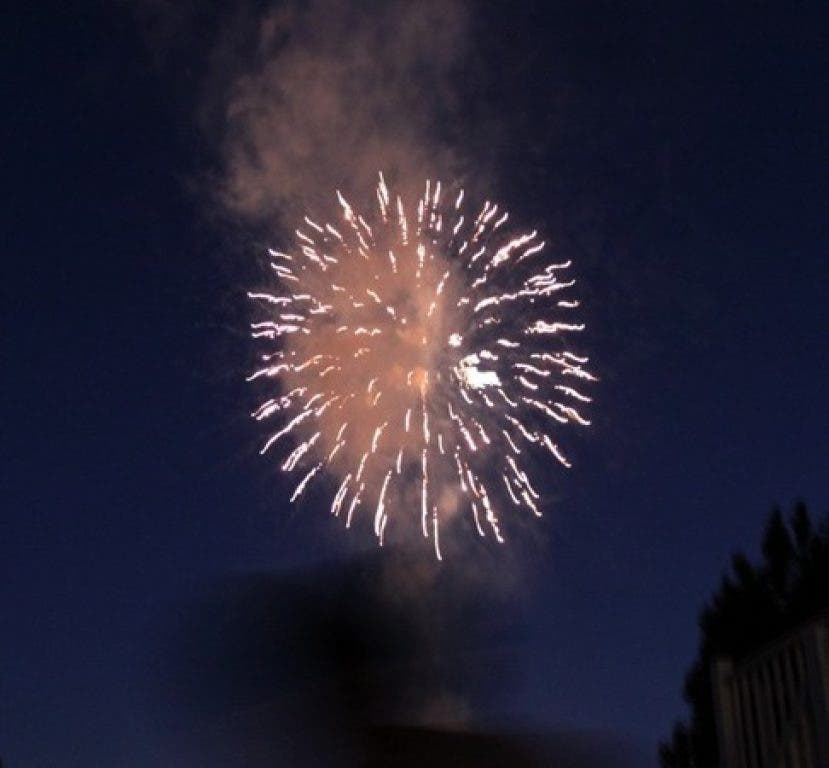
Next in popularity, to the parade, is the always the eagerly awaited fireworks display. Its been that way for 200 years.
Fireworks and Concerts
Next in popularity, to the parade, is the always the eagerly awaited fireworks display.
During the first century of Bristol’s celebration, fireworks were ignited on the Town Common accompanied by the playing of popular melodies and patriotic hymns by local musicians. At these concluding festivities of the celebration many hundreds of citizens of Bristol and nearby towns gathered to enjoy the entertainment, to mingle and converse with friends and family.
The first mention of fireworks is in the Phoenix news reports of 1840 and again in 1843. The following report of the 1847 end of day exercises attests that all the elements of an excellent celebration came to a resounding climax seemingly to the satisfaction of all who saw it.
Find out what's happening in Bristol-Warrenfor free with the latest updates from Patch.
In the evening there was a small but splendid display of fireworks on the common, where a very large concourse of our citizens assembled. A fine band was present and discoursed excellent music, which enlivened the scene. The day was very fine, and on the whole our citizens appeared to enjoy it.
A program of fireworks was executed as the climaxing extravaganza for the 76th anniversary celebration in 1851. The Sanderson & Lanergan Etna Laboratory prepared the display. The records do not tell us anything about the cost of the display, but we can imagine it was a fraction of the $20,000 cost of twenty-first century displays.
Find out what's happening in Bristol-Warrenfor free with the latest updates from Patch.
The report of the closing exercises of the 1862 celebration heralds the manor in which late-20th century fireworks' displays would be presented:
During the evening, there will be a grand pyrotechnic display. In order to heighten the effect of the exhibition, arrangements have been made to have it take place from a vessel moored in the harbor just below Richmond’s Wharf at the south part of town. The band will occupy another vessel anchored near the shore and play during the display.
The finale to the 1868 celebration commenced at 8 p.m. with a concert on the Town Common followed by a display of fireworks. Besides the usual rockets and Roman candles, there were patriotic set pieces including: the flaming numerals ‘1776’, a spread winged American eagle, and a large sparkling “Diamond Star & American Flag.”
The town failed to provide any funds for a pyrotechnic display in 1869. But the town’s youth would not be deprived of their festivities. They exploded an abundance of firecrackers and an endless quantity of Roman candles sent colored balls of fire into the night sky.
In addition to the evening’s fireworks and concert program arranged by the 1871 committee, a balloon ascension was planned. The experience of the committee in such matters being seriously lacking proved disastrous. The premature igniting of fireworks attached to the balloon set it on fire and destroyed what was to have been the evening’s main attraction.
It appears that the 1875 fireworks display on the common was especially festive with Chinese lanterns strung from tree to tree and vendor’s booths dispensing “frozen ices,” pastries and sundry sweets to tempt both children and adults.
In the evening there was a display of fireworks [and] music by the [Bristol] Cornet Band, [for] an immense concourse of people on the common. A large tent was raised there by Reullura Lodge of Good Templars, where ice water was freely dispensed to all, and Arnold’s ice cream and other good things were disposed of for a fair consideration. A large number of [games of skill and chance] booths occupied positions on the common. The trees were profusely hung with Chinese lanterns presenting a fairy like scene.
For the 1892 celebration the activities of the day centered on the Town Common as witnessed by the following Phoenix clipping.
Beginning at 2 o’clock, games for men and youngsters were held on the common. Immediately after the first prize gold medal was awarded to James Perry for his win of the 100 yard dash, a Tug of War contest took place. The contest that was open to all comers for a cash prize of $15, it was won by the Herreshoff Mfg. Co.; in the evening, bonfires were lighted on the common; there was a good display of fireworks and the Middleboro Band gave a concert; flags were displayed in all parts of town, and everything passed off in good order no arrests, and no serious accidents marred the festivities.
It is recorded that rain dampened the activities surrounding the 1895 celebration. The occasional showers failed to extinguish the enthusiasm of the town’s boys. The concussion from a discharge of a cannon cracker on the sidewalk in front of Mckay’s Ice Cream rooms broke seven panes of glass. In many parts of town there were liberal private displays of fireworks. A detachment of artillery under command of Colonel Stevens and Captain Meiggs fired salutes of 21 guns. The report of the guns fired through town and over the harbor gave satisfaction to the youth for the quantity of noise provided for the celebration.
For the closing of the last celebration of the nineteenth-century (1899) a concert, fireworks, and a special illuminated boat procession in the harbor were planned.
A display of fireworks will be given on the common at 8 p.m. accompanied by music by the Bristol Cornet Band. Between 9 and 9:30, an illuminated boat procession will be towed down the harbor, and at the same time a display of water fireworks will be given from a float anchored opposite Lawless Pier and well out in the channel, making it visible from all points of the bay.
1915: There was an unusually large number of people on the streets, notwithstanding the unfavorable weather, and a "tremendous" crowd witnessed the fireworks on the common. In addition to the excellent display there, which consisted mostly of set pieces, the spectators had the benefit of a fine display of rockets and aerial pieces, which were discharged from Linden Place.
Considering the reckless manner in which fireworks were discharged on the streets by the bluejackets from the Battleship Michigan it is fortunate that no serious accidents occurred.
The men from the ship were bent on celebrating in a big way and they did so. Large purchases of fireworks, rockets, etc., were made and not much attention was paid where or in what direction they were discharged.
1928: A bid of $300 by the Rhode Island Fireworks Company was accepted and the contract for concessions on the common was awarded to Clarence E. Chase of Fall River, who paid the committee $350.
1929: Holiday Fireworks Accidents. Wednesday night, Joseph Russell of 189 State Street, 10 years of age, received a wound two inches in length, when a piece of a detonating cap entered his left leg while he was on the common. He was attended by Dr. J.R. Bernardo.
William McKay, 13 years of age who came here from New York City to attend the celebration received a slight wound on the left side of his abdomen when a blank cartridge in a pistol he was handling exploded. Dr. A.F. DeAngelo dressed the wound. He [McKay] was visiting at the home of Representative and Mrs. Thomas H. Byrnes at 5 Howe Street.
Wednesday afternoon, Abner Baker, 20 years of age of 1013 Hope Street, received an injury to his left ankle when a firecracker thrown by one of a party of youths who were celebrating on the common, exploded as it struck his ankle, burning the flesh. Dr. John R. Bernardo dressed the wound.
Dr. A.F. DeAngelo treated Arthur Cordeiro, 10 years old, of 26 Shaw Lane, who had his right leg burned by a fire cracker thrown by youngsters, the fire cracker exploded as it struck the boy’s leg. Phoenix, Friday, July 5
1930: The concert on the common on the afternoon of the Fourth marked the first appearance of Miss. M. Theresa Sullivan as director of the B.T.A. Band. It was rather an innovation to see a young lady leading a band of men, but Miss. Sullivan knows how to get best results and the men followed her directing with evident pleasure. The band concert in the evening before the fireworks was also rendered by this same band, large crowds showing their appreciation by enthusiastic handclapping. Phoenix, July 8
This is the same M. Theresa Sullivan Donovan who in 1957, became the first female Chief Marshal of the parade.
1934: The fireworks display that was already prepared for the Fourth was partly destroyed by the thundershowers—what could be saved was quickly stored in a carnival wagon.
1936: A letter to the Town Council by the Rev. Thomas J. Gillan, pastor of St. Mary’s Church protested the explosion of pyrotechnic bombs on the Town Common.
In his letter Rev. Gillan reminded the Town Council of an ordinance that prohibited setting off bombs on the common. He also pointed out that as a member of a committee appointed by the council to make plans to beautify the common; the continued use of those grounds for circuses, carnivals and bonfires only made the committee’s job more difficult.
At its meeting on Wednesday, July 1, 1936, the council informed the Fourth of July Committee that unless a site other than the Town Common could be found for the fireworks display, bombs may not be set off as a grand finale.
1939: The afternoon and evening of the Fourth would not have been complete without music on the common. From 3 to 5 p.m. and from 9 to 10:30 p.m. music supplied by the Columbus Independent Band of Natic, Rhode Island filled the air. The celebration was brought to a spectacular conclusion by a gigantic fireworks display that was witnessed by a reported 16,000 people.
1940: From 9 to 12 p.m. a concert was rendered from the bandstand by the Portuguese Independent Band entertaining the thousands who patronized the carnival. The Glorious Fourth was to have been ushered in at midnight with a “Monster Fireworks Display” on the Town Common, but it was postponed because of the inclement weather.
The careless handling of explosives and lighting of fireworks led to several serious accidents. Chester Carpenter received severe burns about his shoulder and head when a cannon he was attempting to shoot, backfired. Young Frank Dimond, 13, received powder burns when a firecracker exploded
The most serious accident appeared to be that of Joseph Franko, 30, who it was thought might lose the sight of his left eye as the result of a firecracker burn. Other minor burns were treated throughout the day.
1941: While the celebration’s official beginning was scheduled for the evening of the third, the youth of the town, as usual, started to celebrate several days earlier with exploding fireworks and other noisemakers.
The two-day celebration ended at midnight at the conclusion of the band concert. The thousands who assembled on and around the common in anticipation of the promised fireworks show left disappointed. The Committee was unable procure the services of a pyrotechnic expert to put on a show for the limited amount of money they had to offer.
A group of men formed a fireworks pool at Alger’s store, and each week they contributed a certain amount to it. By the time the Fourth came around a considerable sum had been collected; then came the pay-off. They got out in front of the store and set off barrage after barrage of firecrackers into Hope Street. The sidewalk is high enough above the street there, to make it the ideal spot for that kind of sport. Phoenix, July 8.
1945: Fireworks, although not as plentiful as in past years, were exploded by the boys all during the two-day celebration. The block dance on High Street drew about three hundred youngsters, while on the common the Portuguese Independent Band played familiar selections to entertain the adults.
1948: The rain of the evening had driven the crowds who assembled to cheer the fireworks indoors. Because of the rain, the set pieces in the fireworks display were set off earlier than planned, but the aerial bombs were saved until their scheduled ten o'clock firing.
1950: This was the first year for the State’s new anti-fireworks law, and both the Police Department and the School Department began a vigorous enforcement and education campaign. Chief of Police Ferrara reported that two boys were caught setting off firecrackers; when questioned the boys said they purchased the fireworks from a local grocery store.
There has never been a scarcity of fireworks exploded in Bristol around the Fourth. The police try to crack down on the distributors, but they usually turn a blind eye on the boys who light the fuses.
1954: The final rain came late in the day too late to mare the festivities. The rain only succeeded in causing the fireworks display to begin one hour early. No one in town that night could escape the thunderous booms of the aerial pyrotechnics as they were set off at the Castle Restaurant [at Windmill Point] on Poppasquash Road. Phoenix, July 7
1955: One of the largest crowds ever to assemble watched the half-hour fireworks display. The Peari Fireworks Co., of Providence, presented the spectacular display for a cost of $756. The show was shot over Bristol Harbor from the waterfront site of the Castle Restaurant.
1959: The celebration ended at 10:45 p.m., when the fireworks were set off on the west shore of Bristol Harbor on land (Point Pleasant) loaned for that purpose by Dudley A. Williams. Thousands of spectators lined the East waterfront to view what was called a “thrilling exhibit.”
1961: As late as Tuesday, June 27, the committee had not yet chosen the location for the fireworks display; but the bonfire was planned for the town beach on the night before the Fourth, the same place as in 1960. Eventually the fireworks were held at the town beach at 10:30 p.m.
1979: The emergence of what Police Chief Frank Brown, Jr., called a new “super firecracker” destroyed a postal collection box on the corner of Bradford and Hope Streets and another box at the corner of Sherry and Bayview Avenues. Other similar explosions damaged a third postal collection box and playground storage shed. Fortunately no injures were reported.
Chief Brown said his department was investigating in cooperation with Barrington and Warren Police as well as with postal authorities. No arrests were ever made.
1984: Just before the 1984 celebration, the Providence Journal reported that Bristol police seized an estimated $15,000 worth of fireworks from the home of Anthony A. Balzano. Police charged Balzano with possession of fireworks with intent to sell, a felony.
The “pinch-penny” pyrotechnic display at Independence Park produced the crack, snap and pop of duds. The show, which concluded with a minor exhibit of white light, failed to dazzle the thousands of spectators who gathered to watch what was billed as a “Grand Climax” to the celebration. It was the first time in memory of old time fireworks' enthusiasts, that the fireworks display was booed.
Fireworks and the Philharmonic
1986: Perhaps the greatest number of people ever present at a fireworks display; an estimated 70,000 showed up at Colt State Park on Monday night, July 6.
There was so much pre-show talk about the Rhode Island Philharmonic and the pyrotechnic display by the internationally acclaimed Grucci Family that the rush of people caught police and park officials by surprise. The high-spirited but well-behaved crowd turned the huge field by Narragansett Bay into a living carpet of bodies on blankets, sleeping bags and lawn chairs. Many of the spectators arrived early and enjoyed picnics as they watched a spectacular sunset over Narragansett Bay.
The climax of the show was the traditional 1812 Overture; as the music neared its final crescendo, the percussion section was enhanced by several rounds of carefully timed volleys from four cannon fired by the Bristol Train of Artillery. The entire cost of the concert and fireworks display was $18,540.00.
1988: The Rhode Island Philharmonic Orchestra presented a Pops Concert at Colt State Park that was followed by a display of fireworks.
As the town brought its Fourth of July celebration to a thunderous close with fireworks and cannonades last night, one of the artillery men involved in the show lost half of his right hand in an artillery blast. Ira Ramsey, with the Bristol Train of Artillery, was tamping a Revolution-era cannon during the finale of the Pops Concert when the old brass weapon fired. The cannon was loaded with a homemade blank round, but the blast took off one of Ramsey’s fingers and a large portion of the underside of his hand.
The show ended with a continuous stream of explosives that brought gasps and cheers from the audience, while it lit the sulfur clouded sky with red, white and blue. Before the glow of the explosions had settled to the water, the crowd began to surge toward the parking area and the two roads out of the park.
Bristol and Department of Environmental Management park police assigned 35 officers to handle the event, in addition to the seven Coast Guard boats that patrolled the harbor area. Providence Journal-Bulletin, July 7.
1989: On Friday, July 1, police raided a residence at 311 State Street, charging the occupant with possession of fireworks and cocaine. On Monday, an 18-year-old man was arrested on a charge of possessing $2,000 worth of fireworks, M80s and other explosives with intent to sell them.
To hold the fireworks finale and Rhode Island Philharmonic Pops Concert on the evening of the day after the celebration at Colt State Park was a popular idea with townsfolk. Late afternoon and evening picnics were planned by hundreds of families; unfortunately, a pelting rain washed out this year’s scheduled festivities.
The fireworks were re-scheduled for July 6, but the Pops Concert was canceled because the Committee did not notify the orchestra of the re-scheduled affair. The Committee still had to pay about $8,000 for the rained out concert.
The re-scheduled fireworks display was to have included music by the East Bay Jazz Ensemble—sponsored by the State Department of Environmental Management. Disappointingly, for the second time the fog rolled in from Narragansett Bay and the show was again canceled and re-scheduled; everything finally got off on July 7.
The successful conclusion to the 1989 celebration although three days late was well worth the wait; the spectacular fireworks display, directed by the nationally known Grucci family of Long Island, New York, was accompanied by the ooh’s and aah’s of the thousands who gathered to watch the $16,000 show.
1990: Three weeks before the Fourth, Bristol Police had already confiscated dozens of boxes of fireworks. But the single biggest haul was yet to come.
Armed with a search warrant, Police Captain Thomas Alegria and five other officers went to the home of Pasquale Vaccaro, Jr., on Roosevelt Drive. They had received a tip that touched off an investigation by detectives. During the search of the house they found an estimated $6,000 to $8,000 worth of fireworks stored in the basement. The street value of the stash was about $20,000. The confiscated fireworks almost filled the police station's detention cell.
In a July 5, 1990 editorial, the Phoenix rose to say:
The town's 205th observance of the Fourth of July is not quite over—the pops concert and fireworks are tonight—but we have a suggestion for the 206th.
The Fourth of July has gotten to be big business, with a big price tag attached. Each year the pressure increases on the committee members to somehow fund all the events surrounding the town's celebration. Many Bristolians don't know it, but the cost is up to well over $100,000 at this point.
Our recommendations: Continue the concentration on music. The concerts at Colt School offer something for everyone and are a wonderful addition to the celebration. The drum and bugle corps competition is terrific, helps raise money and insures there will be more of what people like to see in the parade—spectacular costumes and music.
The cost of bands and corps goes up every year, but we think most people would rather see money spent on that element than on anything else. To save some money how about cutting way back on events that basically involve just committee members, such as the post-Flag Day bash?
Move the fireworks back to the Fourth! The RI Philharmonic is not available then, we realize, but if music is necessary, why not have a corps or other parade participant give a concert?
Grucci has put on terrific shows since being hired to handle the fireworks, but it's just not the same as it was when the fireworks topped off the day. With or without music, the grand finale to the Fourth should be on July 4.
James Farley reported a $3,022.80 income (by volunteers passing the hat) from the Fireworks and Pops Concert. Several complaints from the public were reported; major among the complaints was concern for the lack of a clean-up crew the following day. Farley shifted the blame to the volunteers of the Ocean State recycling group called OSCAR. Also discussed was the possibility of obtaining a barge as a fireworks launch platform for the 1991 show.
1992: After six years of Fifth of July fireworks displays, the committee decided to move the Grand Finale back to the evening of the Fourth. That wasn’t the only change planned: the aerial show was to be fired from a barge anchored at the south end of Bristol Harbor instead of Colt Park, or as in 1991, from a barge anchored off Town Beach. The new location afforded a clear view from shorelines on both sides of town.
The pyrotechnics that were widely publicized for the evening of the Fourth, were, held the next day because of the low cloud cover; the same date as so many of the fireworks events of the past six years.
With the elimination of the cost of the Rhode Island Philharmonic, the committee saved close to $15,000; some of this money was used to beef up the fireworks display, said Roger Dubord. Beef up the show indeed! From beginning to end of the fireworks display the crowds gasped and cheered the spectacle.
1993: The Bay Fireworks Company of Long Island, NY submitted the winning bid of the seven received by the committee. This year’s display costing $20,000 was fired from a new site—Bristol Harbor. This year, the barge was moored southwest of the Coast Guard dock.
Logistically, shooting fireworks over the harbor offers many unobstructed views: the Thames Street parks, docks, downtown backyards, windows, and rooftops; also Poppasquash Road, the Asylum Road overlook, and boats moored in the harbor. An added advantage is that traffic leaving town after the display is not the nightmare tangle as in previous years.
After the official display, someone tripping over the firing chain during the clean up process accidentally set off leftover explosives. The fireworks were still on the firing barge at the south end of the harbor, and went off in combination to create an unexpected explosion at about 10:15 p.m. Coast Guard Chief Kevin Blount said, “we came very close to a disaster, miraculously there were no injures.”
1996: At 6 p.m. a drenching rain was pelting the now quiet town. The ten phone lines at the Bristol Police Headquarters were constantly lit as caller after caller asked if the fireworks were called off. The dispatchers don’t know. What was a deluge eventually settled into an irritating drizzle. The fireworks’ program went on as planned.
A fireworks technician said that the Bristol display takes a team of eight, two days to set up. He said that the total lighting effect is one and a half million candlepower—a light so bright that if you had a direct line of sight from the Newport bridge it could be seen from there. Some of the special effects in the night’s show included: nautical shells, which land in the water, red-eyed squid and blue-eyed squid, which are look as weird as they sound; the glittering crossette, which has a long gold tail that breaks and then twinkles again. The largest size shell used is a twelve-incher.
Vendors hawked their light-up toys and balloons as people settled on blankets and lawn chairs on the grass at Independence Park. The encroaching chill prompts the appearance of sweaters and jackets. A few illegal Roman candles set off by youngsters fall dangerously close to passing cars. As the grand finale lights up the sky and before the cheers subside, viewers pack up and begin to pick their way out of the park in the darkness, trying to beat the rush.