Community Corner
Workshop Explains Importance of Bristol’s Historic District
Tuesday night kicked off the first of a series of community workshops created to keep Bristolians informed about the local historic district. The following is the first of a two-part article on the information presented during the workshop.

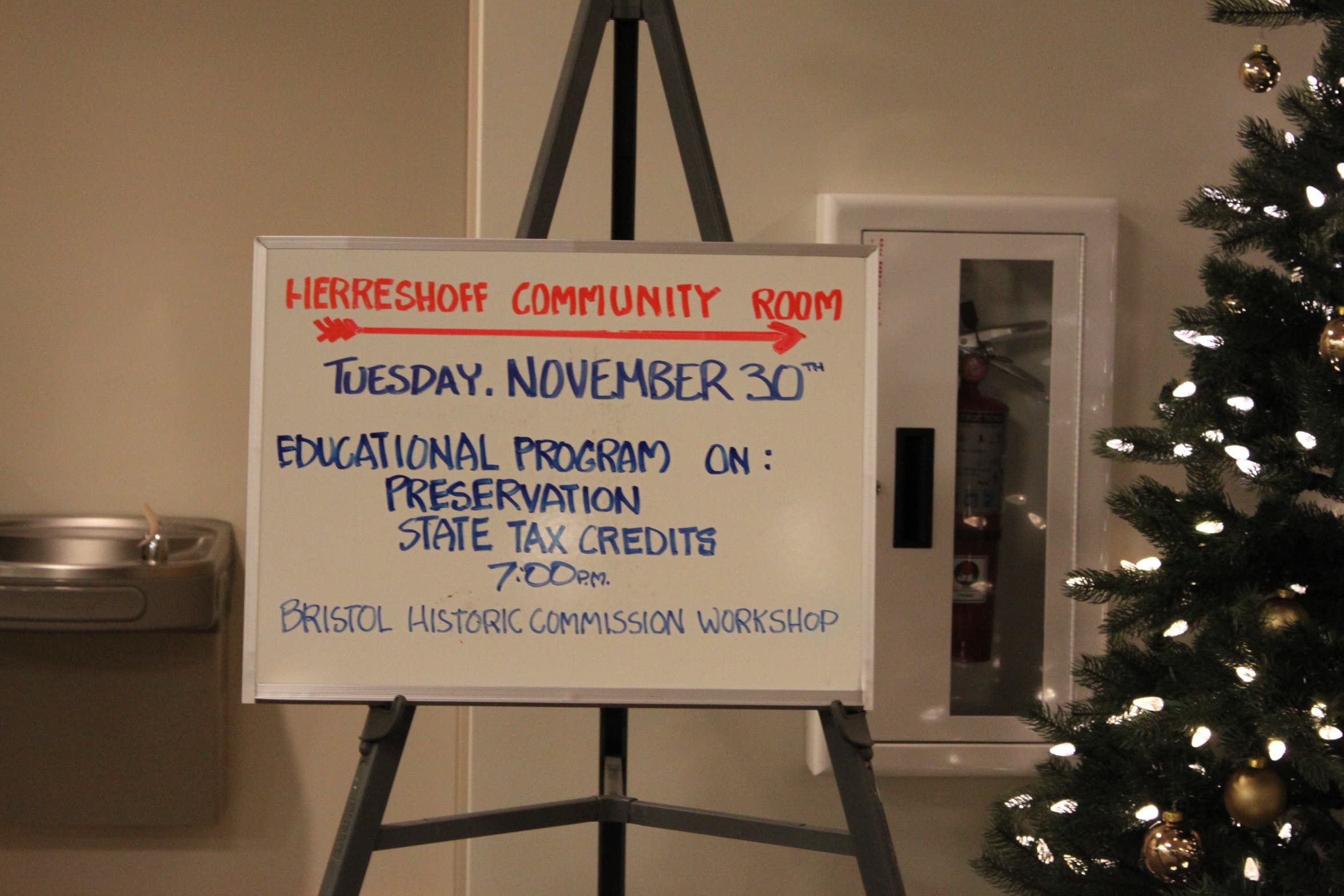

Approximately 30 people attended the workshop held in the Herreshoff room at and enjoyed refreshments while learning about historic districts, state tax credits, and the Secretary of the Interior's Standards for Rehabilitation.
For the first portion of the workshop, guest speaker Rick Greenwood, Deputy Director of the Rhode Island Historic Preservation and Heritage Commission, explained the many reasons why historic districts are important.
"Bristol was developed as a walking community," said Greenwood. "When we preserve the historic district in Bristol, we can see that earlier sort of universe. We can see what the people did and how they lived in that time."
Find out what's happening in Bristol-Warrenfor free with the latest updates from Patch.
According to Greenwood, historic districts are special because they are staffed by volunteers and are drawn by the local population; a feature that he believes represents the American tradition of democratic government. Greenwood also explained the importance of local governments passing regulations to control what can and cannot be done to buildings within the historic district.
"Historical character falls into the category of shared community resources and is not owned exclusively by the property owner," he said. "Towns have a right to establish ordinances that preserve the cultural, social, economic and architectural history of the district."
Find out what's happening in Bristol-Warrenfor free with the latest updates from Patch.
Greenwood also clarified that historic district zoning was not created to eliminate change all together, but to regulate change.
"Eliminating change all together is not healthy for any community," he said. "But the zones regulate change so that the losses don't remove major characteristics of the district and so new things can be added in harmony with what is already there."
As part of Greenwood's speech, he also pointed out that historic districts are beneficial to towns for multiple reasons. Besides the obvious examples of improved tourism and economy, Greenwood stated that the districts also provide educational benefits by presenting a look into local history, real estate benefits by offering "stable, attractive and well maintained neighborhoods", environmental benefits from old homes that have low energy consumption, and social and psychological benefits.
"Confidence develops when neighbors are talking to neighbors instead of on a state or national level," said Greenwood. "We do best when we sort things out amongst ourselves."
Get more local news delivered straight to your inbox. Sign up for free Patch newsletters and alerts.