Health & Fitness
RI Drive-Thru Coronavirus Test Sites Operational: Photo Gallery
Rhode Island's three drive-thru coronavirus testing sites are capable of collecting up to 900 samples per day.


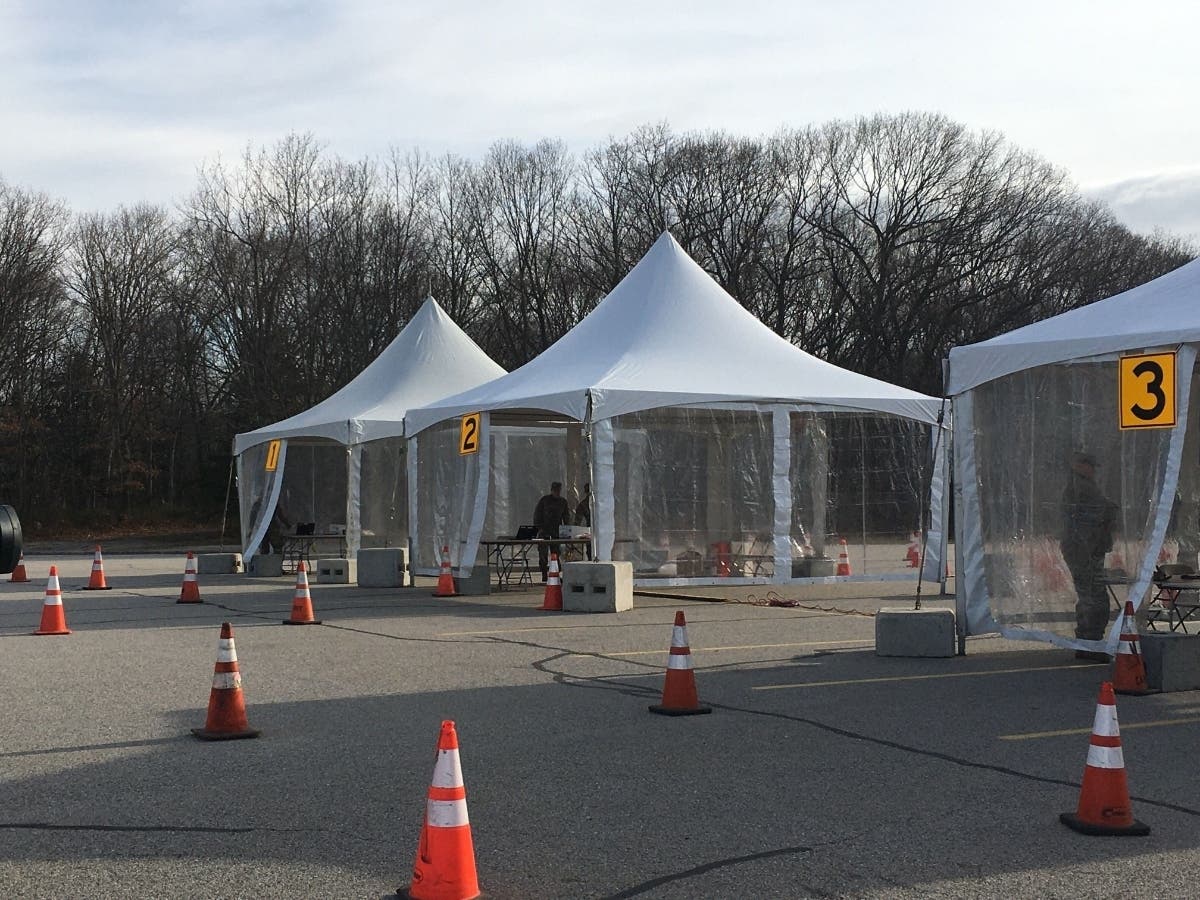


WARWICK, RI — All three of Rhode Island's drive-thru coronavirus testing sites are now fully operational. On Wednesday morning, the National Guard allowed members of the media a look at the Community College of Rhode Island's testing site before the first patients of the day arrived.
The three sites, set up at CCRI's Knight Campus in Warwick, the University of Rhode Island and Rhode Island College, can accommodate up to 300 tests each per day, totaling 900 samples, said Col. Craig Maceri, commander of the joint task force responsible for operating the sites.
The first drive-thru tests were administered Tuesday. A total of 234 samples were collected during the first day, Maceri said. Approximately 50 people showed up to the testing site without a referral from their doctor, despite Gov. Gina Raimondo's order that tests will only be given to those who were sent by their doctor.
Find out what's happening in Cranstonfor free with the latest updates from Patch.
Lt. Col. William Tuttle said the sites will likely be able to test more than 900 people as the work is streamlined.
"It's only a matter of time before we hit our goal and push it to the next level," Tuttle said.
Find out what's happening in Cranstonfor free with the latest updates from Patch.
Testing is conducted by 150 members of the National Guard distributed between the three sites. Those who are administer the tests have been trained to do so in accordance with guidelines from the Centers for Disease Control and Prevention.
Drive-thru testing procedure
To ensure the safety of National Guard members and others at the site, everyone is asked to use their vehicles as "self-isolation pods." When you arrive at the site, keep your windows rolled up until you reach the testing site and follow the posted signs and cones. If you are not well enough to drive yourself to the site, another person can drive you there.
Drivers will be directed to one of several numbered tents. There, members of the National Guard will verify the identity of the patients and make sure that they have an appointment. Soldiers at these first tents will not be wearing personal protective equipment, so drivers are asked to keep their windows rolled up unless it is absolutely necessary to open them. If instructed to open your window, do so just enough to speak through.
Testing will occur at the larger tents behind check-in. A member of the National Guard wearing full protective gear will swab the patient's nose through the vehicle's window.
The nasal swab is "not pleasant, but absolutely necessary," Tuttle said. The long swab is pushed far up the person's nose, almost to the back of the throat, then quickly twisted and removed. While uncomfortable, the entire process takes just a few seconds, he added.
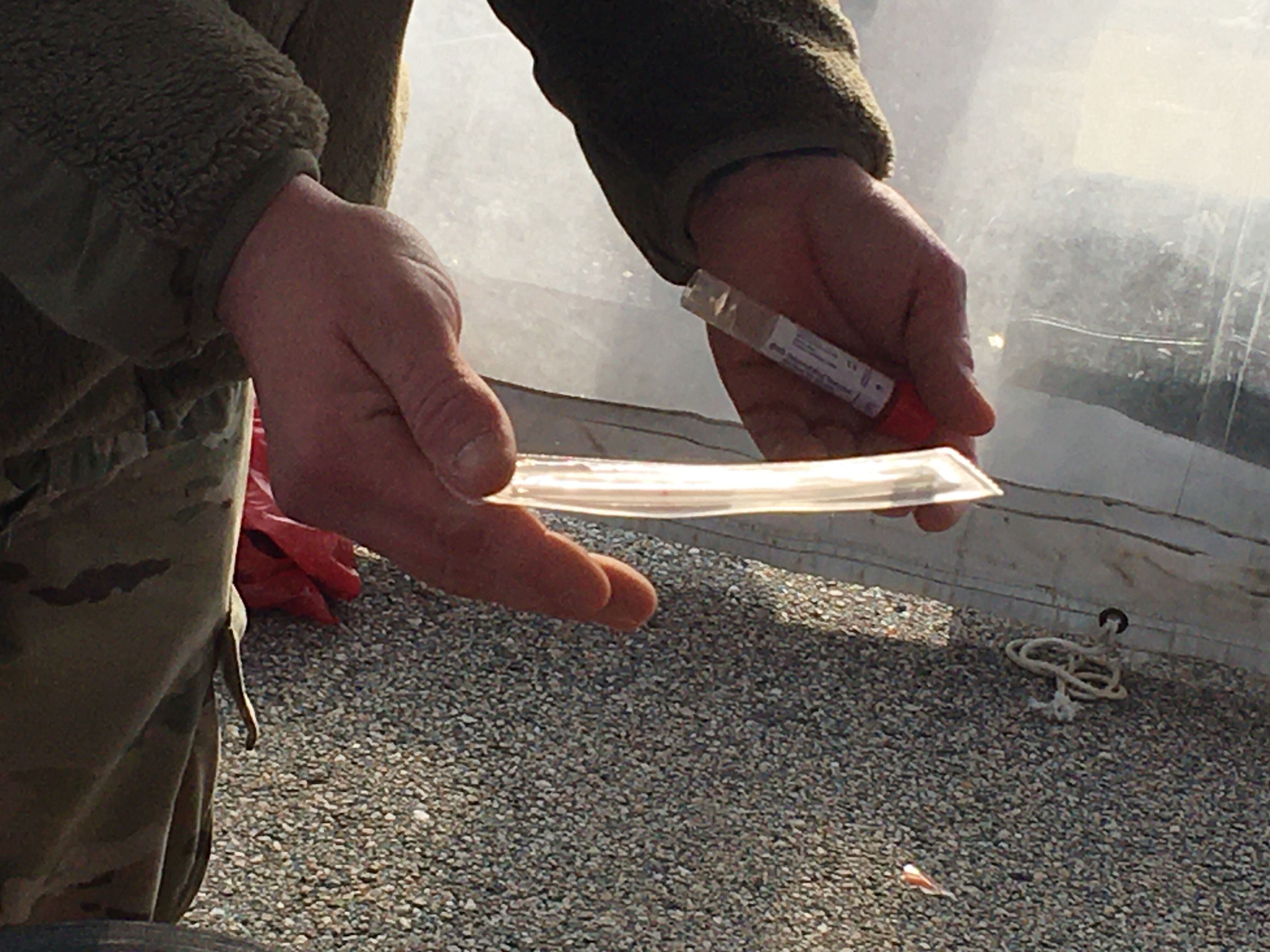
Once collected, the swab is placed inside a sealed tube, then sent to a lab for testing. The state has partnered with East Side Laboratories to test samples collected at drive-thru sites. Results may take a few days and will be sent to the patient's primary care provider.
How do I get an appointment?
To reduce wait times and ensure that those who need tests get them, no one will be allowed to receive a test at a drive-thru site unless they have a referral from their primary care provider. Anyone who does not have a PCP is encouraged to call their local urgent care clinic if they think they need a test. Do not show up to an urgent care facility or your PCP's office without calling first. Health care providers will tell patients when and which testing site to go to.
Safety measures
To keep the soldiers who are collecting samples safe, each will wear full personal protective equipment: a Tyvek suit with booties and hood, eye protection, mask, face shield and two pairs of gloves. The outer pair of gloves is changed between every patient, a National Guard spokesperson explained. Suits are duct-taped at the openings at the wrists and neck to cover any exposed seams. Soldiers will remain in full gear for two-hour shifts, at which point they will remove the suits, following special protocol to do so safely. All used PPE will be treated as a biohazard and disposed of accordingly.
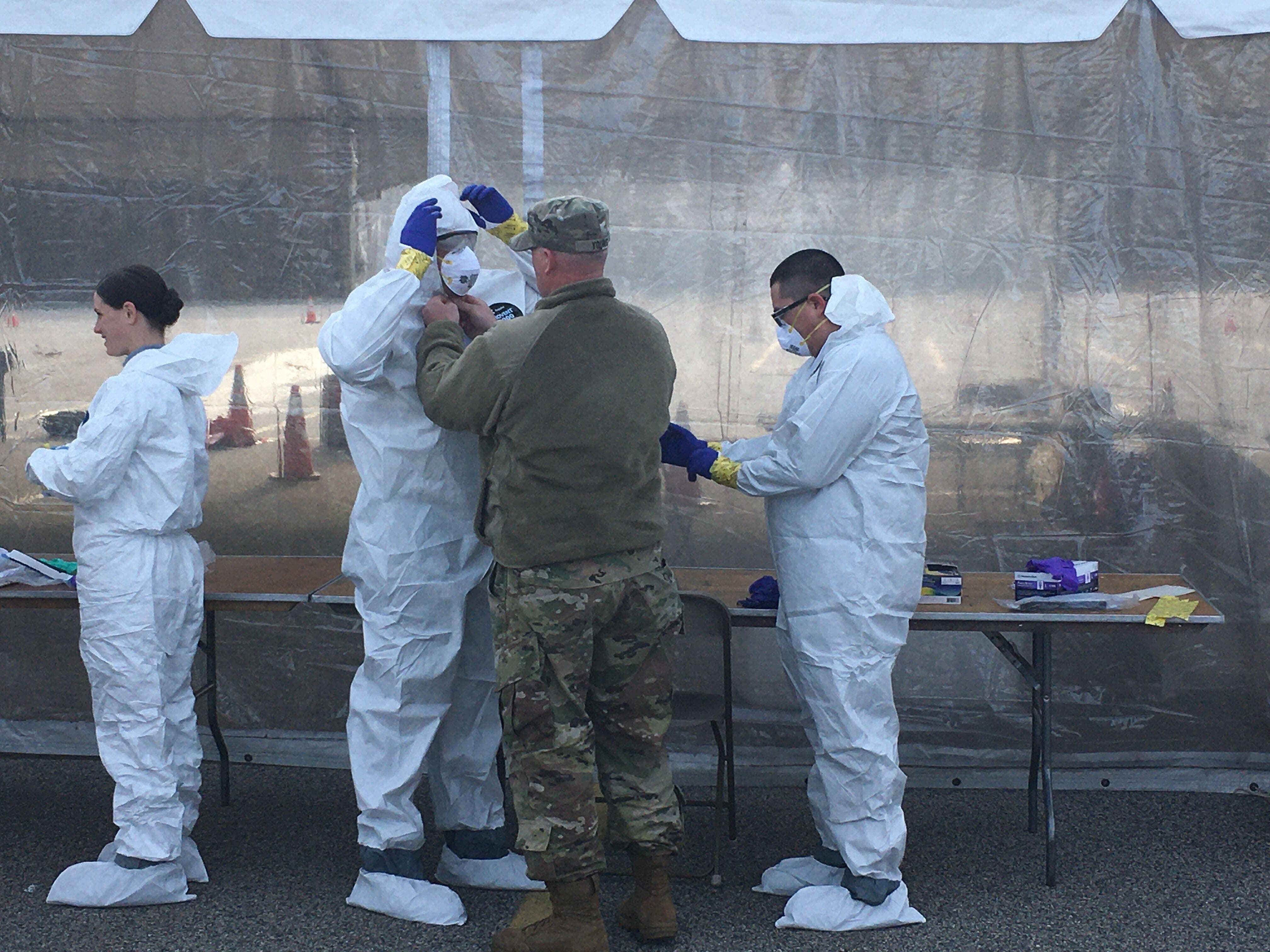
Again, soldiers stationed at the first set of tents will not be wearing protective gear. For their safety, drivers must keep their windows rolled up.
"If we see you roll down your window, we're going to run away," one said.
Get more local news delivered straight to your inbox. Sign up for free Patch newsletters and alerts.