An old adage says if buggy whip manufacturers had understood they were in the accelerator business they might still around.
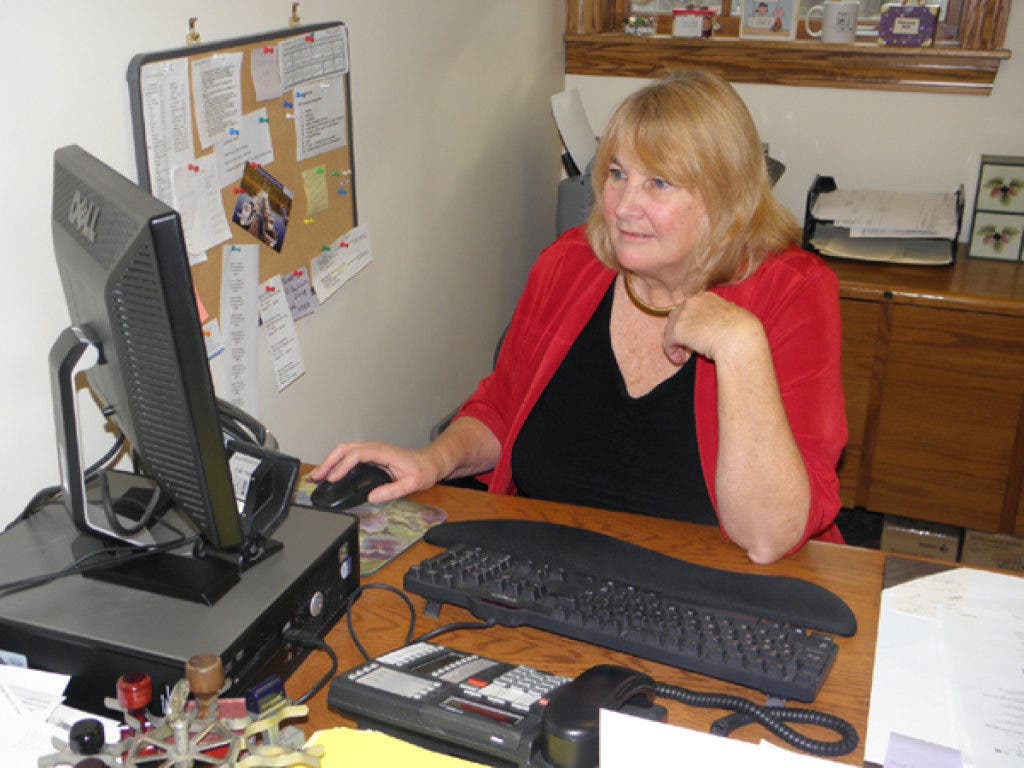
Karen Taylor understands libraries are not book warehouses, but are in the knowledge business.
“That is the world we are in — people getting together to discuss ideas," she said recently. “That’s not ever going to go away.”
Find out what's happening in East Greenwichfor free with the latest updates from Patch.
Taylor is well aware thousands of people unwrapped Nooks, Kindles and other electronic reading device presents this Christmas, but says libraries have always had to incorporate new formats, from micro film and audio books, to DVDs and the Internet.
She sees e-books as tools, but something like getting a television without cable access. While electronic devices include some free books, they are designed to sell books and users have to pay for most of them. “The price of e-book devices will go down,” she predicts, “and the focus will be on selling books.”
Find out what's happening in East Greenwichfor free with the latest updates from Patch.
In a capitalistic society, intellectual property has value and people want to be paid for their thoughts. Taylor sees the commercial world driving that area, offering information that may require payment.
Right now you can buy a book, or check one out at the library, and share it in a number of ways. In the future world of electronic books, you may purchase a license that will allow you to use a book for a specified period of time, something like movie rentals.
Right now, with a library card readers can check out electronic books online. Just as with a paper book, you can only have a "book" for a certain amount of time. And just as libraries have only so many copies of a paper book, they have only so many copies of an electronic book.
Some publishers are proposing limits on the number of electronic copies libraries can circulate and Taylor sees more of that discussion taking place as books go digital. Eventually the talk may not be about the book, but about the licensing of its use, possibly including a time limitation.
Internet access has had an impact on library space. The ready reference sections are gone. Because that information is so easily available online, those books have been removed and that space will now be filled with computers.
“People aren’t asking, 'What’s the population of Haiti' anymore,” says Taylor. “They come in because they have gone online and can’t find what they are looking for."
Because of that, “our staff needs constant re-training," said Taylor. "We have to help people with online questions and technical information.”
Many people come in looking for help with job searches, business information and taxed.
Today, the library has 22 computers, which Taylor says are always busy. For a number of reasons there are a lot of people who don’t have computers at home. They may know how to use a computer, but don’t own one. Or they may own one, but don’t have Internet access.
Much of what the EG Free Library can do is accomplished because of a partnership with Ocean State Libraries. That includes access to technical expertise on new services and upgrades which keeps libraries up to speed, including up-to-date wi-fi.
Since the library’s expansion several years ago, circulation numbers have increased, partly due to the 50,000 books circulated through the statewide access of the Ocean State Libraries program.
But space demands are increasing, with requests from more and more nonprofit groups.
Taylor says people like to come in and use the building, because they need a quiet space or just a place to work. There are business people who work from home, but don’t have an office area. They bring their own computers, but just want privacy. That’s also true of college students. Younger students often want a place where they can work together on a project.
Taylor has freed up some nooks and crannies that work well and is looking at getting dividers for the Silverman Room, a large meeting area, so it can be re-arranged from time to time to accommodate individuals and small groups.
Because of cost, the library has never invested in textbooks, but has been able to offer an internet language course. Now, Taylor is excited about an upcoming adult education program called Universal Class™, which offers 500 online classes. In addition to assignments, the eight-week classes include a tutor and can be accessed at any time of day. The classes are free, but available only to people with an East Greenwich library card.
Taylor is emphatic about the need for libraries, and equally emphatic about democracy and free libraries.
“You don’t want one group with the power to decide access,” she said. “That is why we have the buffer of trustees, et cetera, away from government, we take that very seriously. That can’t be lost.”