Health & Fitness
American Dream or American Nightmare?
Can a family of four, earning $47,000 a year be living the American dream? Is the American dream is in danger?
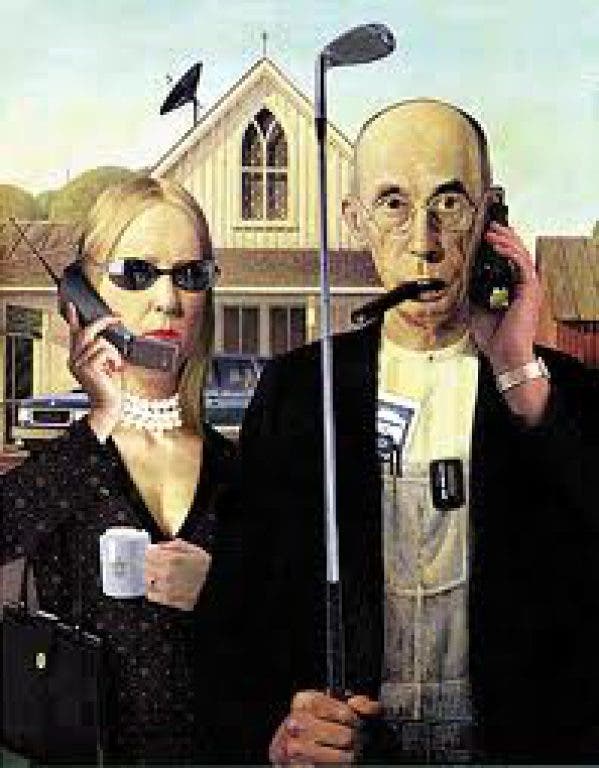
Last week I posted a blog, “Blessed are the Poor.” I received feedback from those who consider themselves to be poor and blessed, as well as from those who feel blessed and don’t consider themselves to be poor.
One conversation sticks in my mind like a big piece of Hubba Bubba that never seems to lose its flavor. It was so unexpected and so profound; I’ve been chewing on it for a few days.
The flavor had almost dissipated when I picked up this Sunday’s Providence Journal. Right there on the front page was a full-page story titled, “The Big Squeeze, One middle-class family’s formula for ‘getting by’ in an era of eroding income and rising costs.” The sub-story was equally intriguing, “American Dream in Danger.”
Find out what's happening in East Greenwichfor free with the latest updates from Patch.
The introduction to the piece ominously declares in bold, “Income plunges. After rising for four decades, Rhode Island’s median household income plummeted from 2000 to 2010. When income is adjusted for inflation, median households now earn less than they did in 1970.”
Hey, wait a minute! I grew up in the 70s and I’m thinking it was pretty great then. So where is the danger to the proverbial American Dream?
Find out what's happening in East Greenwichfor free with the latest updates from Patch.
According to Grace and Joe Swinski, profiled in the article, they are living the American dream despite what many would call not so dream-like circumstances.
The Swinskis have a combined household income of $47,000. They have one child in college and one in high school. They live from month-to-month with little savings, old cars, an old TV and tuna casserole on the table. Nonetheless, the Swinskis find happiness in these tough economic times.
“We’re making it … Is the dream smaller? Well sure,” says Grace Swinski. “But what we have we are happy with.”
The Swinskis celebrate on the 14th of every month. “We just make sure everything gets paid,” Grace says. “And on the 14th, we do the happy dance.”
So what is the secret to their happiness?
“For Grace and Joe Swinski and their teenage daughters Olive and Ivy,” the article continued. “it means a carefully managed budget, cars with many miles, smart shopping, and putting off some of the niceties they would like but cannot afford. They do not have a large retirement fund. They have gone without health insurance in the past.”
None-the-less, they define themselves as happy.
The Journal states that the roots of the American Dream lie in the Declaration of Independence and its assertion that everyone has the right to pursue happiness.
The article goes on to say that the American Dream, at least since World War II, has been closely tied to home ownership, college education and iconic symbols of status, such as cars, vacations, boats and other status symbols with fancy labels.
Since World War II, each generation has expected to do better than their parents as they move socially upward.
Could this be why the American Dream has become an American Nightmare. It is like one of those dreams that lulls you into a blissful sense of security, ever deeper into slumber, until, boom…
“You’re not in Kansas anymore Dorothy.”
Could the secret of the Swinski’s happiness be that its source has nothing to do with what our culture defines as happiness-inducing?
So, back to that big hunk of Hubba Bubba before it starts to taste like rubba. My friend, who most would agree is upwardly mobile, came to me and thanked me for the blog. She said it was important for everyone to be made aware of other people’s struggles and stress.
“Stress is stress,” she said.
Hers just happens to have its roots in financing her son’s private school education. However, the difference between my friend and those described in my previous blog is that she recognizes how blessed she is to have such a problem.
My friend does not have an attitude of entitlement or an expectation of always being able to afford private school.
Could this be the source of her happiness? Although her circumstances are different from the Swinskis, as she pointed out, “stress is stress.”
She also told me that she grew up “dirt poor.”.
“What is so funny about it is that I didn’t know I was poor until I grew up,” she said.
Well, if that isn’t perspective, what is?
If the American Dream is defined by expecting to make more money and get more stuff, the Providence Journal is right — it is in danger.
However, if it is defined as the pursuit of happiness, as our founders probably intended, perhaps the current financial woes are just what might save the American Dream from a rude awakening.
If it is true that 80 percent of our country’s population no longer shares in this dream of upward mobility, perhaps it is not a dream worth having.
Let us all take a lesson from the Swinskis. They don’t expect to have a new car, expensive vacations or other material signs of success. They are happy that their clunker of a TV works and that they can watch it together as a family. They don’t spend beyond their means and they don’t have a sense of entitlement that only fuels discontent. They obtain their happiness from other sources: family, friends and tuna casserole.
Don’t you just want to cozy up on the couch to watch this week’s episode of “The Swinskis” with your family and some Jiffy-pop popcorn? Before you do, please unplug the iPads and iPhones.
Remember, when income is adjusted for inflation, median households now earn less than they did in 1970, so what better time to take a look back in time and be content with what we have.