When my children were younger, I had a ritual on Abraham Lincoln’s birthday: I would play a recording of Sam Waterston reciting the Gettysburg Address for them before they left for school. As Lincoln’s words competed with Cheerios and orange juice for their attention, I hoped my kids would come to love those words as I do – for what they say and, especially, for how they say it.
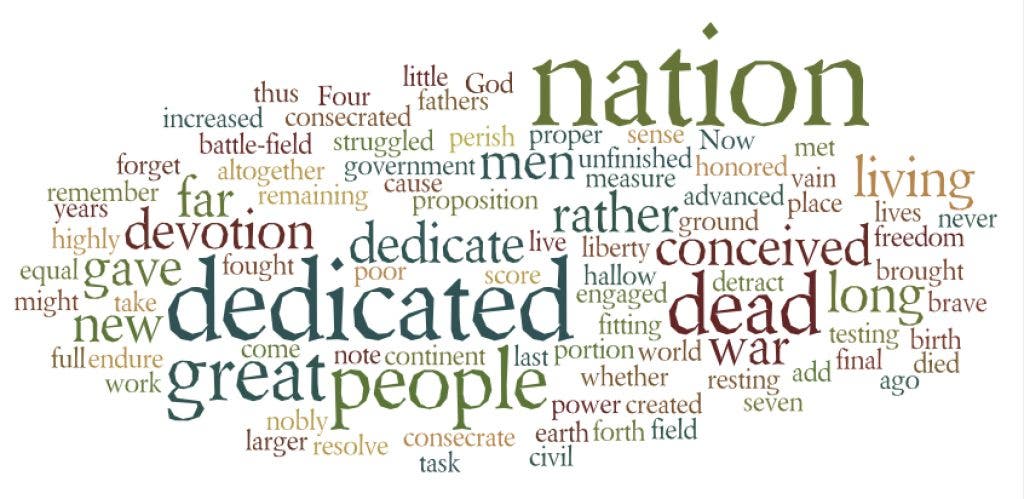
There are only 268 words in the address – a mere ten sentences – but what profound poetry they make! As an English major in college, I was surprised to find the speech in my Norton Anthology of American Literature, right there with works by Emerson and Hawthorne, Whitman and Poe. Lincoln, the writer? But that was my tip-off. For the first time, I read the Gettysburg Address as a piece of literature, and have been re-reading it ever since.
Find out what's happening in East Greenwichfor free with the latest updates from Patch.
The words are Lincoln’s own. No speechwriter submitted drafts to him or fine-tuned the phrasing on the train to Gettysburg the day before. The main speaker at the cemetery dedication was Edward Everett, former U.S. Secretary of State and Governor of Massachusetts. Lincoln followed. There is no photo of him delivering his “remarks,” as they were called, because they were so brief. He reached his now-famous close – "…that this government of the people, by the people, for the people, shall not perish from this earth." – before any photographer was set up to capture his image.
Witnesses reported that Everett’s speech, much longer than Lincoln's, was better received. But shortly afterward, the noted orator wrote to the president: “I should be glad if I could flatter myself that I came as near to the central idea of the occasion, in two hours, as you did in two minutes.”
Find out what's happening in East Greenwichfor free with the latest updates from Patch.
In those two minutes, Lincoln proved what Shakespeare had written in Hamlet two and a half centuries before: “Brevity is the soul of wit.”