Health & Fitness
When Words Do A 180: The Story Behind "Scan"
A semantic journey from Shakespeare to Stop & Shop

Look up the word "scan" at dictionary.com and the first two definitions may confuse you:
1. to glance at or over or read hastily: to scan a page.
2. to examine the particulars or points of minutely; scrutinize.
Find out what's happening in East Greenwichfor free with the latest updates from Patch.
One word with diametrical meanings – what's up with that?
The word "scan" is derived from the Latin "scandere," which means "to climb" and relates to the rising and falling rhythm of poetry. By the late 14th century, the word had the specific meaning of "marking off verse in metric feet." I remember scanning Shakespeare's sonnets in high school English, deconstructing each line, syllable by syllable.
Find out what's happening in East Greenwichfor free with the latest updates from Patch.
In the 16th century, however, the sense of the word began to broaden. According to the American Heritage Dictionary, people started using it to describe "looking over the surface of something" without examining every detail. Which brings us to today, when most of us would say that scanning something means to look it over quickly, e.g., "I scanned the homepage to get the news."
Word meanings evolve slowly. It wasn't until 1969 that 85 percent of the Usage Panel at the American Heritage Dictionary found the broader meaning of "scan" acceptable, though the panel noted (with a tap of its red pencil) that this was less formal usage.
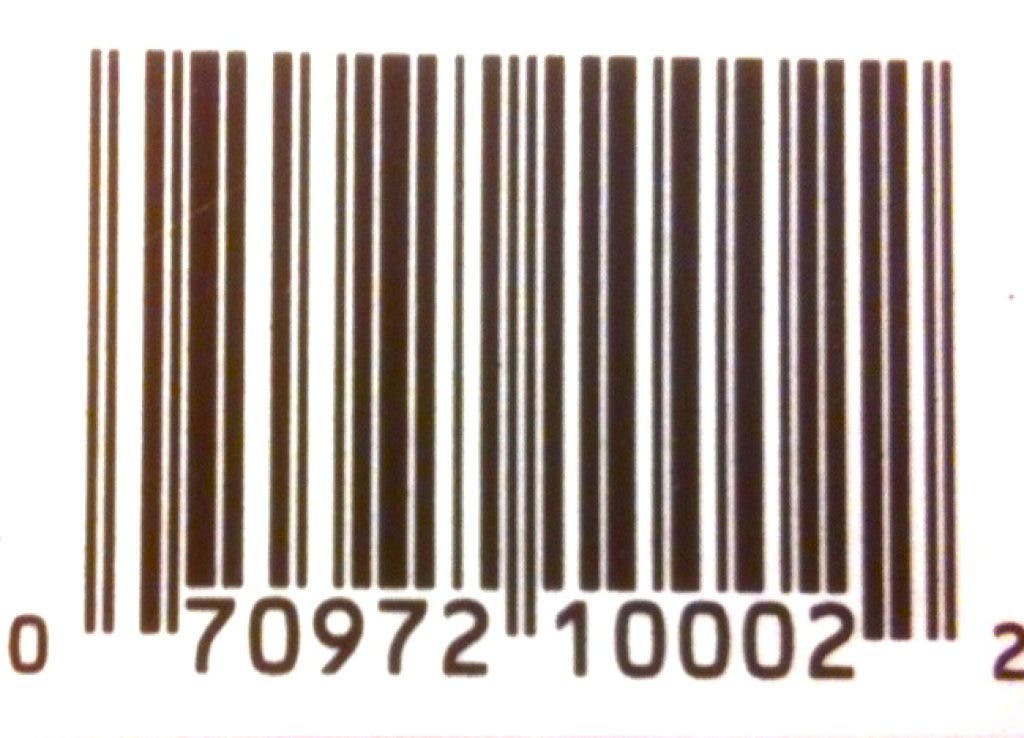
When I go to Stop & Shop these days, I scan the UPC codes on the products I buy. UPC stands for Universal Product Code, though I find that ironic since each UPC is unique. As I stand in aisle 7, scanning the parade of black bars and white spaces on my box of vermicelli, both meanings of "scan" apply. The scanner's laser reads every barcode particular, and then in an instant – beep! – the information is absorbed. Scrutiny and speed, all at once, in a nice modern-day mashup.