Politics & Government
Land Trust, Pat McNiff Sign 10-Year Lease For Boesch Farm
McNiff will be able to keep poultry, sheep, goats, dairy cows, rabbits and pigs on the South Road property.


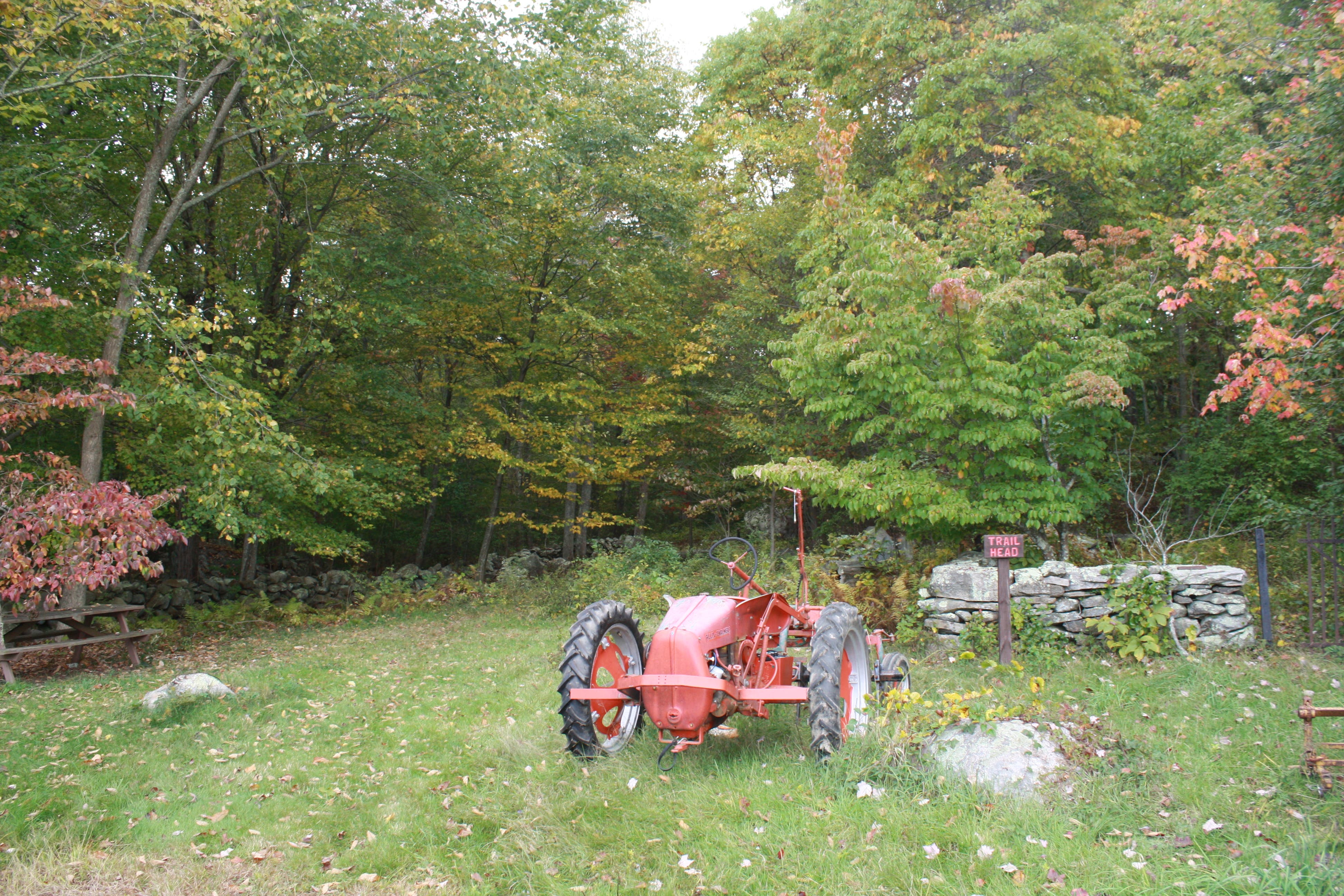


Patrick McNiff is the new tenant of - house and property - as of Thursday. A lease between McNiff and the was signed Thursday morning, granting him 10 years to farm organically on the South Road property. (The lease is attached in PDF form at right.)
Lease negotiations were conducted in private but residents and others weighed in on what they thought should be in the lease both in letters to the Land Trust and during . Some South Road-area to the idea of animals such as pigs being allowed at Boesch, preferring a vegetable-farming enterprise instead.
Under terms of the lease, McNiff will be allowed to keep poultry, sheep, goats, dairy cows, rabbits and pigs at Boesch. Specific numbers of animals were not given. Instead, the lease dictates that McNiff work with the federal Natural Resources Conservation Service and the state Department of Environmental Management in determining numbers - and types - of animals.
It reads: “Tenant is required to follow all NRCS and DEM recommendations for sustainable farming, following recommended best management practices. These include, but are not limited to, types of animals, numbers of different animals, grazing rotation schedules, and property, trail, wetland, and surface water buffers and setbacks.”
For McNiff, such language was crucial.
“To create a static number that never changed wouldn’t allow flexibility for me as a farmer,” he said in an interview Thursday night. “What NRCS does, they are able to assess a piece a land and they have tools to be able to help us figure out what number of animals are good for the land.”
Steven Whitney, president of the Land Trust, said members wanted McNiff to be able to respond to changes in the market and that the lease would allow for that.
“Things change over time,” said Whitney. “Maybe he has a market for chickens more than milk,” and this lease would allow him to shift - if that were the case - to keeping more chickens and fewer dairy cows on the land.
“I think the language we put in provides enough protection. I do see it as kind of a fluid, living document,” Whitney said.
That said, the lease does spell out some specifics. It limits the animals allowed to graze on the front field along South Road (parcels B and C) to sheep, poultry, rabbits and dairy cows. McNiff is allowed to keep livestock guardian dogs unleashed within enclosed areas only.
It also spells out that access to the farm be unchanged from before and that fencing will not be used to block off trails except when animals are being moved from one grazing area to another. The public may walk dogs on the property but the dogs must be leashed. Horseback riding and bicycling are also not allowed, as per earlier restrictions.
McNiff will pay $500 a month for the first three months of the lease and $1,000 a month through February 2013. The rent will increase 3 percent a year after that, for a total of 10 years.
Whitney said he thought the rent was appropriate.
“The condition of the house is certainly not optimal right now,” he said. “The point is not to make money on the house. … More important is having a business there that’s sustainable.” Whitney noted that the last tenant, Erik Eacker, had run into financial difficulties running his farm business, Ledge Ends. The Land Trust lowered rent requirements for Eacker, who eventually abandoned the property entirely in June.
“I’d rather have an honest assessment of what’s affordable,” said Whitney.
As for McNiff, he said he’s happy to be an East Greenwich resident. “I want to be a good neighbor,” he said. “I went to for breakfast this morning and I met all these local people. I’m excited to meet all these people.”
Whitney said he was glad that the lease is now signed but has some reservations about how the entire process of finding a new tenant for Boesch played out.
“I’m not pleased with the process and how it went,” he said. “I would have liked for it to be a more organic discussion too but because of the threat of legal action we had to be protective of the town.”
“I’m hopeful that residents who had some concerns, that [those concerns] are alleviated over time,” said Whitney. “I’m emphatic that I think we made the right choice.”
Get more local news delivered straight to your inbox. Sign up for free Patch newsletters and alerts.