Arts & Entertainment
A Lesson in a Seasonal Art in East Providence
Classes are learning how to craft Ukranian eggs at St. Mary's Episcopal Church.
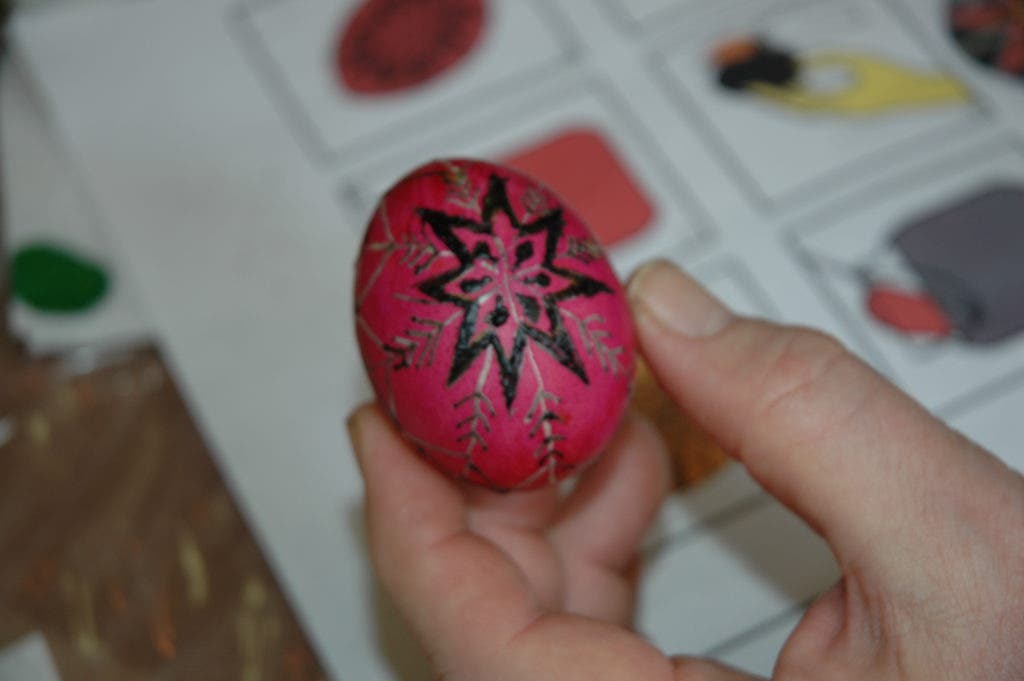


For the past 30 years, Phyllis Stafford has been creating intricate treasures.
She makes Ukrainian eggs called "pysanky," which means "to write." These eggs are messages passed down through the generations and each symbol has its own meaning. For example, a deer is a symbol for prosperity, a four-petal flower is a cross and cross-netting symbolizes Jesus being a “fisher for men.”
After Stafford read a 1972 National Geographic Article featuring Luba Perchyshyn, a master of the craft, she begged her mom to help her learn the art of pysanky and she’s been doing it ever since.
Find out what's happening in East Providencefor free with the latest updates from Patch.
She is teaching a class at in East Providence every Saturday for the weeks leading up to Easter. Pysanky are given as gifts to ward off bad spirits. It is believed that evil is trapped within the egg.
“You are supposed to say prayers for the person who you are making it for the whole time while you are making it.” Stafford said.
Find out what's happening in East Providencefor free with the latest updates from Patch.
The class is advertised as “An inexpensive tradition to learn; symbols of Easter passed down from generations before.” All materials for the class are included with a $10 donation, which goes directly to the church.
The class began with an instructional video about the history of the tradition. There are many tales surrounding the purpose of the eggs. One story Stafford told was about when Jesus was crucified, Mary carried an apron full of rare white eggs to which she had labored hard to gather. When she gave them to the soldiers, she wept and her tears made drops of bright colors on the eggs.
Creating the eggs is an intricate process.
First, light a candle, then draw a sketch of the design on your carefully chosen egg. Next, rub the egg with an alcohol swab to lighten the pencil mark for barely visible lines. Then, you light your kistka — a wooden rod with a copper funnel attached to the end which the beeswax melts through and acts as a writing utensil. You trace over the pencil lines with the beeswax and “if the kistka catches fire, it’s too hot, Stafford said. The egg is then placed in a series of dyes and is drawn on after each dip. The beeswax will be melted off at the end of the dyeing sessions to reveal the design.
Marsha Schlasinger, a second time pysanka maker, said, “This is my second egg experience and also my second mistake egg! I did the same thing wrong!”
Crafting the eggs is tedious, meticulous work — a perfectionist’s nightmare. The act itself is quite easy, but the desire to replicate one of the pysanky made by Stafford is near to impossible.
“It is fun when you’re with a group of people,” said Jim Kinder, another class attendee.
Don’t be scared away by the gorgeous, near perfect eggs you may have seen pictures of — most of them were made by people who have done this craft their whole life.
Students in the class were welcomed back next week as “advanced students” to create another egg with the design of their choice. All of their eggs turned out beautifully unique and the students will be able to hand them down to future generations — as long as no one cracks them!
The next class is April 16 from 11 a.m. to 3 p.m.