Community Corner
City to Demo SafetyNet System on Thursday
The system, by the folks who make LoJack for cars, is designed to help find people with cognitive conditions who might wander off.


One of the biggest fears for parents of children with autism, or the caregiver of an elderly person who is suffering from dementia is the possibility that he or she might wander off.
No matter the circumstances, it’s terrifying, especially on cold winter or hot summer days when the chance of finding a missing person alive dramatically decreases.
That’s why city officials are trying to get the word out about a new program that can make the search for a missing person last for a few minutes instead of hours, or even days.
Find out what's happening in Newportfor free with the latest updates from Patch.
It’s called SafetyNet and it’s offered by the LoJack company, best known for its automobile tracking devices that make it easier for law enforcement officials to find cars that are reported stolen.
The city will host a special demonstration of the program on Thursday, Aug. 21 from 6 to 7:30 p.m. at the Newport Public Library in the Program Room. The library is located at 300 Spring St.
Find out what's happening in Newportfor free with the latest updates from Patch.
A participant wears a small tracking device, not much bigger than a watch. In it contains data that instantly tells responders the persons name, age, address and phone number along with a photo.
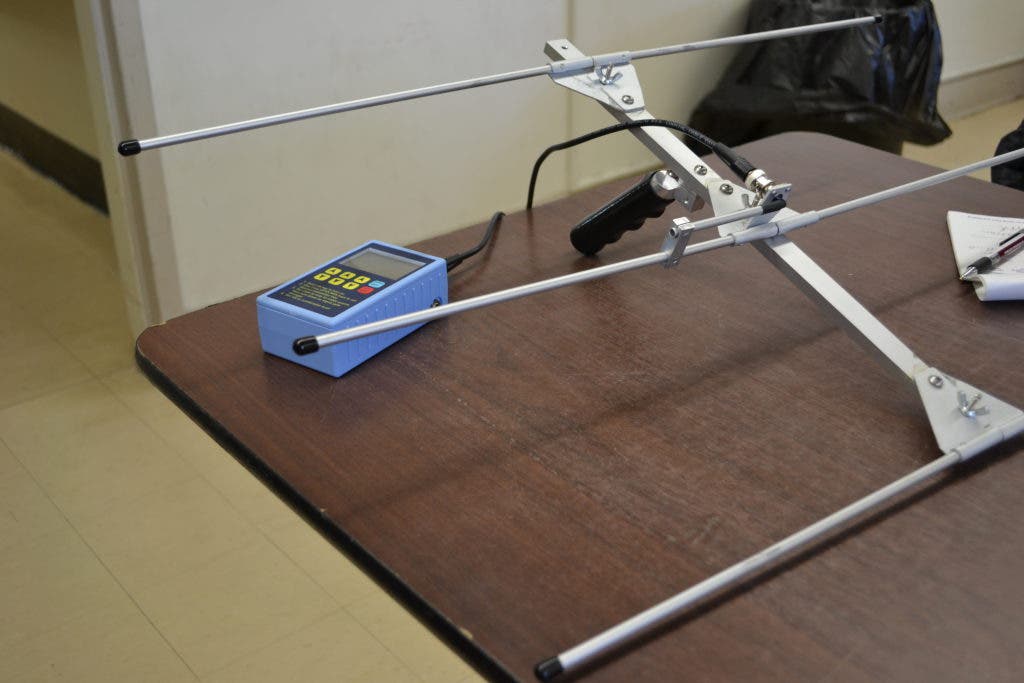
Once someone is reported missing, rescue officials can quickly spread out using a special antennae and tracking device that can zero in on the transmitter’s location. Local police and firefighters have been trained on the system and practice runs have shown that it doesn’t take more than an hour to find the device, even when it was hidden in a local Dunkin’ Donuts bathroom.
The tool can also help responders when they find someone on the street who appears confused — not just to track down people reported missing. In Cranston, where the program has been in place for about two years, firefighters said a woman was found walking along Cranston Street and responders quickly realized she suffered from Alzheimer’s and didn’t know where she lived.
“There was no way to find out, there was no way to search for her address or phone number,” retired firefighter Leo Kennedy said. “It took two hours to find a family member. Now, while we had her, she was safe and comfortable, but if she had the device, we quickly could have found out that information.”
If only boosting enrollment was as easy as passing around a sign-up sheet.
First, there’s the cost. At about $30 per month, the service is financially out of reach for many cash-strapped families, especially those paying for care.
As a result, officials and other people involved in the program are in the process of trying to find local organizations and benefactors who might help subsidize some of the cost for local families.
The other hurdle is simply getting the word out. So local officials said they’ll be coordinating with local organizations, area churches and other places to make sure people know about the program. That includes Thursday night’s demonstration.
Ralph Poland, law enforcement liaison for SafetyNet, said in Marshfield, Mass., where he is a retired police officer, the program has already been instrumental in saving lives. And it has been a huge money saver, too.
“The longest search we ever had with this equipment was 30 minutes,” Poland said, noting that a traditional search can take hours and involve a huge percentage of officers on duty, helicopters, environmental police, and more.
Officials note that it’s not just for dementia patients. The SafetyNet program makes sense for young children and children with autism or other disorders where they might slip out of view. Poland said a young girl, about 5, managed to unlock the front door of the house and showed up, naked, in the lawn of a nearby resident.
That resident gave the girl a blanket and saw the tracking device on her body (it can be worn like a bracelet, anklet, or even attached to shoes or a belt). When he read that number back to dispatchers, they instantly knew where she lived and how to get in touch with her parents.
Those types of rescues are called a “reverse find,” Poland said.
To find out more about the program, visitwww.lojack.com/safetynet or call 1-877-4FINDTHEM.
Get more local news delivered straight to your inbox. Sign up for free Patch newsletters and alerts.