Community Corner
Preserving The Gilded Age: Conservation At Newport's Marble House
In the six weeks between the start of the new year and Valentine's Day, Newport's Marble House is getting a top-to-toe facelift.


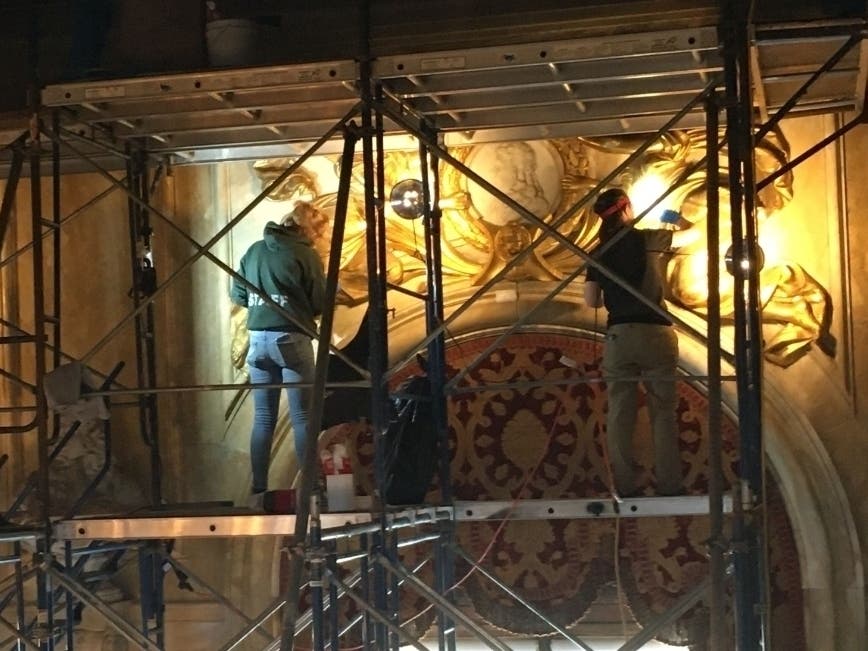
NEWPORT, RI — Visiting the Newport Mansions, whether in the summer sun or the splendid Christmas season, is always a transformative experience. Much as in their glory days, the "summer cottages" of the Gilded Age give off an aura of being effortlessly elegant and spotless, as if they were frozen in time — unaffected by dust and age. In reality, a small army of conservators, caretakers and restorers who, if they do their job properly, the public never knows was there.
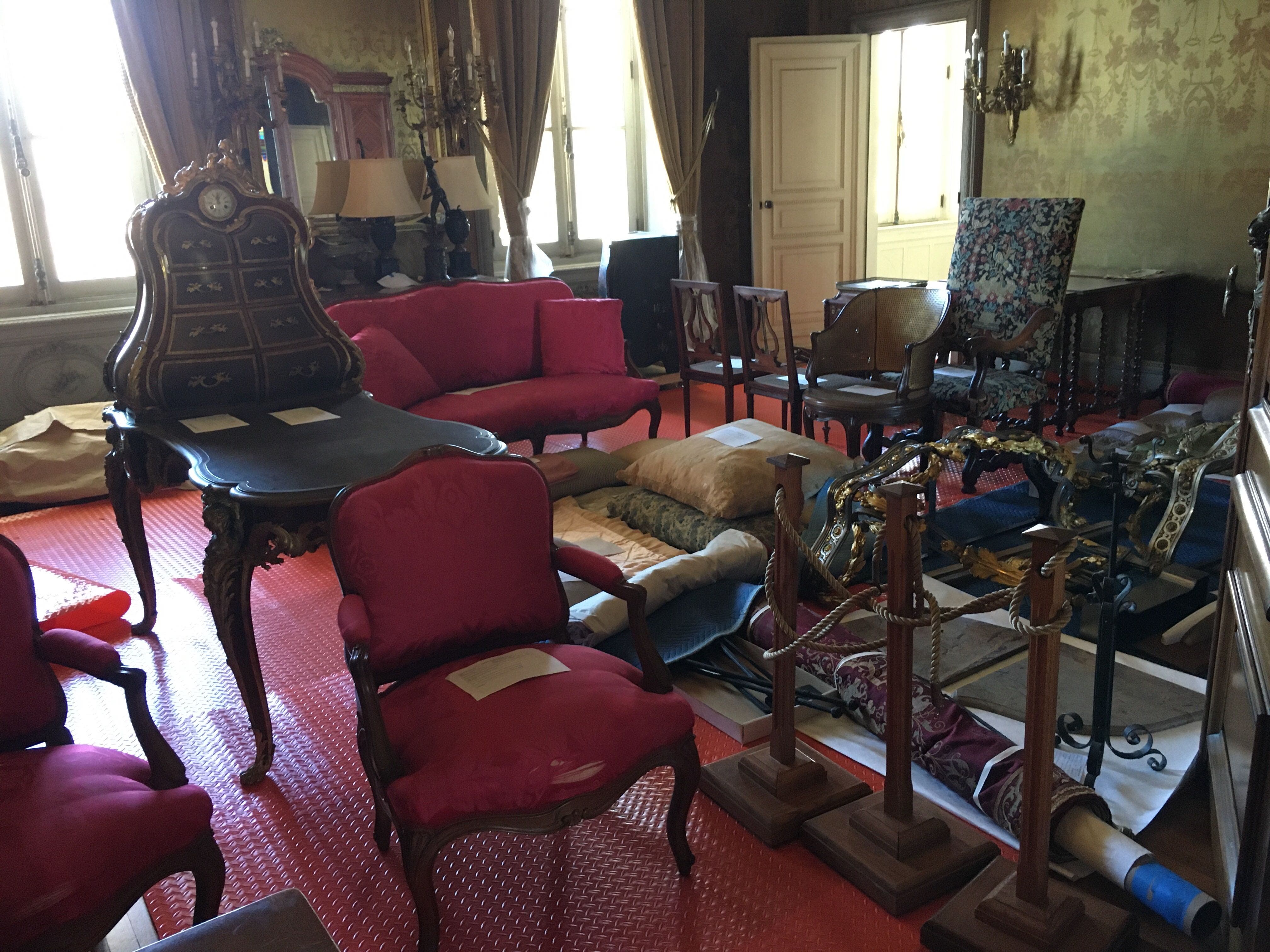
Every year, one of The Preservation Society of Newport County's four "main" mansions — The Breakers, The Elms, Rosecliff and Marble House — closes to the public during the six weeks between New Year's Day, which marks the end of the busy Christmas season, and Valentine's Day. During this period, the selected mansion receives a deep clean, addressing everything from furniture to drapes to individual decorations placed on mantels and side tables. Each item is meticulously inspected, cleaned and cataloged before everything is placed exactly where it came from, readying the house for the next round of visitors when it reopens.
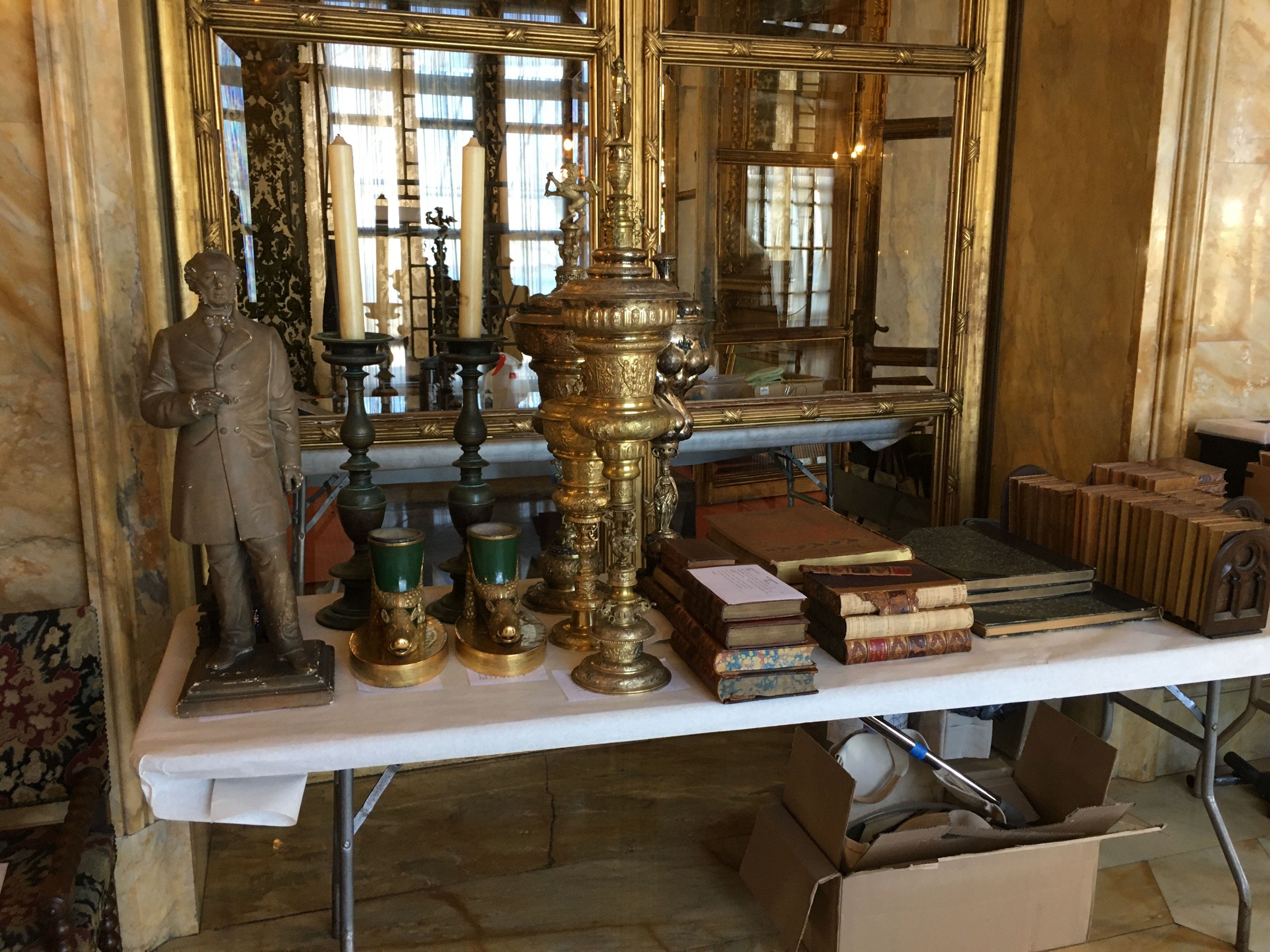
Just off the main foyer is the famous "gold room," an opulent salon covered in gold leaf. During the cleaning process, the room is a sort of command center for conservators, who work at a maze of tables underneath bright spotlights. Here, each painting in the house is carefully disassembled, cleaned and assessed for further damage, as nearby broken or structurally unstable furniture is carefully treated.
Find out what's happening in Newportfor free with the latest updates from Patch.
"It's all about finding the right material to match the object," said Carola Schueller, one of the conservators, saying that, for example, certain types of glue could work well on one object, but might be too brittle when dry to be a good choice for another.
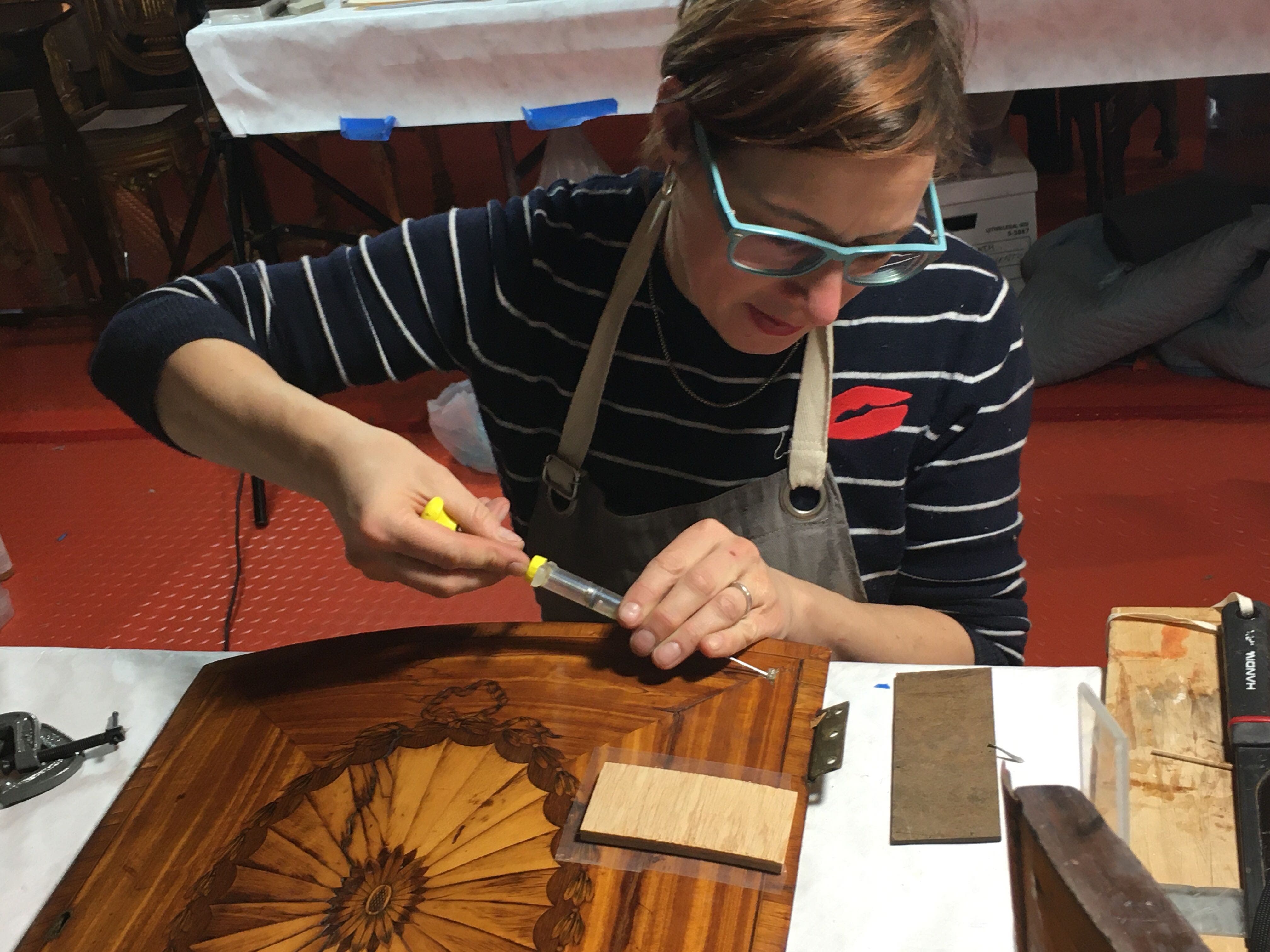
"Our big houses never really close, so this is our once-per-year opportunity to do this," she said. "You can hardly put in a scaffolding while the building is open to the public."
Find out what's happening in Newportfor free with the latest updates from Patch.
The scaffolding she references is on the mezzanine landing of the house's grand staircase, where several caretakers were hard at work cleaning the detailing around the massive windows that overlook the sea.
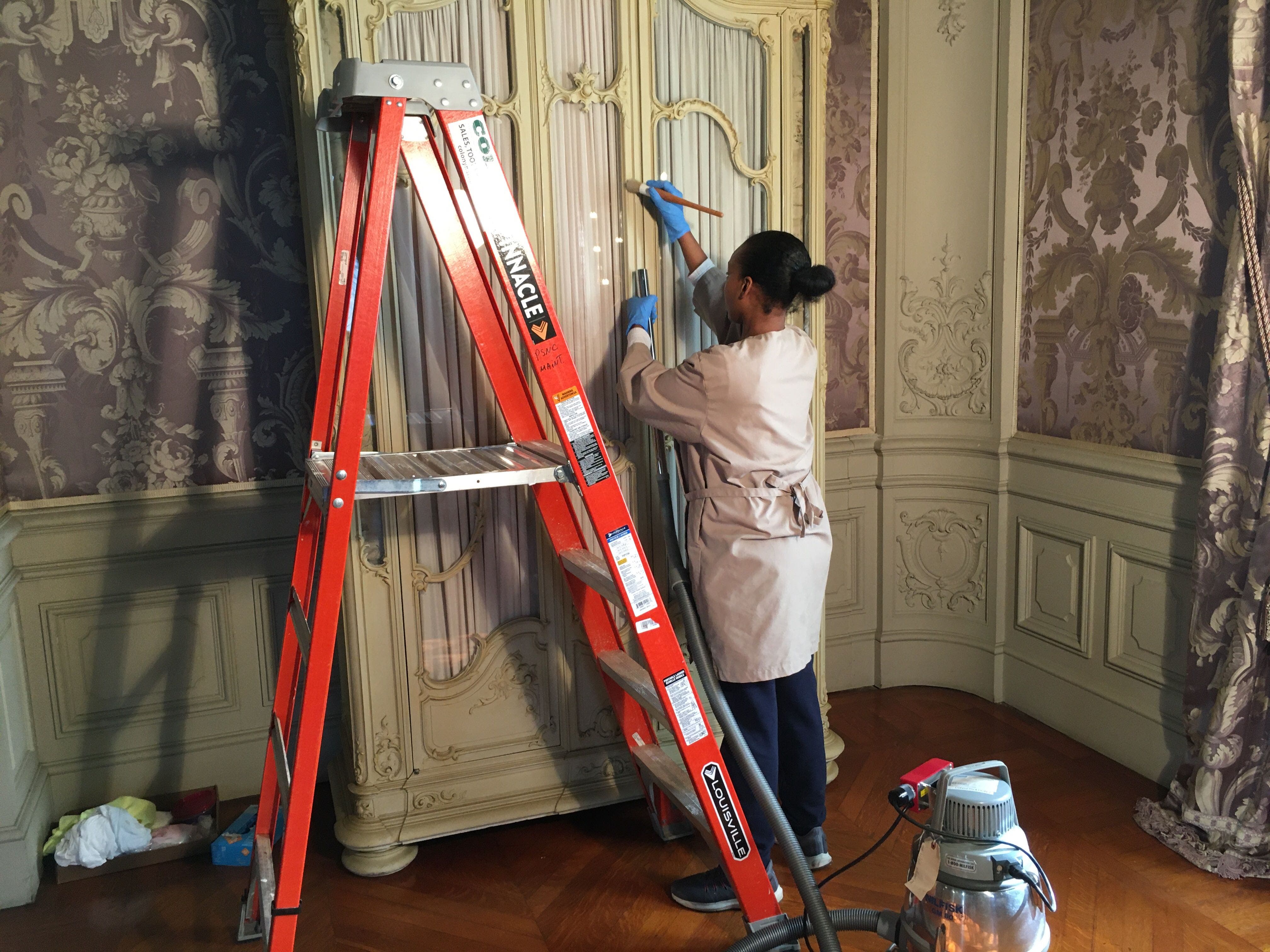
Nearby on the second floor, Alva Vanderbilt's massive bedroom, known for its feminine white and lilac motif, was stripped bare as two other caretakers painstakingly cleaned the disassembled bed frame and armoire. Because all of the furniture and surfaces inside the homes are extremely sensitive to wear, caretakers cannot use regular cleaning sprays and solvents. Instead, most dusting is done using a small, fluffy brush and a low-suction vacuum hose, vaguely reminiscent of how a dentist gently scrapes the surface of the teeth then suctions away the plaque.
Next door is Mr. Vanderbilt's room, which, during the cleaning process, is being used as a staging area for all sorts of furniture, mostly chairs ranging from tightly upholstered wooden armchairs to impossibly delicate caned pieces. These items have already been cataloged, Garrett-Cox said, and conservators determined that they are less in need of attention. While some may be wobbly or have slightly ripped fabric, the tight time frame means that the crew must prioritize.
"We can definitely tell what people have been touching," she said with a laugh, adding that they will adjust the tour route as needed if they notice a particular piece is getting worn from people touching it.
Marble House, she continued, is lucky in that its namesake construction material is incredibly sturdy. While stonemasons were called in to relay tiles that have popped up over time, the stone doesn't wear down from foot traffic the same way wooden floors do over time.

The incredible amount of work meticulously poured into the mansions will allow future generations to continue to witness the opulence of the Gilded Age for years to come.
"These houses and collections were given to us in the public trust, and it's our job to preserve them for the best of our ability," Garrett-Cox said.
The ongoing restoration and conservation efforts are largely supported by the organization's annual fund, made up primarily of various donors and benefactors. More information on membership and ways to donate is available on the society's website.
In some ways, the work of a caretaker or conservator is a thankless one, in that, if their job is executed flawlessly, the public will never know the hours or work spent painstakingly gluing veneer or notice the lack of dust on the spotless dining room china or on the perfectly made bed.
It's through this that the houses are able to maintain the feeling that they are not, in fact, museums, relics of a long-gone era, but living, breathing homes, where it wouldn't seem out of place to see a Vanderbilt sitting in the library or a maid soundlessly slip out of a hidden door with a pile of freshly laundered sheets. It is only by getting a glimpse behind the scenes that the public is able to appreciate the amount of work it takes to keep the mansions operating at such a high standard.
Get more local news delivered straight to your inbox. Sign up for free Patch newsletters and alerts.