Business & Tech
Beer Buzz: Coddington Introduces Local Honey Beer
Coddington Brewery has introduced a new beer called Honey Brown which is brewed with Aquidneck Honey.
has beer lovers buzzing over their latest brew, a honey beer brewed with honey from right here on Aquidneck Island.
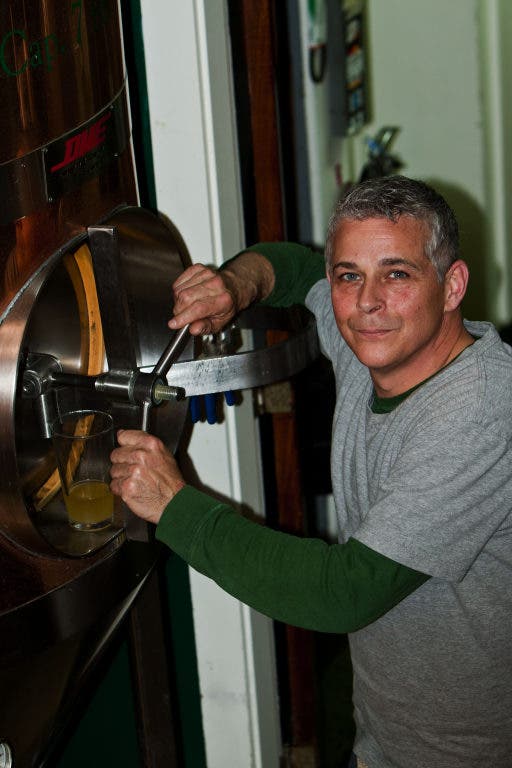
The brew called Honey Brown, which has been on-tap for about two weeks, is made with Portsmouth-based , which is collected locally and is free of preservatives, said Coddington’s brewer Marshall Righter.
“It’s almost the original color of the honey itself,” said Righter who has been brewing for 18 years.
Like all Coddington in-house brews, Honey Brown is Righter's personal recipe. Its unique beer style can only be found at Coddington.
When Righter got out of the Navy in 1995, he learned the trade at Smutty Nose and Portsmouth Brewery in New Hampshire, but he knew he needed to study the science to perfect his brews. He went to brewing school at the Siebel Institute in Chicago.
Find out what's happening in Portsmouthfor free with the latest updates from Patch.
Once he graduated, he took job in Boston for a short time, but then came to Coddington, where he has been brewing for 13 years.
“People have liked it,” said Righter about the new beer. “It’s nice to use a local ingredient that is really good.”
Before modern transportation, flavor was specific to its geographic region, explained Righter. Today the malt, which is produced from barley, by steeping the grain in water to allow germination, is typically produced off-site.
Coddington uses up to 30 different malts annually, which it purchases from different parts of the country, Canada and Germany.
Find out what's happening in Portsmouthfor free with the latest updates from Patch.
Colors and flavor profiles will vary with temperatures and length of time the malt is left in the kin, which contributes to the different beer styles.
Other factors that define the beer’s style are bittering agents such as hops, roasted barley, herbs, amount of sweetness from the sugar in the beer, strength, smoothness and the color.
Once the malt has arrived at the brewery, Righter “crushes” it, which is a process to break the kernel. It is then mixed with hot water to form a mash, which reduces enzymes naturally present in the malt to starches and sugars.
“That’s the whole goal because the yeast eats the sugar and produces alcohol, heat and CO2,” said Righter.
The extract is then rinsed, a process known as sparging, which creates a sweet solution called wort. The next step is to put it into the brew kettle and boil.
This is when Righter will add the hops, which he said is a cone-like flower that grows on a vine.
“It looks like a green, soft, pine cone,’” he said. Hops provides the aroma and serves as a bittering agent, Righter explained. He said an IPA is an example of a beer that will have a citrus aroma created from adding hops.
Once the wort is cooled, yeast is added to ferment the wort into beer. Ale, which ferments in only 14 days, has a stronger yeast characteristics than a Larger which will ferment for up to 30 days.
Righter then takes the completed product to the dispensing tank located in a cold room in the basement, where it is carbonated and dispensed to customers.
To see the process and taste the result, Righter brews on-location at the restaurant. If you can’t stay to try it on-tap, Coddington provides all beers in a 64 oz growler, which start at $12.