Politics & Government
Fighting for the Farm
Owners of the historic Glen Ridge Alpaca Farm ask town to abandon road proposal.


Editor's note: The following is the second installment of a two-part series looking at the abandonment of Heidi Drive. This is a controversial issue with two sides. Please view our story on Rhode Island Nurseries to hear both sides of this debate.
The request to abandon the Heidi Drive extension will be discussed at a public hearing this October in the newest phase of a controversy between Rhode Island Nurseries and the owners of Glen Ridge Farm Alpaca Farm.
In a classic case of the battle between development and historic and environmental preservation, the council voted in June to allow the building of an access road which would potentially cut 20 acres off of the historic 76-acre farm.
Find out what's happening in Portsmouthfor free with the latest updates from Patch.
The controversy began when Bruce Vanicek, owner of Rhode Island Nurseries, applied to build a 14-lot subdivision on his property which neighbors the farm. Vanicek would need to build an emergency access road to comply with town regulations.
The planning board initially denied the request in November 2009. In June, however, Vanicek appealed the decision and a changed vote by Dr. Christopher Ottiano resulted in approval of the road. Ottiano is currently running for Rhode Island state senate.
Find out what's happening in Portsmouthfor free with the latest updates from Patch.
The farm, which was once part of the historic Glen Manor Estate, is home to 85 Alpacas, unique animals with long, slender necks, similar in appearance to llamas. The proposed road would cut the farm in two, bisecting their dwelling from their pasture and eliminating the animal's access to land for grazing, breeding and birthing.
Ann Fiore and Kevin Tarsagian purchased the sleepy waterfront property, including many buildings dating back to the late 1700s, in 1997.
Fiore worked in historic restoration before owning the farm and has a deep appreciation for the land's significance. "This has really been a dream come true for me," she said.
The couple has worked closely with the National Resource Conservation Service (NRCS,) an agency of the U.S. Department of Agriculture, in its development. The agency assists private landowners in developing healthy ecosystems. "We wanted to learn how to be environmentally responsible farmers," Fiore said.
Though ecologically sound development cost more at first, Fiore says it has helped them to reduce overall costs. "It was the best decision we've ever made," she said.
The creation of a road would cut the farm off from the Sakonnet River and destroy not only the pasture, but multiple fences and conservation measures designed and paid for by the couple with the help of NRCS, according to the farm's owners.
"Every detail was planned responsibly," Fiore explained. "We're under contract with NRCS to use this land for farming. This road would break that contract and we'd pay a penalty."
Ken Ayer, chief of the Rhode Island Department of Environmental Management (DEM), believes the proposed road could destroy the practicality of farming here.
"Given the small size of the farm, we think a road would greatly diminish the viability," he said. "A small farm needs to be very intensively used, meaning all of the acreage is important. A road going through the middle of it would diminish its capacity to perform the necessary functions. We think it's a poor decision and have stated that to the town."
Fiore has located an area that would allow emergency access without destroying her property.
"Prior to Rhode Island Nurseries going before the planning board, we tried negotiating something that would work for both of us," Fiore explained. "We even offered to help pay for it if they don't go through the farm."
She has recommended a space where a more environmentally sound road could be developed.
The road as proposed, she points out, would obliterate all of her and Tarsagian's efforts to avert soil erosion. "It would create a huge drainage issue," she said.
In 2003, NRCS worked with Fiore and Tarsagian to create an engineering project that would stabilize the coastal portion of their land. The couple signed a $200,000 proposal and started the project.
"The final group of engineers stopped the process and determined that it can't be stabilized," Fiore said. The project was officially abandoned and it was decided that the area would never be immune to serious erosion.
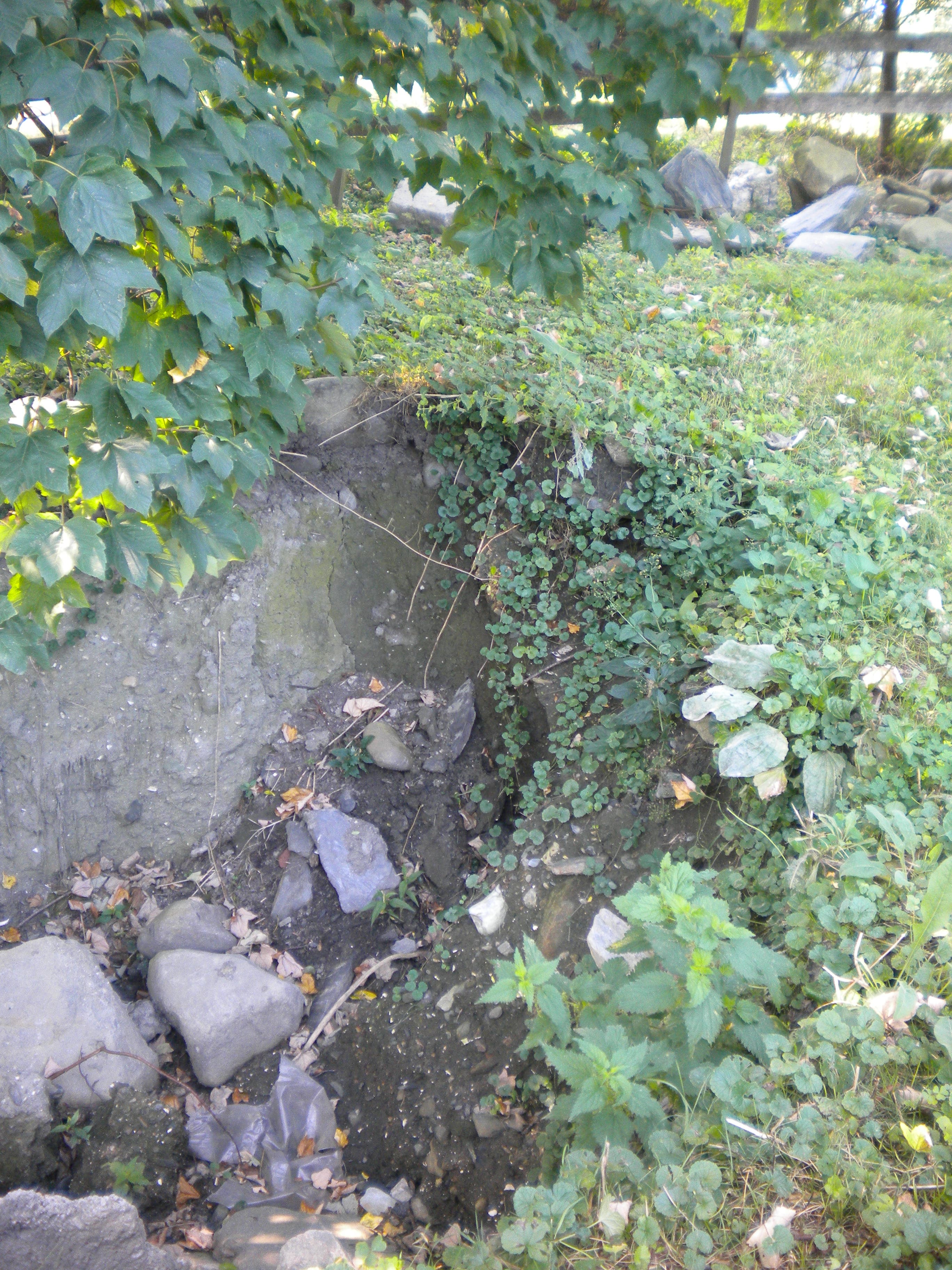
She pointed to an area where soil was already eroding in zone where the Heidi Drive extension would potentially sit. "They don't have a plan, they haven't actually spoken to engineers."
Others oppose the Heidi Drive extension for its potential to destroy historically important land.
Gloria Schmidt, a former librarian at Elmhurst Elementary School, has studied the Glen Farm area extensively.
In the late 1800s, Henry A. Taylor owned this land as part of a 1500-acre farming estate.
"It has a very rich history, and specifically, there is a history regarding the use of the land for agriculture," Schmidt said. "The area is virtually untouched and the entire layout harkens back to the original Glen Farm days. It would be very sad to destroy that to build houses."
The fenced pasture where the proposed road would sit is currently one of the more beautiful and open areas on the farm, with an ideal view of the water below. The Taylor family used to enjoy picnics here. "The Taylors had a kitchen in the barn, and would enjoy hot food right in the pasture," Schmidt said.
Rhode Island's Historical Preservation and Heritage Commission has raised additional questions regarding the entire project proposed by Vanicek.
A letter from the commission to the Coastal Resource Management Council from September of last year documents the historical sensitivity of the land.
Vanicek's lot contains "three known Native American sites," according to this communication recommending an archeological survey.
The commission also found that the creation of a side road on the Glen Ridge couple's lot would be "threatening their agricultural viability and potentially inducing the alteration of this portion of the historic district."
At a public hearing on Oct. 7, the owners of Glen Ridge will address the Portsmouth Town Council to request the abandonment of the proposal.