Community Corner
Food Source Crackdown Cuts Portsmouth Coyote Sightings
Researchers at the Narragansett Bay Coyote Study saw a major drop in sightings after removing two primary food sources.


PORTSMOUTH, RI — A Portsmouth neighborhood is seeing far fewer coyotes after researchers were able to identify and remove two major food sources. Graphs from the Narragansett Bay Coyote study show two major hotspots where coyotes were going to feed. After removing these food sources, sightings in these areas dropped off dramatically.
Researchers fitted "Hank" the coyote with a GPS-tracker collar, which allowed them to follow his movement throughout the area, including where he stopped to eat. Clusters of dots show two popular coyote feeding sites, which the organization then focused on.
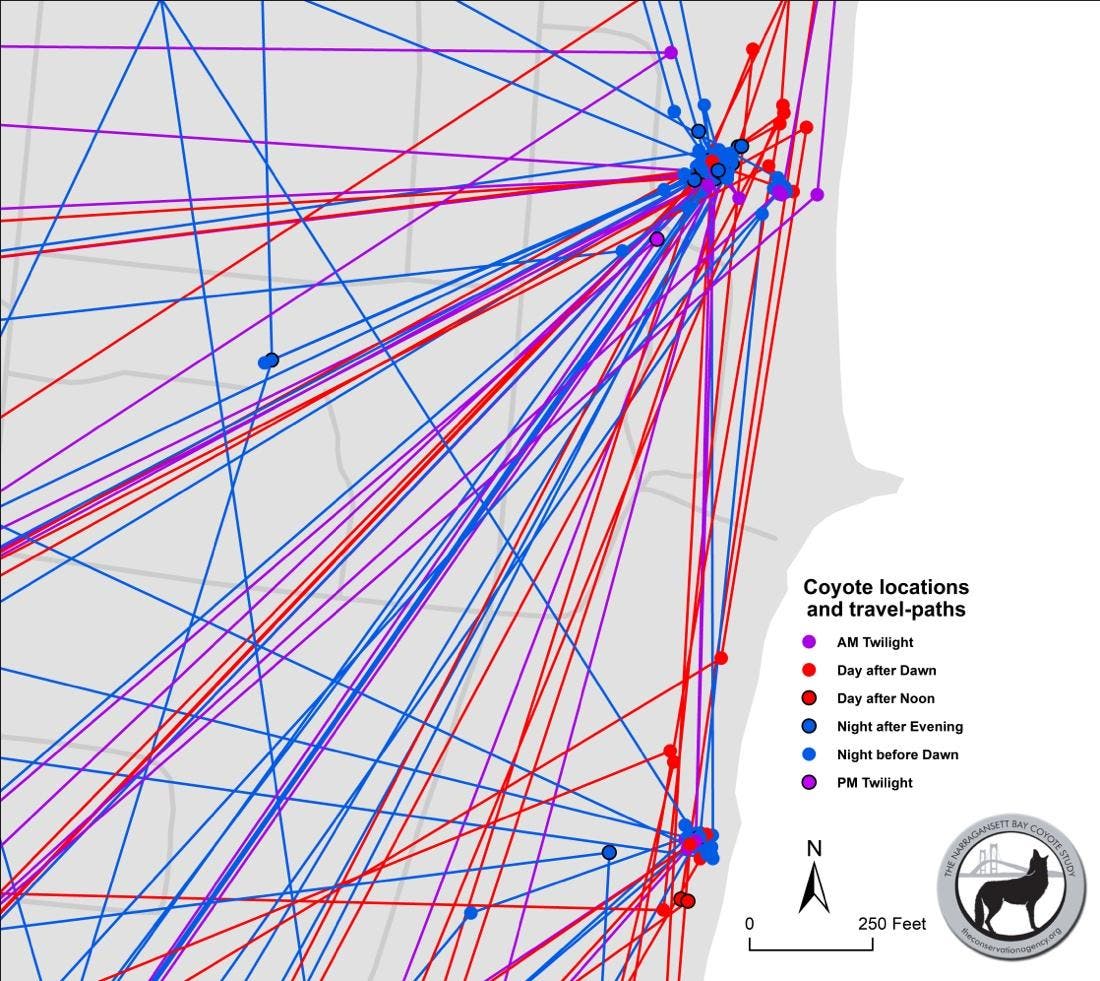
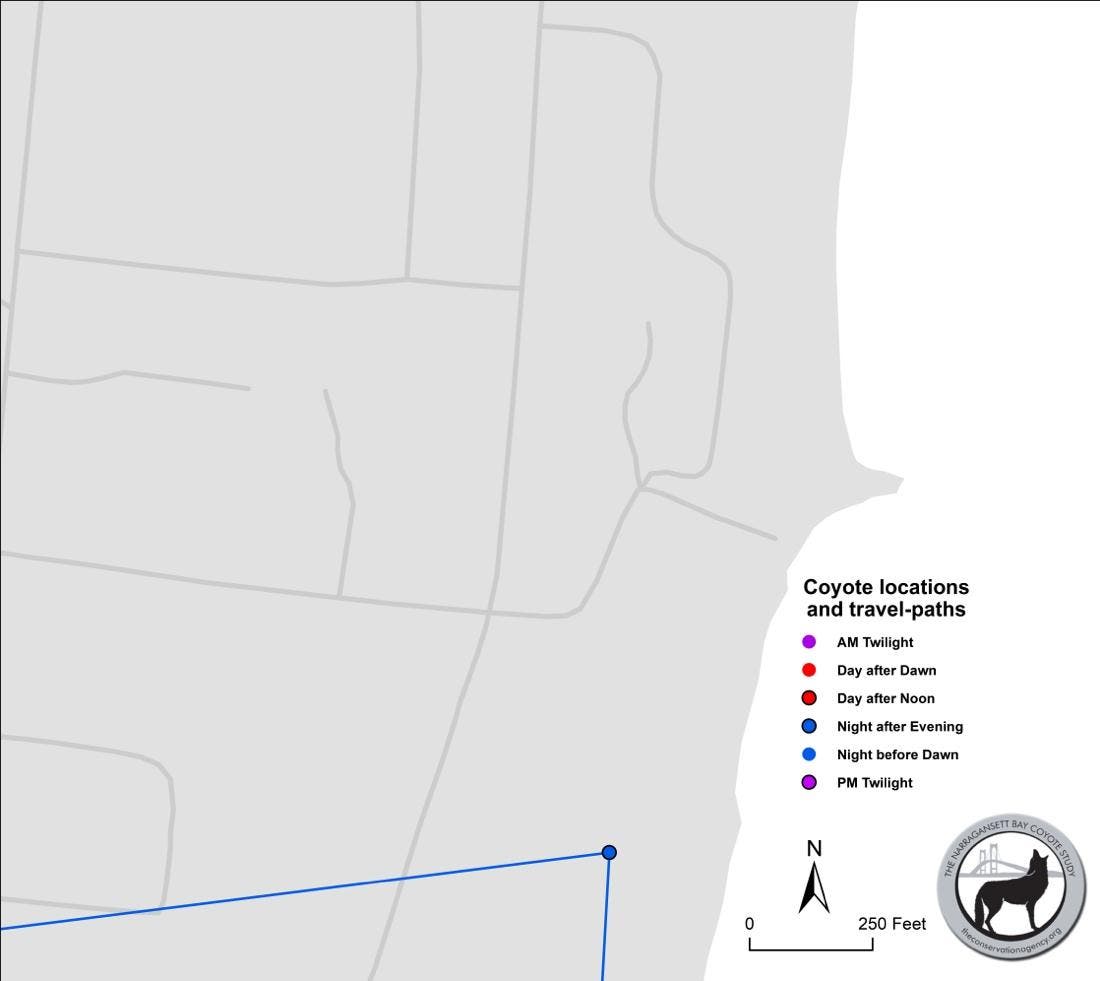
The organization has believed food sources to be a major cause of increased coyotes sightings for several years, and is now rolling out experiments in communities such as in Portsmouth to safely reduce the number of coyotes in residential areas.
Find out what's happening in Portsmouthfor free with the latest updates from Patch.
"It is our job to provide scientific data that show, if we prevail, that coyote populations and coyote behavior can be controlled by managing human-generated food subsidies," Mitchell continued. "This was our first experiment with stopping residential feeding – and the results so far are pretty dramatic."
Because researchers cannot monitor all Rhode Island communities simultaneously, residents who are seeing a lot of coyotes near their homes are encouraged to look for popular food sources such as open compost piles, outdoor pet food or free-roaming chickens. Purposefully providing food for coyotes is banned by the Department of Environmental Management and can result in a fine.
Find out what's happening in Portsmouthfor free with the latest updates from Patch.
Get more local news delivered straight to your inbox. Sign up for free Patch newsletters and alerts.