Business & Tech
Maplewood Farmer Steve Anderson Chips Away at a New Generation of Potato Farming
Maplewood Farm continues to offer fresh potatoes after three generations of operation.
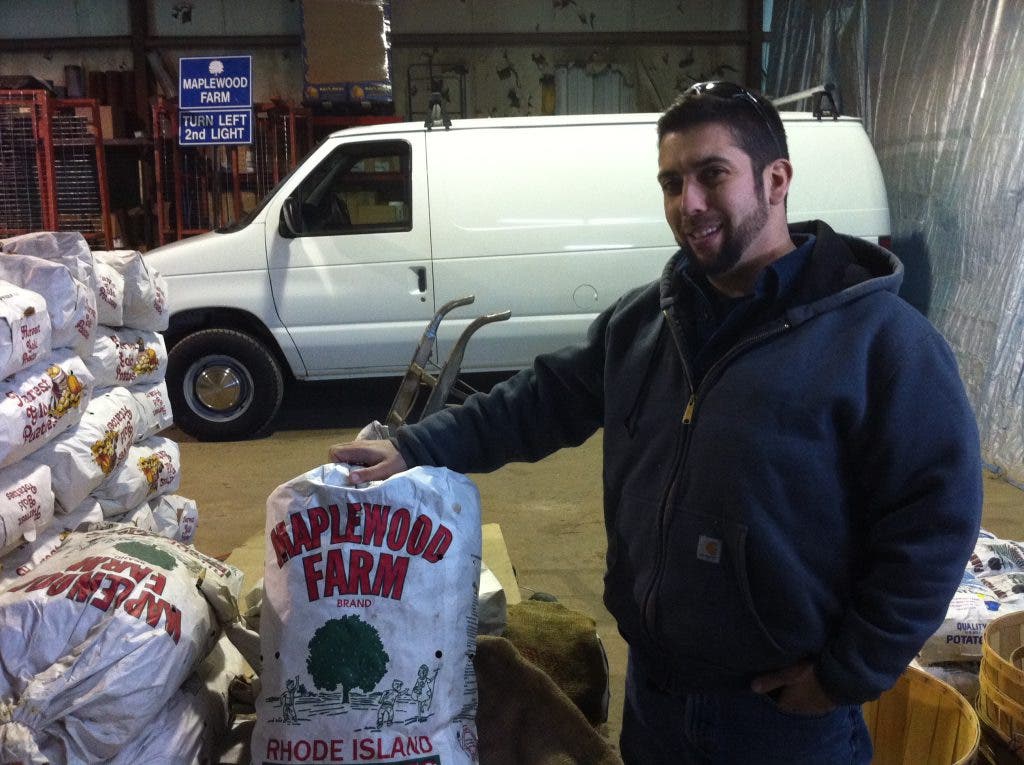

Steve Anderson of knows how to work.
“I’m a third generation farmer,” says the 30-year-old Anderson. “My grandfather started the farm, right across the street at Maplewood Grove and then bought the current property in, I think, 1973. I just bought the house here last year and that’s what the deed said.”
The farm on Hedley Street is rich in history and greenery.
“This is mostly a three season farm, but we’re busy in the winter, too. I built this greenhouse we’re standing in. We are primarily a potato farm, thus the sign out on the street there, but we sell herbs and sunflowers, too.
“After my grandfather’s untimely death in 1988 my aunt Judy (Carvalho) took over. I came along in 2000. I had no schooling whatsoever in this area, and had just gotten out of the military and started to put up greenhouses.”
Anderson spoke about the challenges farmers struggle with.
“In 1999, my aunt started to let some of the land go. She had to sell it. It’s tough bringing tractors and other equipment on the road from farm to farm. People want to see tractors on farms, but not on the road.”
It is also difficult to find people of his generation who are interesting in farming, he said.
“My brother did it for awhile, but he got out," Anderson said. "I thought, ‘I could do it’, but I had no clue. I figured it out, starting with building that first 50-foot-greenhouse. It’s tough to find people to help. They don’t want to work, even in this economy. Select people are interested, but it’s hard and many people see farming as settling.”
When Steve started farming in 2000, he was struck with an immediate crises.
“That was the year the Atkin’s diet came along. We couldn’t GIVE potatoes away," he smiles. “And remember, potatoes is the majority of what we do-in the summer we sell a lot of flowers, and we rotate because the land likes to rest, but it was still a very difficult time.”
In order to bring customers in, Maplewood Farm sells 11 varieties of potatoes throughout the winter, as well as 40 varieties of herbs, along with sunflowers during the summer months.
“We encourage people to come to the farm," he said. "I keep one house herbs, and the other flowers, to make it easier for retail and wholesale customers.
Find out what's happening in Portsmouthfor free with the latest updates from Patch.
"But how do you get people of my generation to come to farms? You try to bring technology in, but it can’t go up to a plant and identify a disease. It’s an old profession battling against current trends.”
Steve says he enjoys farming and likes being part of Portsmouth’s rich farming history, in spite of the struggles involved in the profession.
“Can we support ourselves? Yeah, but it’s a hardship. It’s very hard to make a living, and add to that there may be no more tax breaks for us. People forget potatoes have been huge in Portsmouth for generations. Chances are if you own a house here, it was built on a potato farm.”
Maplewood Farm supplies potatoes to restaurants in Providence, Newport and East Providence. They are harvested in November and last through the winter in the cool barn on the property.
In the barn, Steve displays his many varieties of potatoes, cutting into some of the fingerling variety to show off their different colors.
“These are French, blue and Russian potatoes. See how different they are?”
He points to old farm equipment, some dating back into the 1980s and all of which he still uses today. He remarks on how hard it is to maintain and update the equipment.
“I need a new car, I have to get that first. Of course the equipment needs updating, but you have to budget very carefully," he said. "Each year, we try to make a little bit more, but everything goes back into the farm. It’s a self-sustaining enterprise.
"I’m lucky I get some retired folks to help me out. My cousin Jack, who is in his 80s, helps out, whatever nieces and nephews I can get. We have some part-timers, but like I said, very few people of my generation want to farm. So, what’s going to happen next?”
Still, even with the difficulties, Steve relishes the rewards.
“People want fresh potatoes and we give that to them. They want local. You can taste the difference. The potatoes here taste different than the ones even in Tiverton. These are better."
Maplewood Farm is open to the public year-round. You can stop by the farm, or contact them at (401) 683-1370.