Schools
Portsmouth School Committee Violated Open Meetings Act, AG Rules
The committee met twice earlier this year to meet with potential candidates for the Portsmouth superintendent job.


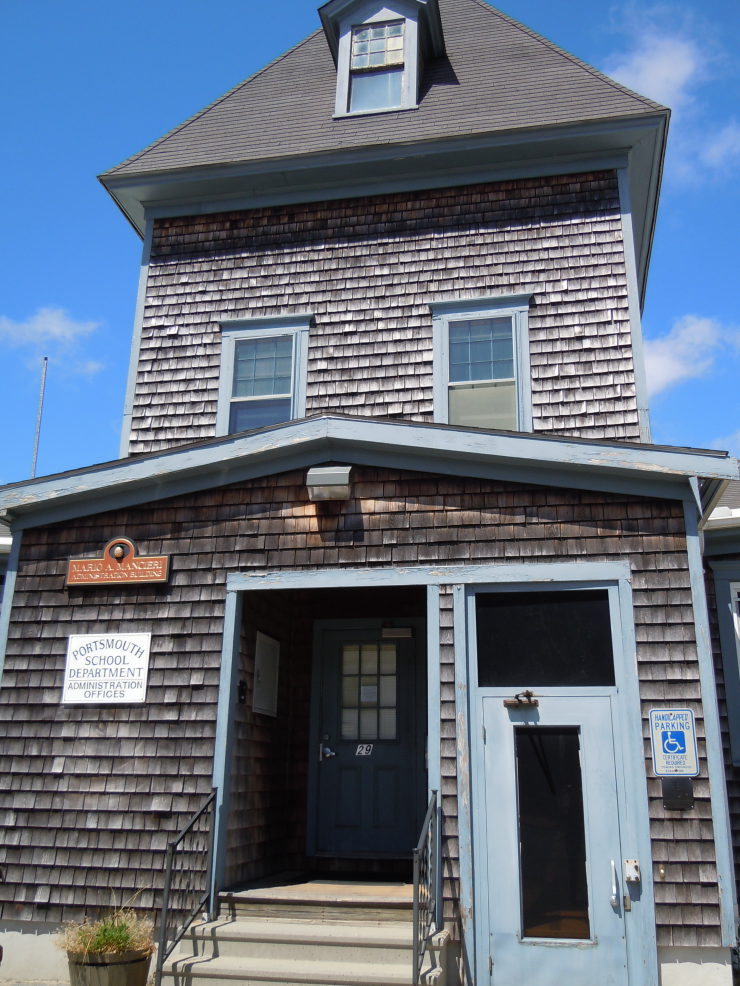
Members of the Portsmouth School Committee violated the Open Meetings Act earlier this year when they met at the Crowne Plaza in Warwick and the Portsmouth Publick House in Portsmouth to discuss a superintendent search outside of public view, the office of the Rhode Island Attorney General has ruled.
The committee met with potential candidates on Jan. 23 and Feb. 20 to discuss management styles and general issues relating to the search, such as stances on the Common Core standards and the town’s new STEAM initiative.
Those meetings were not posted publicly and no minutes were kept despite a majority of School Committee members being in attendance, which constitutes a quorum, concluded Lisa Pinsonneault, special assistant attorney general in the Nov. 25 ruling.
Find out what's happening in Portsmouthfor free with the latest updates from Patch.
The original complaint was filed by School Committee Member Frederick Faerber III in May. In it, he alleged the committee violated the OMA during those meetings because members discussed official business despite assertions by then-School Committee Chairman David Croston, who arranged the meetings and said that they were simply ”informal ‘meet and greets’ and “did not provide either candidate an advantage over another. We were pitching our District, the unity of the School Committee, and the vision of our District.”
Faerber, who apparently told the AG’s office that he was filing the complaint to be “vindictive” towards Croston, also alleged in a supplemental filing that the committee has had a habit of violating the spirit of the OMA by engaging in a “walking quorum” by placing flurries of back-and-forth phone calls in advance of meetings to get consensus before voting on upcoming public agenda items.
Find out what's happening in Portsmouthfor free with the latest updates from Patch.
Specifically, Faerber said the committee engaged in discussions outside of public view in regards to the T3 project (turf, track and tennis court replacement) and a 2.4 percent school budget increase.
In the ruling, Pinsonneault concluded that there was insufficient evidence to conclude that a violation occurred but ”we would be remiss if we did not express our concern that the evidence demonstrates at least some communications occurred outside the public purview.”
Pinsonneault referenced assertions by Faerber in his complaint that said Croston would call members to see if he “has the vote for an upcoming issue.” And, she said, Faerber himself seemed to be breaking the rules when he called other members to gauge whether he had enough votes for a vote of no confidence against Croston, who ultimately stepped down from the chairmanship of the committee earlier this year and was not reelected.
“Even your complaint, which alleges a walking or rolling quorum, suggests that you were contacting School Committee members in order to determine the level of support you had to bring a vote of ‘no confidence.’ This concerns us,” Pinsonneault wrote.
But according to the ruling, the meetings about the superintendent search were clear violations, despite assertions by the School Committee’s lawyer, Mary Ann Carroll, who provided five affidavits from committee members and said the meetings were informal in nature and no official committee business was conducted.
“These meetings with potential candidates were not a formal interview and no decision was made,” she said. “The committee was very serious about finding the right candidate to begin in this position on July 1, 2014, and therefore they felt it was important to have informal talks over coffee, regarding philosophy of several potential candidates.”
Carroll referenced Open Meeting Advisory 99-01, which determined that a meeting planned by the then-Cranston mayor to hold a reception for members of the General Assembly, City Council and School Committee in the city to “familiarize legislators and others with the history and status of the City of Cranston.”
That event was a social, nonbusiness event and the AG’s office ruled at the time that the mere attendance of the School Committee and City Council did not constitute an OMA violation.
But the facts in that case aren’t analogous to this case, Pinsonneault concluded, because “by [committee members’ own admission], notwithstanding the meeting places, this was not a ‘social’ event or a reception. This was an active discussion by a quorum of a public body on topics over which the public body had supervision, control, jurisdiction or advisory power.”
In an e-mail message, Faerber he disagrees with the ruling’s determination on the alleged rolling quorum issue.
“Both of my OMA allegations represent Mr. Croston’s constant disregard for laws, rule, regulations, policies and procedures,” Faerber wrote. “I disagree with the Attorney General’s determination on the alleged “rolling quorum” violation believing that none of the affidavits given by School Committee members addressed my specific allegation. I thought the AG’s office would seek more affidavits but they chose not to. Mr. Croston constantly illegally interfered in school administration but you can’t seek redress for that at the Attorney General’s office or I would have.”
The AG’s office will not file suit against the School Committee, sparing potential fines no greater than $5,0000 because the committee did not appear to willfully violate the OMA and because there is no evidence that any vote was taken, there is no decision the Superior Court could overturn.
Related:
Members of Superintendent Search Committee Resign in Protest
Get more local news delivered straight to your inbox. Sign up for free Patch newsletters and alerts.