Schools
Awareness Of Summer Learning Is Growing
Summer is a time for growth and we see it all around us in the natural world, especially in our children.


School Highlights for the week of March 21 through March 27.
Summer is a time for growth and we see it all around us in the natural world. Tomatoes ripen and zinnias bloom in our gardens. The cherry blossoms that began in spring, bear fruit over the summer. While our children in the United States physically sprout up like weeds every summer, we may be allowing the growth of their minds to whither. Children and their families look forward to the end of the school year and the start of summertime’s recreation, relaxation and slower pace. Although school is out, learning shouldn’t slow to a hazy inertia.
There is research dating as far back as 1906 that shows that children educationally regress during idle summers. It’s called summer learning loss which is a term that is becoming more familiar to educators and parents. The growing body of research confirms the existence of academic regression among all students in the United States. In fact, a recent study showed that two-thirds of the achievement gap in reading is directly related to unequal summer learning opportunities.
Find out what's happening in Woonsocketfor free with the latest updates from Patch.
Research spanning 100 years shows that students typically score lower on standardized tests at the end of summer vacation than they do on the same tests at the beginning of the summer. It has also been found that most students lose about two months of grade level equivalency in mathematical computation skills over the summer months. Low-income students also lose more than two months in reading achievement.
Additionally, about two-thirds of the ninth-grade achievement gap between lower and higher income youth can be explained by unequal access to summer learning opportunities during the elementary school years. Lastly, parents consistently cite summer as the most difficult time to ensure that children have productive things to do.
Find out what's happening in Woonsocketfor free with the latest updates from Patch.
Not surprisingly, summertime has become a focal point for education reform. The good news is that Rhode Island is a national leader in the emerging summer learning field. With the support of the Nellie Mae Education Foundation much work has begun on summer learning in Rhode Island. The Rhode Island Afterschool Plus Alliance (RIASPA) and state leaders convened a summer learning work group, piloted innovative summer programs (including Chillin' and Skillin' in the Fairmont neighborhood of Woonsocket), and created a legislative task force to study the issue statewide. Establishing relationships between summer learning providers and community organizations is one recognized method through which to grow such programs and stem summer learning loss.
In Woonsocket, and the Woonsocket Education Department have collaborated to create an innovative, community-wide initiative for summer learning. Elementary students learn through educational, yet engaging, interactive experiences. These entertaining activities are based in the arts, recreation, field trips and more. The Woonsocket model blends the expertise of summer learning and afterschool professionals, area organizations, city agencies, school principals, and teachers. Together they collectively formulate high-quality programs.
The Summer Learning Symposium
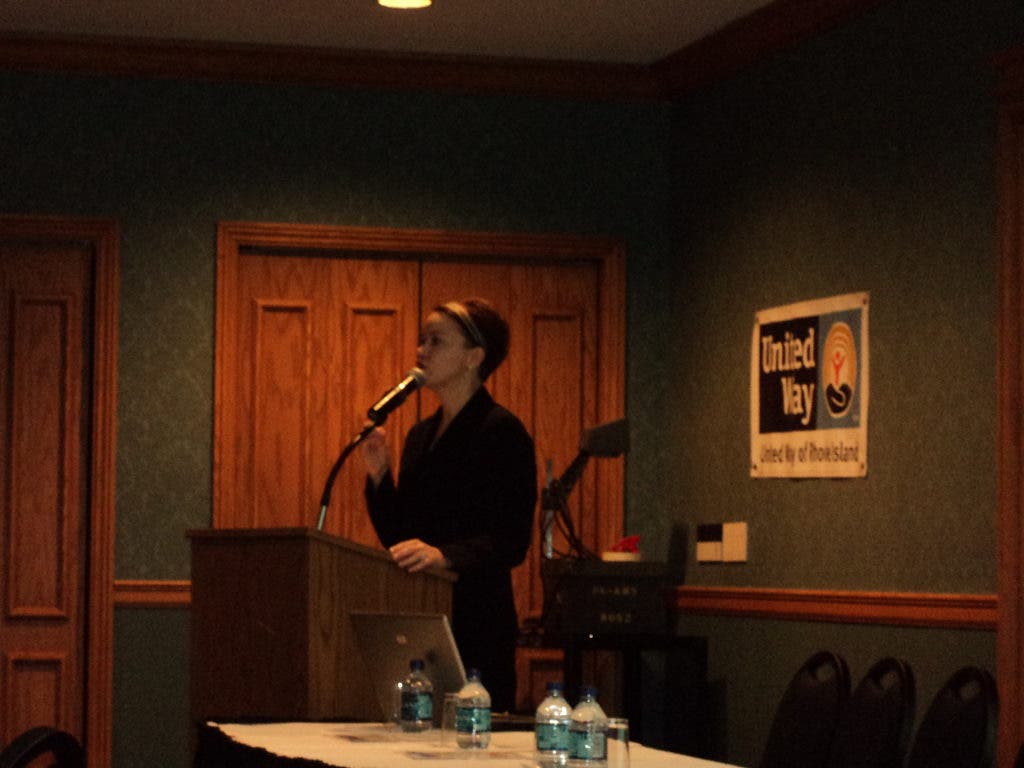
The Summer Symposium was held at Providence College on Tuesday March 16, 2011. Deborah A. Gist, Rhode Island Commissioner of Educations and Matthew Boulay, Interim CEO of the National Summer Learning Association both provided inspirational opening remarks.
In our roles as the Superintendent Schools and the Executive Director of the Rhode Island Afterschool Plus Alliance, we were excited to be a part of the Summer Learning Symposium. In his role as Executive Director of RIASPA, Adam Greenman organized and emceed this event that drew over 150 educators and elected officials.
Several workshops were offered and one highlighted the collaborative work that has taken place in Woonsocket in order to offer the Chillin' and Skillin' summer learning program in Woonsocket. The panel for this workshop consisted of Terese Curtain, Executive Director of Connecting Children and Families, Charlotte Boudreau, Director of Education and School Linked Services, Linda Filomeno, Woonsocket Education Department Director of Grants, and Dr. Gerardi in his role as Woonsocket Superintendent of Schools. “Our kids are benefiting from broad, cooperative partnerships that stimulate them during the summer months. Through a variety of indoor and outdoor activities and programs, they stay engaged and remain intellectually active all summer. Therefore, they are returning to school in the fall, more prepared and better able, to meet the challenges of the classroom,” said Terese Curtin.
The Future of Summer Learning
The hope for continued education reform regarding summer learning rests in recommendations at the federal, state and local levels. Nationally, recommendations call for mandating schools to provide summer programming as a part of the reauthorization of the Elementary and Secondary Education Act. Also, educators are calling for more leadership and resources for summer learning as a vital component of education reform by increasing 21st Century Community Learning Center funding, enhancing supplemental education services to make summer a preferred teaching and learning time, and authorizing demonstration projects that test innovative models.
Recommendations in Rhode Island look to legislation for creating funds to support innovative and experiential, summer learning programs. Also, school districts are encouraged to adopt the New Vision for Summer School outlined by the National Summer Learning Association. Envisioned, too, is the creation of a public database to make families aware of available summer learning opportunities.
At the local level, more proactive and collaborative approaches to summer school policies that focus on enrichment, as well as remediation, are recommended. Reform methods encourage schools, parks and recreation departments, libraries, and other agencies to facilitate program collaborations and share resources. Finally, representatives from schools and summer learning programs should proactively collaborate and assess students’ needs and strengths and then align curriculum and content to deliver high-quality enrichment activities and instruction.
To learn more about summer learning loss, and its affects on children in Woonsocket and across the state, you can visit RIASPA’s website, at www.afterschoolri.org. Further, at the bottom of this page, there is an opportunity to leave a comment. It would greatly help us if you could comment on the following questions.
1. As a parent how important are quality summer activities for your child?
2. Do you feel that you would want these programs expanded beyond the Fairmont neighborhood and if so what neighborhood do you represent?
Sincerely,
Robert J. Gerardi, Jr. & Adam Greenman
“The purpose of learning is growth, and our minds, unlike our bodies, can continue growing as long as we live.”
Mortimer Adler