Community Corner
Let's Go Letterboxing!
Learn about the exciting hobby called letterboxing. The only rules are seek discretely, tread lightly, and stamp enthusiastically.


What is Letterboxing?
Letterboxing is a fun and exciting hobby that combines hiking in the great outdoors with a treasure hunt. The basic idea of letterboxing is that someone, (a person, family, group or organization,) hides a waterproof box in a spot of their choosing. Letterboxes can be in parks, on trails or just about anywhere. (I have even hunted one in a graveyard!)
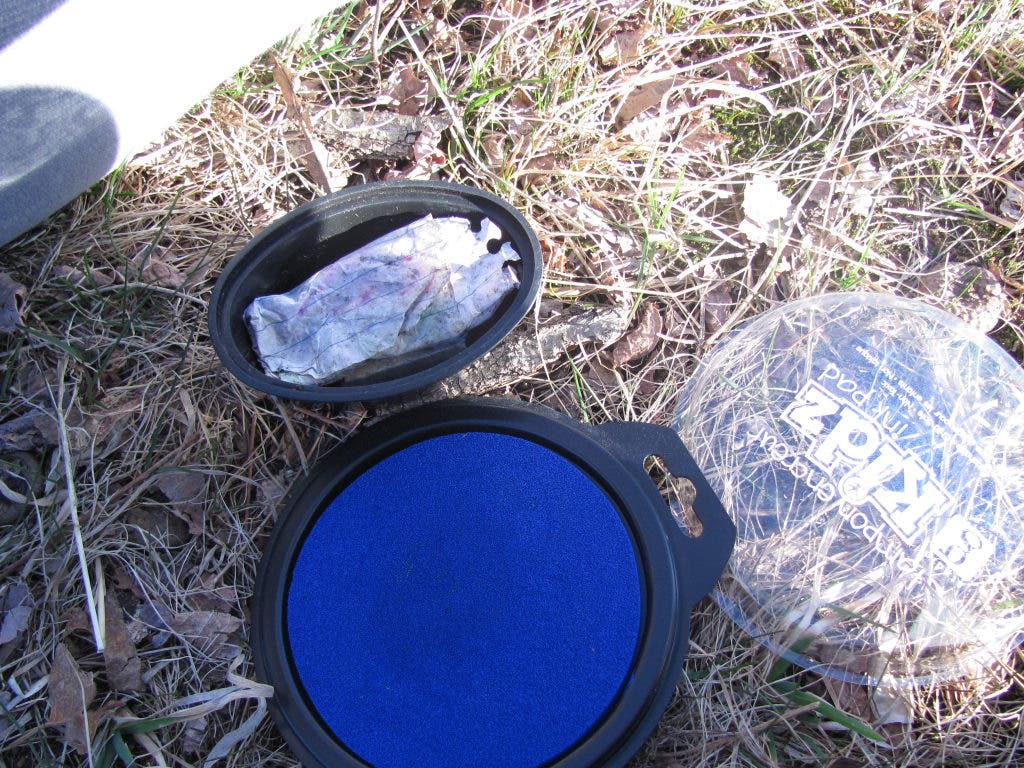
The letterbox will contain a logbook, a rubber stamp and usually an ink pad. Sometimes you will get lucky and discover a box with other goodies inside such as a "hitchhiker " or maybe a stamped postcard to send to the owner of the box upon finding it. The hider of the letterbox writes directions to the box, these include clues and/or a map. They can give basic instructions or get pretty tricky, depending on the hider. Often the clues involve landmarks, visual clues, the number of paces from landmark to landmark.
Find out what's happening in Woonsocketfor free with the latest updates from Patch.
Once a letterbox is hidden and the clues to its location are written, hunters, or letterboxers, attempt to find the box. In addition to the clues, the hunter should also carry a pencil, his own personal rubber stamp, an ink pad, and his logbook. When a hunter finds his desired box, he will stamp the logbook with his own personal stamp. He may also write his name, the date of the find, and a short message if there is room. (Example: "Found on 3/12/11 by the Jones family, great find, beautiful hike.")
The hunter then, in turn, will stamp his own personal logbook with the box's stamp and record the date, the name on the letterbox (if there is one,) and any notes they may want for themselves such as details of the hunt. Logbooks typically show who went on the hunt, and other notable facts such as if the box was a hard find and if the hunter(s) had fun. In a nutshell, the box's logbook keeps a record of all its visitors or hunters, and the hunter's logbook keeps a record of all the letterboxes they have found.
Find out what's happening in Woonsocketfor free with the latest updates from Patch.
Letterboxes are hidden just about everywhere. There are thousands of boxes hidden throughout the U.S., and that number is growing each day. Here are some basic facts on letterboxing.
What will I Need to Hunt for Letterboxes ?
You will need clues to the location of the letterbox you are trying to find, an ink pad, and your own stamp. You can either make your own stamp with an eraser and an exacto type knife, or pick out a store-bought stamp. Remember to be choosy, your stamp is your personal signature in the world of letterboxing! Also take along a pencil if you wish to write in a boxes logbook or your own logbook.
Where can I find clues ?
The two best sites in my opinion are: Atlasquest and Letterboxing North America. On either of these sites, you will find an area in which to enter your zip code. From there you can start looking for letterboxes that interest you. You can view their general location, when it was placed, and the status of the box. The status tells you whether it has recently been found, sometimes the status may read "missing" or "unknown." As for the clues, they will normally say something like "follow the path until you come to a double trunk maple tree, turn left and travel 200 paces to a set of boulders on your right." Other clues may require you to solve a riddle or puzzle, or even use a compass.
How can I hide my own letterbox ?
Location is key. First you want to decide where you'd like to hide your box. Remember to pick a public, safe location and that National Parks are off limits. You will want to hide the box in a spot not likely to be seen by a passerby. Letterboxes should be well hidden, possibly under a rock or boulder, maybe even in a tree or a hollowed out tree trunk. People can get pretty creative in the placement of their letterbox.
What supplies will I need for the letterbox ?
First you need a box. The disposable ziplock type work just fine and are usually pretty waterproof. Next you'll want to supply your box with a stamp, an ink pad and a logbook where finders will stamp their own stamp. It is a good idea to put these supplies in a ziplock baggie then into the container to ensure everything remains dry. Well hidden letterboxes can remain in their location for many years. Also try to get the smallest supplies possible, as boxes can be hard to hide.
How do I leave clues after I have hidden my box ?
You can write your directions, or clues, and publish them online. Again the two best sites, in my opinion are Atlasquest and Letterboxing North America. When writing your clues try to be very specific. I was recently on a hunt and followed what I thought was the correct blue trail for almost a mile when I realized I was on the wrong blue trail, and that was a real bummer. Thankfully, I turned around, found the right trail and eventually found a great letterbox with a really cool hand carved stamp inside. For those who do not use the internet, there are other ways to distribute clues. Check your local library.
If you are thinking about letterboxing, I suggest hunting for one first to see if it is something you want to take on as a hobby. Also, hunting gives you a lot of ideas about how and where to hide your own box. That's how my family learned. You can start out with a set of clues, a stamp and ink, and a few index cards stapled together to record and stamp your find. This hobby can be free if you're crafty; just grab a marker for the ink, carve a stamp from an eraser, and use paper you have at home.
To go letterboxing, you won't need to go far. There are some very cool letterboxes hidden right here in Woonsocket. There is even a letterbox series hidden in the city. That means that a series of letterboxes are hidden, and after you find the first one, you are then set out for the next, until you have completed the series.
These are the basic facts of the hobby as I know them, but there is so much more to learn. Books and online resouces are abundant, to say the least. You can learn about cool things like hitchhikers, phantoms, travelers, and cuckoo clues; things I am not even quite sure about myself, but I am very intrigued by. I hope that I have sparked your interest in this family friendly hobby.
Always remember to respect the environment and leave no trace.
Happy hunting!