Community Corner
Keeping tabs on Mother Nature
West Ashley weather station localizes weather information


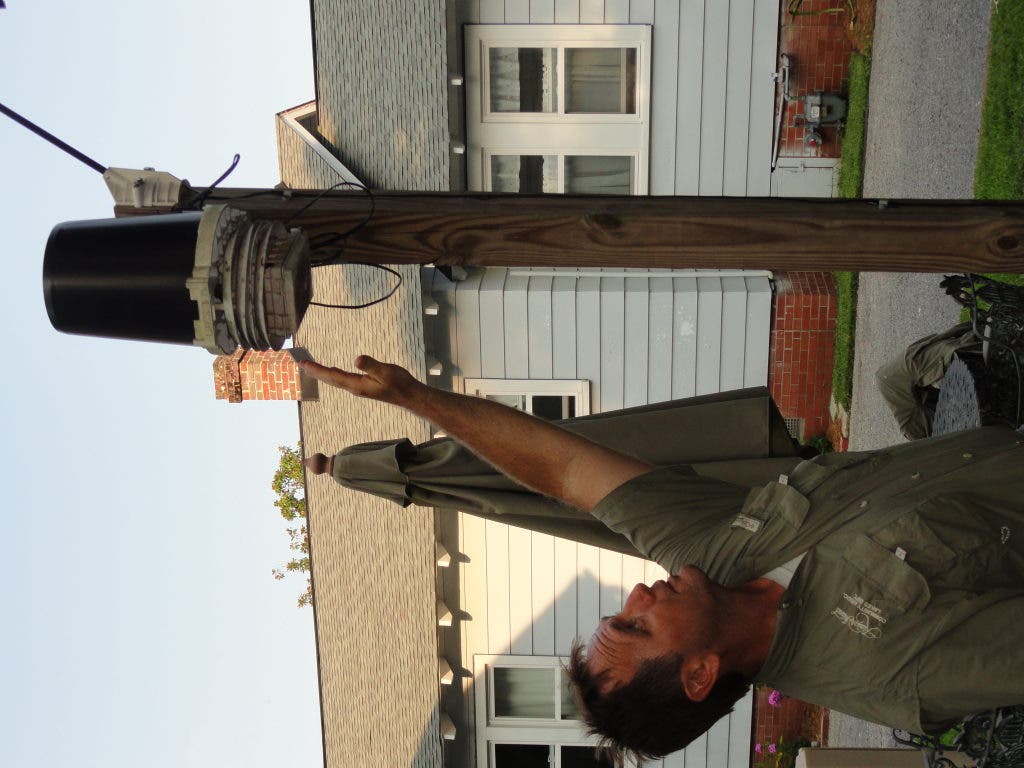

CHARLESTON - Knowing exactly how much rain is falling is very important to Norm Shea, who manages the lake system at Kiawah Island.
"Summer rain storms are likely to cause fish kills because the rain water is so much cooler," Shea said.
A large influx of cool rain water into a pond that had been baking in the sun all day causes the warmer water above the pond's thermoclime - the point at which sunlight no longer penetrates and heats the water - to mix with the cooler and more oxygen depleted water below.
Find out what's happening in Charlestonfor free with the latest updates from Patch.
"The stormwater runoff causes them to mix so it became important to measure the rainfall," Shea said.
Back in 1996 Shea installed a weather station on the island to get more locally accurate temperature, wind, humidity and rainfall readings than those coming from the National Weather Service station at the airport.
Find out what's happening in Charlestonfor free with the latest updates from Patch.
"It can vary so much between locations," he said.
Years later he installed a similar weather station in the backyard of his Magnolia Road home.
"Over the years, watching the rain events in Kiawah and here in town, it seemed like we got a lot more rain in West Ashley than out at Kiawah," Shea said. "So my natural scientific curiosity took over and I went and installed one here."
It turns out his observations were spot on.
"There's a retired meterologist living on Seabrook and he was interested in seeing if there was a statistical difference in rainfall between Kiawah and the airport, and there was a significant difference," Shea said. "I asked him to check my data here compared to Kiawah, it's not as big a difference as with the airport, but there is definitely a difference."
Local weather patterns seem to send more rain to North Charleston than to Kiawah, and West Ashley is somewhere in the middle of the two, he said.
"It's definitely interesting to see where we stand on an annual basis, rain-wise, and how we compare to prior years," Shea said.
He's not the only one with access to the data from his weather station though. Anyone can see it in real time online via Weather Underground (see Shea's weather data here).
His station has been up and running since 2005.
Inside a small dark grey cylinder atop a post in his backyard the monitoring system keeps track of rainfall, temperature and humidity, and mounted at the end of a thin metal arm a wind guage keeps track of the speed and direction of gusts. The system is hooked up to a computer in Shea's house and constantly sends data to the Weather Underground webpage.
"It's interesting to see how the outside temperature affects the amount of energy we use," he said. "You can tell when it's a cloudy day by how much it affects your electricity usage."
The weather station doesn't monitor Shea's energy usage, but he recently installed a solar panel system on his roof and tracks his energy usage through that, then compares that data with his weather data to draw his conclusions.
It turns out a cloudy summer day can save an average size home 10 kWh compared to a sunny one.
Once installed, Shea said the weather station requires minimal maintenance, just occassional cleaning.
"The worst thing is palm berries are the same size as the oraface (for the rain gauge)," Shea said. "And the birds love to sit up there and leave their little droppings, so cleaning it is really the only maintenance."
Get more local news delivered straight to your inbox. Sign up for free Patch newsletters and alerts.