Weather
Hurricane Irma: South Carolina In Likely Path, How To Prepare
While it's still early, the projected path of deadly Hurricane Irma takes it over most of South Carolina Monday, forecasts say.

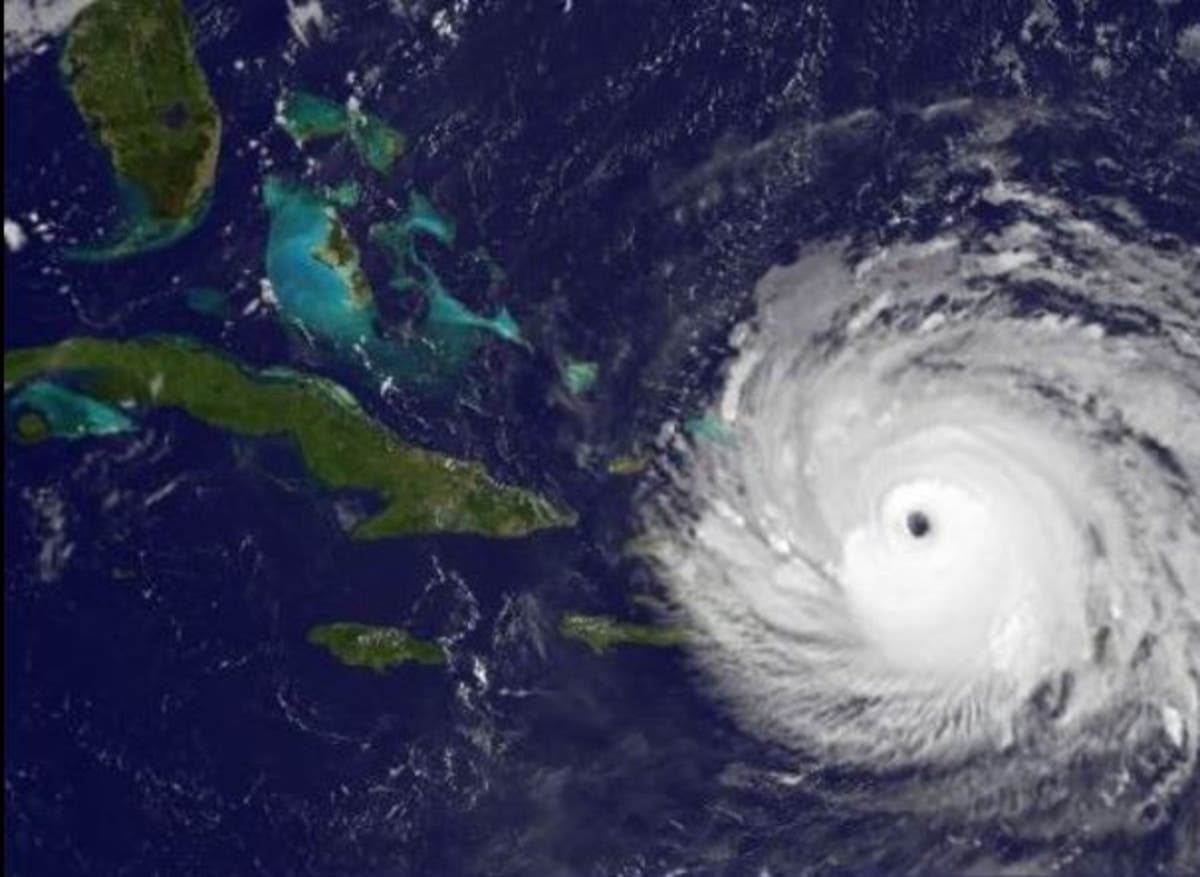
Deadly Hurricane Irma, the most powerful Atlantic storm ever recorded, is on a projected path to reach the lowcountry of South Carolina beginning early Monday morning, forecasts say. The storm is blamed for at least 10 deaths so far and was following a path that may have dire implications for Florida, Georgia, and the Carolinas.
The 11 a.m. forecast released by the National Weather Service Sept. 7 shows the Carolinas will begin to feel the tropical force winds of Irma by 8 a.m. Monday, Sept. 11, when the center of the storm is projected to be located off the coast of Georgia with wind speeds greater than 110 miles per hour. During the course of the day, the storm center is projected to move across the Palmetto State, bringing sustained winds up to 73 miles per hour to the upstate of South Carolina and the Charlotte metro region by Tuesday morning at 8 a.m.
Governors in both South Carolina and North Carolina declared a state of emergency for their states Sept. 6 in preparation of the storm’s arrival. Six Georgia counties on the coast are also under a state of emergency. (Get Patch real-time email alerts for the latest news in Charlotte — or other neighborhoods. And iPhone users: Check out Patch's new app.)
Find out what's happening in Charlestonfor free with the latest updates from Patch.
Watch: Top 10 Items You Need In Your Hurricane Emergency Kit
“I have been advised that Hurricane Irma, and the associated wind, heavy rain, flash flooding, and severe weather, to include tornadoes, may pose a significant threat to the State of South Carolina and requires that the State take timely precautions to protect property, critical infrastructure, communities, and the general safety and welfare of the people of this State,” Gov. Henry McMaster said Wednesday.
Find out what's happening in Charlestonfor free with the latest updates from Patch.
McMaster stopped short of calling for an evacuation. That decision would likely be made by Friday, The State newspaper reported.
Gov. Henry McMaster Asks South Carolinians to Prepare for Hurricane Irma, Declares State of Emergency pic.twitter.com/IxpyGY4EZX
— SC Governor Press (@scgovernorpress) September 6, 2017
While the storm's exact path is impossible to predict, the National Hurricane Center has the storm jogging a bit eastward, making a hit somewhere in Georgia between Cumberland Island and Savannah more of a possibility. At that point, after pummeling the Orlando area, Irma is likely to have weakened a bit to a category 3 storm when it comes ashore in Georgia.
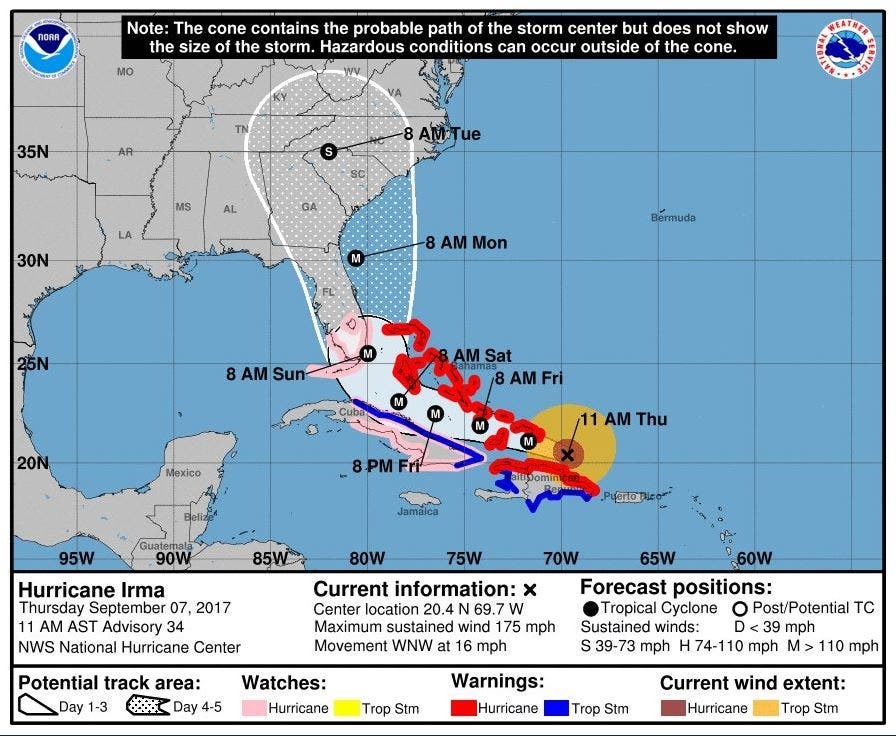
Hurricane Irma was moving west-northwest off the coast of Hispaniola by the National Hurricane Center’s 8 a.m. Sept. 7 update. The storm was heading toward the Turk and Caicos Islands, located about 165 miles southeast of Grand Turk. Irma was still packing maximum sustained winds of 180 mph, down only slightly after her catastrophic run through the region in the overnight hours.
As Florida prepared, the Caribbean experienced Irma’s ravaging effects Wednesday night. The death toll in the Caribbean was up to at least 10 as of Thursday morning, according to ABC news. At least eight people had died in St. Martin and St. Barthelemy, along with others in Barbuda and Anguilla.
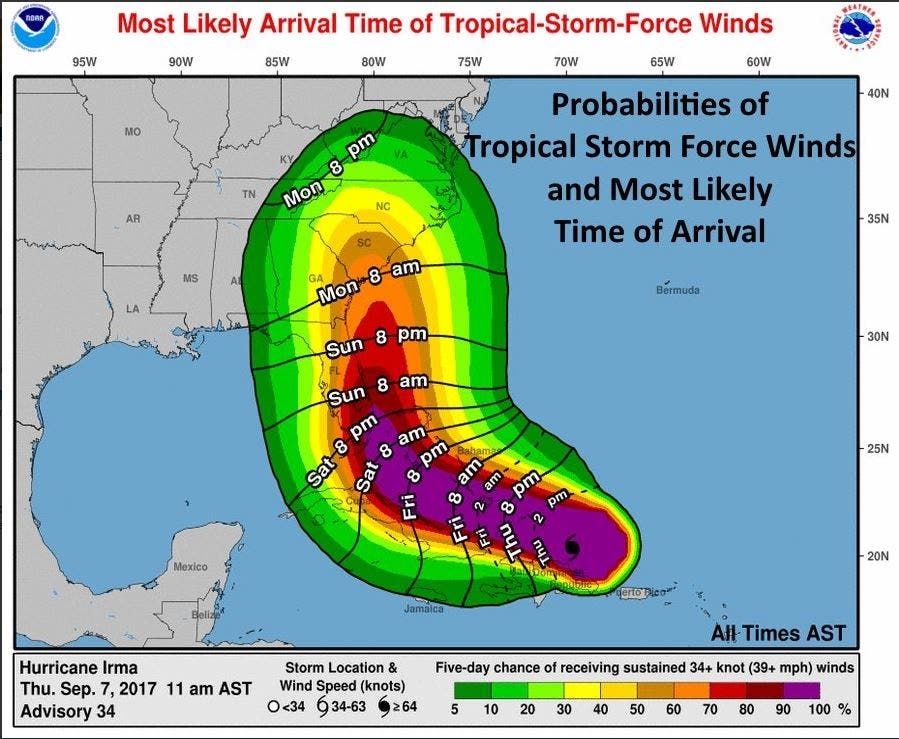
By Thursday and Friday, Irma is projected to swirl along the northern coasts of the Dominican Republic and Haiti, pass through the Turks and Caicos islands and then the southeastern Bahamas, where storm surges of up to 20 feet are possible, the hurricane center said.
Hurricane Preparation Tips
State officials in the Carolinas are urging residents to prepare for Irma. According to ready.gov, every emergency preparedness kit should have the following items:
- Water, one gallon of water per person per day for at least three days, for drinking and sanitation
- Food, at least a three-day supply of non-perishable food (canned food, baby food, Granola bars, energy bars)
- Battery-powered or hand crank radio and a NOAA Weather Radio with tone alert and extra batteries for both
- Flashlight and extra batteries
- First aid kit
- Whistle to signal for help
- Dust mask to help filter contaminated air and plastic sheeting and duct tape to shelter-in-place
- Moist towelettes, garbage bags and plastic ties for personal sanitation
- Wrench or pliers to turn off utilities
- Manual can opener for food
- Local maps
- Cell phone with chargers, inverter or solar charger
Other suggested items to have in your kit include:
- An emergency (reflector) vest
- Red Bandana (in case you need to signal for help)
- Pet supplies (leashes, pet food, medicines, kennel or crate)
- Medications for family members
- Eye drops
- Dry socks
- Cash
- Sleeping bags/blankets
- Writing supplies
- Books/Games
- Emergency Contact information/documents
- Fire extinguisher
- Waterproof matches/fire starter
- Insect repellant/sun screen
You can find a list of more items,and tips on being prepared at ready.gov or the National Hurricane Center.
Make a Communications Plan
If your family isn’t together when a disaster strikes you should know how to reach each other and where to meet up in an emergency. The Ready Georgia app also has an “I AM SAFE” text message tool that allows you to send a text message to emergency contacts in your disaster plan.
Build a Ready Kit
Put together a Ready Kit that includes the supplies you and your family would need for three days. That includes sufficient water, non-perishable food, medications, important documents and any other essential items. Once you’ve gathered all the basic items, consider what unique needs your family might have, such as supplies for pets, seniors or family members with special needs. Add those items to your kit and start packing it today.
Know the location of your local shelter
In the event of an evacuation, have a plan for where you and your family are going. If you plan to go to a local shelter have the address and directions printed out and in your Ready Kit. If you have a pet, check in advance to see if the shelter or hotel you plan to use is pet friendly. Most public shelters can’t accept pets due to health regulations.
Stay informed
Every family should have multiple methods for receiving severe weather alerts, including at least one with an audible alert to wake you in the middle of the night if necessary.
There are many options for staying in touch with changing weather conditions:
- NOAA Weather Radio: Watches and Warnings issued by National Weather Service air on these radio.
- Television Stations: Local or national news stations monitor and broadcast weather alerts.
- AM/FM Radio: Radio stations are required to air Emergency Alert System messages.
- Smartphone Apps: Numerous free and paid smartphone applications have been created to notify the public of severe weather. Some of these applications use GPS tracking on your phone and will notify you of severe weather warnings based upon your location. Ready Georgia’s free app provides severe weather alerts and also gives you mobile access to your emergency plan and other preparedness resources.
- Wireless Emergency Alerts: WEA are emergency messages sent by authorized government alerting authorities through your mobile carrier. The alert system doesn’t require you to download an app or subscribe to a service. The WEA message will usually provide the category and time, the agency issuing the alert and what action you should take.
Patch Editor Deb Belt contributed to this article.
Images via the National Weather Service and KOMUnews via Flicker Commons
Keep up with Hurricane Irma news and more by liking Charlotte Patch on Facebook:
Get more local news delivered straight to your inbox. Sign up for free Patch newsletters and alerts.