Health & Fitness
Colbert Busch Lands Working Families Party Endorsement
Elizabeth Colbert Busch will appear on the ballots twice in the May 7 election following endorsement by another political party.

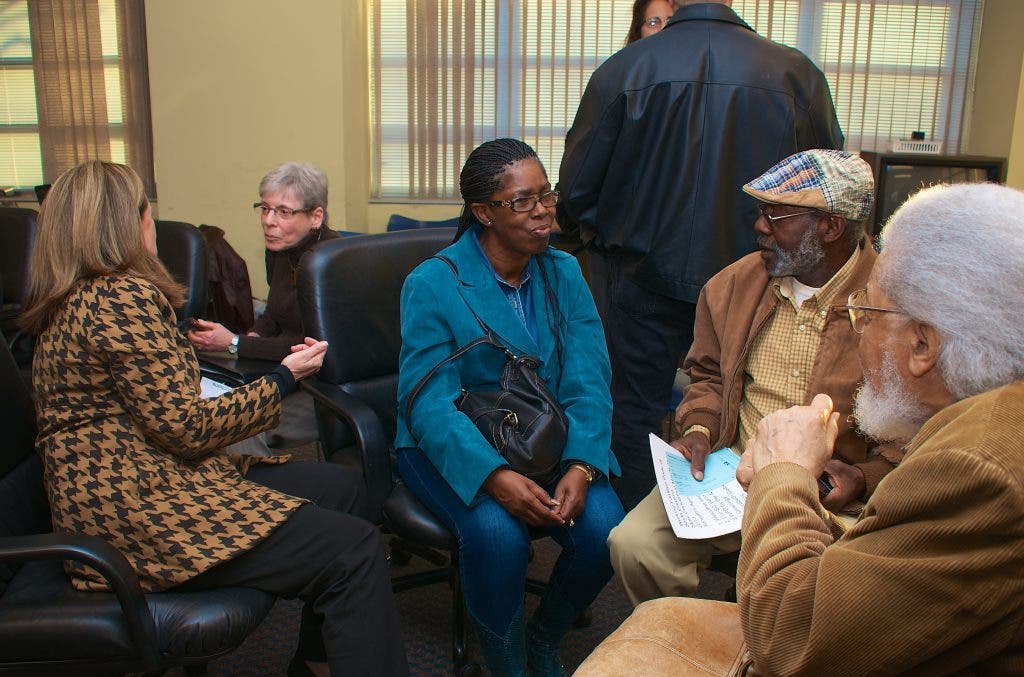


NORTH CHARLESTON, SC -- Just two days after winning the Democratic primary, congressional candidate Elizabeth Colbert Busch scored another political party’s endorsement.
The Working Families Party officially endorsed Colbert Busch at its March 21 convention, held at the ILA Hall in Charleston.
Her name will appear twice on the May 7 ballots, once for each party, the State Election Commission confirmed.
Find out what's happening in Summervillefor free with the latest updates from Patch.
Although it cost her many weeks of work and spending to secure the Democratic Party nomination, last night’s was a snap for Colbert Busch. She spoke briefly on the interrelation of education and job development (two key WFP topics), her own experience in both, and her campaign’s position on those issues. “You must have one to get the other,” she said.
Immediately after her short address, the committee voted unanimously to offer endorsement.
Find out what's happening in Summervillefor free with the latest updates from Patch.
Party chairperson Erin McKee says the decision was easy. “Elizabeth believes in our platform of good education, good jobs and good healthcare.”
Colbert Busch’s campaign is excited by the minor party endorsement.
“We are extremely appreciative of the Working Families' support and grateful for their backing,” says James Smith, its deputy director of communications. “We are especially pleased that the endorsement comes as a result of the work Elizabeth has done in helping to create thousands of well-paying jobs in South Carolina.”
This minor-party nomination could offer a vote-snatching strategy, McKee says.
“Voters who may normally vote Republican, but who don’t support that party’s candidate, can vote for Colbert Busch without having to push the Democratic button.”
The double appearance on the ballots also lets voters point out specific reasons that candidates earn their votes, McKee says, and because the WFP stance is narrower and more specific to particular issues than the platforms of larger political parties.
“When a bill is up for vote pertaining to education, employment or healthcare,” which are platform issues of WFP, “elected officials who were co-endorsed by our party would be more likely to remember constituents’ stances on those issues, and because of the votes they received as our candidate.”
In 2012, co-endorsed candidate Bobbie Rose got 5.4 percent of her votes as the Working Families candidate in this same congressional district. Its state government candidates got an average of 10 percent of their votes as WFP nominees last year.
South Carolina is one of eight states that allow “electoral fusion,” in which a candidate can be endorsed by multiple parties, appearing on the ballots separately for each one.
South Carolina WFP was created in 2006. It’s also present in Vermont, Oregon, Connecticut, Massachusetts, New York, Delaware and Pennsylvania.