Politics & Government
Charleston Economic Growth Tied to Sept. 11
Since 2001, the tri-county area has experienced a 148 percent increase to engineering jobs and grown a multi-billion-dollar industry.

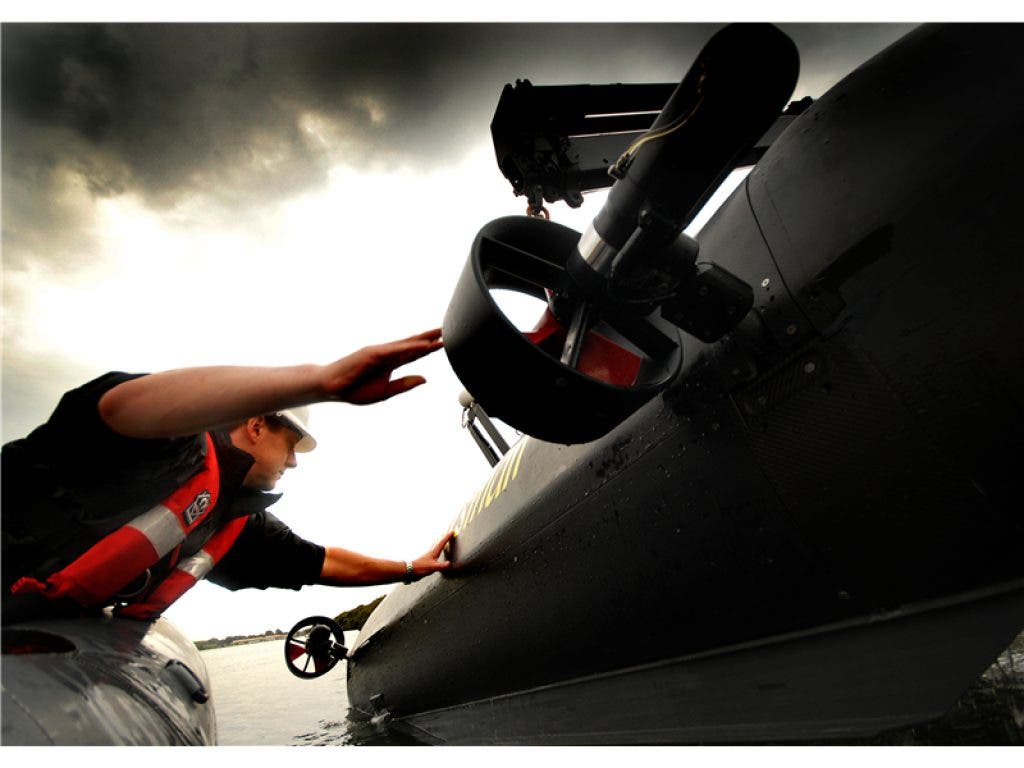


Just as World War II helped to haul the country out of the Great Depression, the need for advanced securities and innovation in engineering post-Sept. 11 has led to an increase in jobs and innovations in the Charleston region, business leaders say.
"As much as anybody hates to admit it, if you're going to go into war, you have to support the effort," said College of Charleston economics professor Kent Gourdin.
"Military responses to war have always kind of trickled down to the civilian sector."
Find out what's happening in Summervillefor free with the latest updates from Patch.
But this time it's not about rations or inspiring posters. It's about landing Boeing in North Charleston, transporting military and defense contractor equipment through the Charleston port and increasing engineering jobs in the region by 148 percent in 10 years.
It's about companies such as Force Protection Inc. of Ladson and BAE Systems of North Charleston.
Find out what's happening in Summervillefor free with the latest updates from Patch.
As of 2010, BAE was the second largest global defense contractor based on revenues, according to its website.
Force Protection, which was founded in 1997, employs about 1,300 people at its plant 10 miles from the Charleston Air Force Base.
Advanced securities and aerospace/aviation have grown so much so in the last decade that they have been targeted as two of the Charleston Regional Development Alliance's four strategic clusters for the last five years, according to alliance spokeswoman Claire Gibbons.
"It's part of our economic development strategy," Gibbons said. "Those jobs are going to go somewhere and we believe strongly that they should come to the Charleston region."
According to alliance figures, in addition to the engineering job growth there has been a 67 percent increase in computer-related jobs in the Charleston region since 2001.
But saying that any region benefited in the aftermath of the terrorist attacks is a touchy subject.
Some in the Charleston area finger another significant event for providing economic opportunity: Hurricane Hugo, which killed 27 people in South Carolina and caused billions in damages in 1989, according to the National Hurricane Center.
"Particularly something like Hugo … it does present you with the opportunity to rebuild," Gourdin said. He added: "It is kind of awkward to talk about that as an opportunity"
With the nation engaged in multiple wars, Charleston was primed to welcome the multi-billion-dollar industry that flourishes today with its port, Air Force base and position on the East Coast.
"A lot of the growth since 9/11 has been because of the port," Gourdin said. "As the demand for that sort of freight rose, we were here in a position to support it."
It attracted Force Protection in 1997, according to the company's Senior Director of Corporate Communications Tommy Pruitt said.
But while 2001 shook the country to its core, it wasn't until 2005 that the small company of about 140 employees began to increase its workforce by the thousands.
Force Protection had a product that the U.S. government needed: vehicles that can withstand insurgencies.
"The United States had really never been involved in anything like that where we had to fight an insurgency," Pruitt said. "We started the MRAP program."
MRAP is Mine Resistant Ambush Protected armored vehicle. Those made by Force Protection can withstand improvised-explosive devices, which have become a part of the nation's vocabulary during the last decade.
Force Protection grew to about 2,000 employees in 2008, but now has around 1,300 employees, Pruitt said. And the company is growing yet again.
"We're in good shape and expanding internationally," Pruitt said.
While the nearly recession-proof industries still produce large economic impacts — cold numbers in emotional times — employees in jobs created in the aftermath of a changed world are likely not aloof to their efforts, according to Pruitt.
"I don't think you could find anybody who would say it's just a job. They know what they do impacts people's lives … They realize the importance of what they do," Pruitt said.
Get more local news delivered straight to your inbox. Sign up for free Patch newsletters and alerts.