Politics & Government
S.C. Superintendent: 38 Percent of Students 'Functionally Illiterate'
National Assessment of Education Progress data released Tuesday.

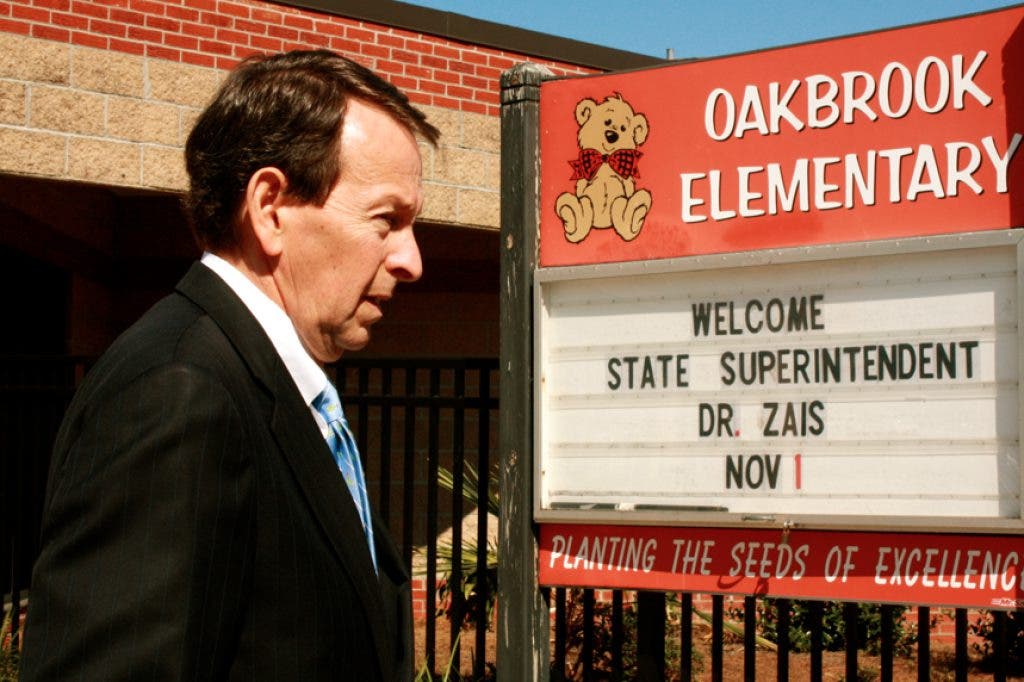
LADSON — While touring Tuesday, S.C. State Superintendent of Education Mick Zais said 38 percent of the state's students are "functionally illiterate."
That's according to the National Assessment of Education Progress, which handed out its report card to the state Tuesday.
While South Carolina eighth-graders improved their scores in reading and mathematics, fourth-graders’ performance in reading declined but improved in mathematics on the 2011 National Assessment of Educational Progress.
Find out what's happening in Summervillefor free with the latest updates from Patch.
Ranked by scale score in comparison the other 49 states, South Carolina is 39th for fourth-grade reading (no change from 2009), 38th in eighth-grade reading (improvement of four spots from 2009), 37th in fourth-grade mathematics (improvement of one spot from 2009), and 34th in eighth-grade mathematics (decline of one spot from 2009).
"The Nation’s Report Card provides an apples-to-apples comparison between states measured over time. South Carolina is still behind most states in the foundational subjects of reading and mathematics," Zais said in a statement.
Find out what's happening in Summervillefor free with the latest updates from Patch.
Zais pinpointed "one-size-fits-all" models of education failing students.
"It's time to transform the system to provide a personalized and customized education for every student where mastery of reading and mathematics is the focus," Zais said.
He called the poor fourth-grade reading data "especially troubling."
"In kindergarten through third grade, we learn to read. And in fourth grade through 12th, we read to learn," Zais said Tuesday at Oakbrook. "But sadly … (the test) determined that 38 percent of students in South Carolina enter fourth grade functionally illiterate. And it should not surprise us that the students that drop out five, six or seven years later are those same students."
He said schools, like Oakbrook Elementary, that focus on innovative reading programs will be the solution to the problem.
"It's really personalized, individualized, customized instruction for each student, and I think it's producing some pretty good results for Oakbrook," Zais said.
To break out of the "one-size-fits-all" problem Zais pinpointed, the superintendent said funding needs to move from the federal Department of Education and into the state and local coffers.
"I'm working to empower the local officials to make the decisions to fit their schools," Zais said. "The federal Department of Education is far too intrusive, tries to micromanage our schools, and if they'd just give us the dollars I think we could figure out how to use them more effectively."
In reading, South Carolina’s fourth-graders had an average score of 215 in 2011, a decline of one point from 2009. The nation’s average score was 220 in 2011. South Carolina’s eighth-graders had average score 260, an increase of three points from 2009, while the national average score increased by two points to 264.
In mathematics, South Carolina’s fourth-graders had an average score of 237, an increase of one point, and the national average was 240. Eighth-graders’ mathematics scores increased one point to an average score of 281, and the national average was 283.
Regarding achievement gaps in the state, results were mixed. For the first time on the NAEP assessment, South Carolina female students outperform South Carolina male students in each assessment.
Other achievement gap findings:
- Fourth-grade reading: the gap between white and black students increased by one point; the gap between white and Hispanic students decreased by three points; the gap between full pay and free/reduced lunch students increased by four points; and the gap between males and females increased by four points.
- Fourth-grade mathematics: the gap between white and black students increased by three points; the gap between white and Hispanic students increased by one point; the gap between full pay and free/reduced lunch students increased by two points; and the gap between males and females increased by two points.
- Eighth-grade reading: the gap between white and black students decreased by one point; the gap between white and Hispanic students increased by four points; the gap between full pay and free/reduced lunch students decreased by two points; and the gap between males and females decreased by three points.
- Eighth-grade mathematics: the gap between white and black students did not change; the gap between white and Hispanic students decreased by four points; the gap between full pay and free/reduced lunch students increased by one point; and the gap between males and females increased by three points.
Get more local news delivered straight to your inbox. Sign up for free Patch newsletters and alerts.