Politics & Government
Zais Talks Education Policy
S.C. Superintendent of Education Mick Zais said more money, smaller class sizes don't work.

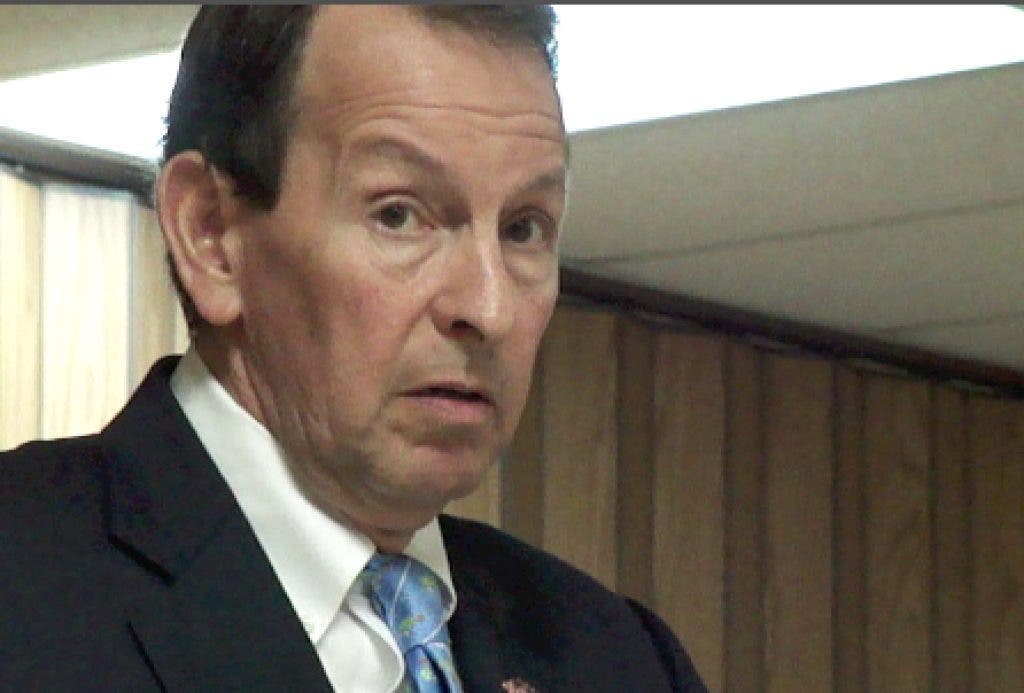
One year into his first term, S.C. Superintendent of Education Mick Zais is causing a rattle in the state's ailing education system, even among his Republican colleagues.
Out numbered on the State Board of Education by mostly GOP delegates from each of the 16 legislative districts, Zais has ideas to transform — not reform — the state.
"We take a lot of votes and we lose about all of them," Zais said, referring to two other conservative members of the board.
Find out what's happening in Summervillefor free with the latest updates from Patch.
The superintendent visited the Lowcountry on Tuesday, making stops at schools and culminating the trip by speaking at a LowCountry 9.12 meeting in Summerville.
Zais gave an outline of his plans for education, which includes passing a bill that would create pay-for-performance for teachers.
Find out what's happening in Summervillefor free with the latest updates from Patch.
"There's not much that's more important (than education). Some of the maladies we see in our society today are a product of the education system we have ongoing," Zais said.
Zais was joined by State Board member Larry Kobrovsky at the conservative group's meeting at . Kobrovsky represents Charleston and Berkeley counties on the board.
"It's awfully lonely up there," Kobrovsky said. "You wouldn't think that because this is a Republican state."
But as Zais said, education is a "bipartisan issue," and who wouldn't want to spend more money for the children?
"A lot of people have solution for education, and traditional solutions for improving education — more money, smaller classes, improved curriculum and better facilities — will not work," Zaid said. "The perspective on funding that I bring to education is this: given the dollars available how do we maximize student learning? The advantage of this perspective is that it focuses on outcomes of learning, not inputs — spending, facilities, curriculum. This perspective invites opportunities for innovation and it also limits the taxpayer's liability."
Kobrovsky called the liberal fiscal education policies among Republicans in the state "mind-boggling." Both Zais and Kobrovsky keyed in on the phrase "it's for the good of the children" when funding education.
"If it's good for the children, the taxpayers ought to pay for it, and by that logic you'd have a Golds Gym and an olympic pool at every school because it's good for the kids," Zais said.
Watch the state board of education's meeting at 1 p.m. Nov. 10 via a live video feed.
According to the superintendent, who likened education to a medical or law practice, "accountability, competition and incentive have the power to transform education."
On Tuesday, the results of the National Assessment of Education Progress were released — pinpointing the state's problem with reading on the fourth grade level. .
Zais zeroed in on reading as being key to education and employment in the state.
"We have a big problem in South Carolina with the large number of students who fail to graduate from high school with little prospects of employment, and certainly no prospects for being economically independent and caring for a family, much less themselves. And the key to employment and success in school is the ability to read," Zais said. "Well-meaning people, well-intentioned, believe that every child should have 45 minutes of P.E. and 45 minutes of music and 45 minutes of art … but if you can't read, it doesn't matter. They're aren't many semi-literate people in the art museum, the symphony orchestra or the live theater. You've got to read first."
Zais offered his solutions to help fix the state's educational status: individualizing and customizing education, parent and local empowerment, and paying for performance for teachers.
"While every child is special, every child is different," Zais said. "They differ in ability — let me say that again: they differ in ability — in motivation, the rates at which they mature, their interest, their skill set, their personality, their home environment.
"Despite these enormous differences, we have a system that puts them all in the same classroom. It's a system based on mass production and standardization."
According to Zais, the college-preparatory curriculum standardized in high schools since the late 1800s no longer works for a society that now has a majority of children educated through the high school level. He said that parents should be able to choose from a "menu of options" to find a school that fits their needs, whether it's public, private, magnet, charter or home schooling, and whether it's vocational-minded or college preparatory.
"What I'm suggesting is flexibility," Zais said, adding that it should be an option for a student to take public speaking or business writing instead of a British literature class, or consumer math instead of pre-calculus.
Watch the video attached to this story to hear what Zais had to say about the International Baccalaureate program in public schools.
Also bucking standardization from the national level, Zais will request a waiver from participation in the No Child Left Behind assessments next year. His chief complaint is the demoralizing assessments that will fail a school based on one missed mark.
Giving parents the ability to choose schools and programs, and then empowering the state and local school districts to tailor instruction, rather than the federal government, will help fix educational woes, according to Zais.
"I'm trying to disassemble policy, not make more, so we can have more local control," he said.
After home environment, Zais said, teachers are the most important key to success for students.
"The most powerful and cost effective way of improving education is to get excellent teachers in every classroom," Zais said. "Unfortunately our compensation system ignores their effectiveness and rewards them on things that have no relationship on their competence."
Those rewards include seniority after five years, certifications and masters or doctorate degrees, which don't determine effective teaching, according to Zais.
Part of his focus on teachers includes his Teacher Protection Act, which he again tied back to empowering local leaders like district superintendents and school principals.
"Teachers need the ability to maintain discipline in a classroom and award grades in accordance with the performance of their students," Zais said.
But all these policy ideas face an uphill battle, not only on the State Board of Education, but also among state legislators.
"I'm not the only guy who establishes policy in South Carolina. I have a little insight for you: there's nobody in charge," Zais said, adding that between funding being developed in committees within both the House and the Senate, there is little control by a singular person over the fate of education.
Get more local news delivered straight to your inbox. Sign up for free Patch newsletters and alerts.