Health & Fitness
Hurricane Harvey Texas: Evacuees Now Face Gas Leaks, Mold
Inhaling airborne mold spores can cause coughing, wheezing and asthma attacks.

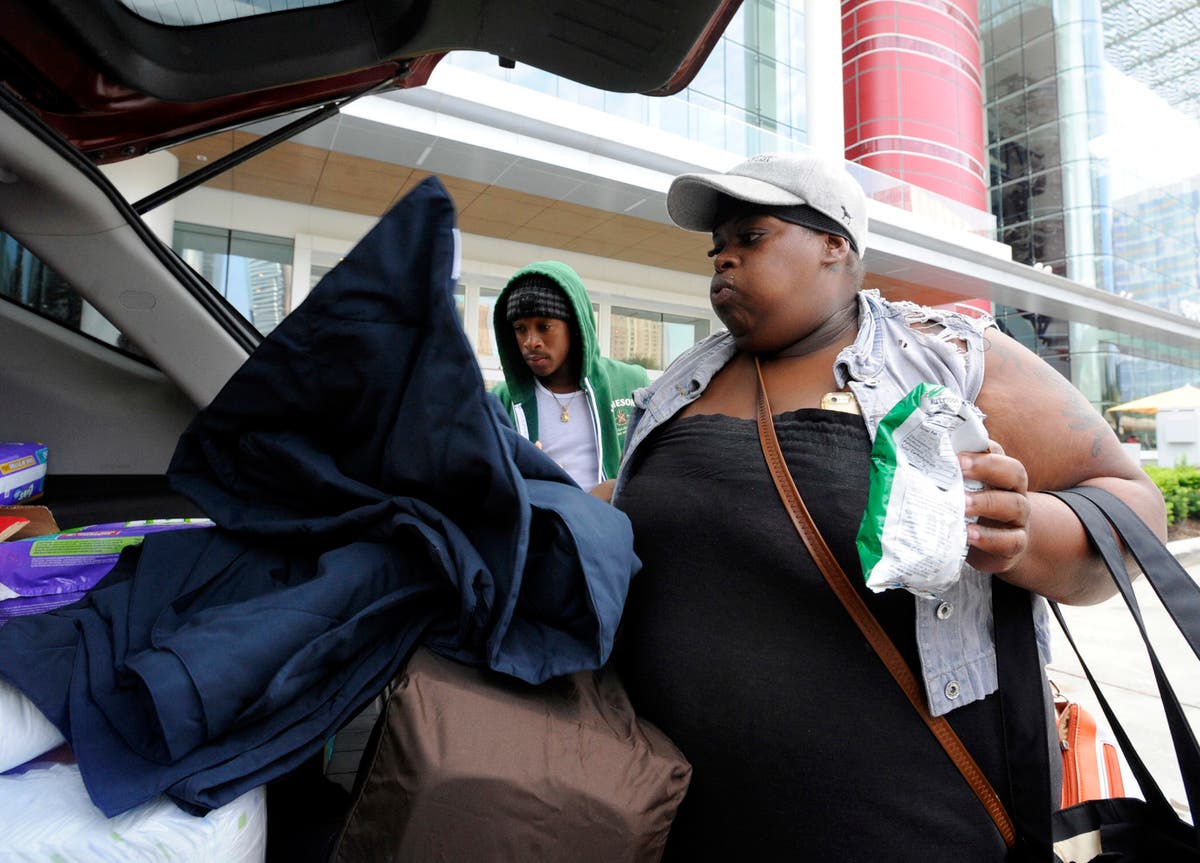
HOUSTON, TX — Lakeithia Bankhead and her four kids spent five nights sleeping on cots in Houston's mass shelter at the city's convention center. On Friday, they finally left and headed back to their Harvey-soaked home east of Houston, stuffing a family member's SUV with trash bags full of donated clothes, food and a baby bed.
But Bankhead, 38, felt she wasn't prepared to face the looming health hazards, including mold, spoiled food, gas leaks and downed power lines. She'll need to rip out the drenched carpet in her rental home, but she doesn't know what to do about other potential problems. Breathing in mold can lead to respiratory problems.
The danger isn't over yet for Harvey evacuees who are returning to flood-ravaged homes and dragging sodden debris to the curbside. Sharing advice on recommended mold-cleaning strategies and other safety tips is now one of the biggest challenges for public health officials in Harvey's aftermath. (For more information on Harvey evacuees returning home and other Texas stories, subscribe to Patch to receive daily newsletters and breaking news alerts. If you have an iPhone, click here to get the free Patch iPhone app.)
Find out what's happening in Across Texasfor free with the latest updates from Patch.
While some who escaped the flooding lost internet access when they abandoned or lost mobile devices, many others held onto their phones. Public health officials hope to reach evacuees through Twitter, Facebook and Instagram with safety messages, and hope those who see the tips posted online will spread the word to others.
Avoiding health threats during flood cleanup requires forethought. Here are some health precautions:
Find out what's happening in Across Texasfor free with the latest updates from Patch.
MOLD
Mildew and mold can start growing in a home a day or two after flooding. It will keep growing unless it's removed. Inhaling airborne mold spores can cause coughing, wheezing and asthma attacks. People with chronic conditions can develop dangerous infections in their lungs.
Dry out a damaged home as soon as possible. When it's safe to use electricity, turn on a fan in a window to vent air to the outdoors.
Hard surfaces can be cleaned with soap and water, and then disinfected with a bleach solution — roughly one cup of bleach to one gallon of water.
"We're posting tips like don't mix bleach and ammonia" to clean up mold because the two cleaning supplies together produce toxic fumes, said U.S. Health and Human Services Department spokeswoman Joni Geels.
But dry wall, insulation, carpeting, bedding and anything porous including books must be destroyed.
"That little spot of mold can grow in the home especially in the heat of the South," said Dr. Parham Jaberi of the Louisiana Department of Health.
If mold covers more than 100 square feet, a trained mold remover is recommended, he said.
DEADLY FUMES AND LEAKS
Before entering a flood-damaged home, check for loose power lines or gas leaks. At least one person died in Harvey's aftermath when he stepped on a live electrical wire in ankle-deep water.
Carbon monoxide fumes are a threat as people return to homes without electricity and hook up generators, said Renee Funk of the Centers for Disease Control and Prevention.
"Any sort of roof over a generator is actually a problem," Funk said. "When people go in and out to refill the generator they can be overcome."
If a structure, like a garage or shed, is attached to the house, the house can fill with fumes.
Charcoal grills and camp stoves used indoors also can produce carbon monoxide.
INJURIES AND TETANUS
The Texas Department of State Health Services is urging people with puncture wounds or cuts exposed to floodwaters to get a tetanus shot if they haven't had one within the last 10 years.
Sagging ceilings, slippery floors and other structural problems can cause injuries. Exhaustion can contribute to accidents. Children should not take part in disaster cleanup work.
FOOD SAFETY
Food that may have come into contact with floodwaters is unsafe to eat. Cardboard containers for juice, milk or baby formula should be discarded because they can't be sanitized. Throw out any food in damaged cans.
Harvey knocked out municipal water service in some areas. Boil water or use bottled water for drinking if water comes from a well or if officials have issued warnings.
By JAY REEVES and CARLA K. JOHNSON, Associated Press
AP Medical Writer Carla K. Johnson reported from Chicago.
Photo credit: Jay Reeves/Associated Press