Health & Fitness
Why Do Texans Have Bad Oral Hygiene? WalletHub Explains
Texas ranked low among U.S. states for oral hygiene and dental health. WalletHub's latest study can help us understand why.


You might want to think twice before you cancel that next dentist appointment. Most people consider oral health an important part of overall hygiene, but a study from WalletHub suggests Texas is falling short in keeping those pearly whites, well, pearly.
The study, which looked at 25 factors that affect dental wellness, and therefore overall health, dubbed Texas the tenth-worst state in the U.S. for oral hygiene. The categories studied included dental treatment costs, the number of teens who visited a dentist in the past year and the share of adults who express low life satisfaction due to an oral condition.
What the WalletHub researchers found is that Texas landed at the No. 42 spot in the overall rankings, with an "oral care" rank of 47 and and "dental care & habits" rank of 27.
Find out what's happening in Across Texasfor free with the latest updates from Patch.
While unexpected based on the data, Texas actually appeared among the top five states for affordable dental care. The Lone Star State meanwhile locked down the lowest possible spot for number of adults who are unhappy with life because of an oral condition.
Why did Texas land so low on the list? It's hard to say for sure, but a breakdown of Texas-specific data from WalletHub states that only 59.5 percent of adults in Texas paid a regular visit to a dentist in the last year. Moreover, 61 percent of Texans went to the dentist less often than recommended due to the costs of dental care.
Find out what's happening in Across Texasfor free with the latest updates from Patch.
Meanwhile, 15.5 percent of Texans live in areas with shortages of dental health professionals and 14 percent of Texans smoke cigarettes.
There's hope to be found, however, in water fluoridation. Across the state, an estimated 79 percent of people receive fluoride-treated water, which is said to help improve dental health and avoid cavities and decay. One professional told WalletHub that for every $5 spent on fluoride treatment, $32 is saved in cavity repair. Improved access to fluoridated water will almost certainly aid Texans' dental needs.
Dental care, thankfully, isn't complicated, and preventative measures like brushing and flossing are cheap and effective. But some even simpler steps can be taken to stop serious dental health problems dead in their tracks. One expert told WalletHub that something as simple as drinking water immediately after consuming sugary or acidic foods or drinks can spare people expensive trips to the dentist and costly repair work.
The most effective element in the fight against dental decay is twice-daily brushing with a fluoride toothpaste and at least once-daily flossing.
Hear from dental health experts and view the complete study and methodology on WalletHub.
Here's a look at dental health across the U.S.:
Data was collected form the U.S. Census Bureau, Bureau of Labor Statistics, the CDC, Healthy Grid, American Dental Association, Health Resources & Services Administration, United Health Foundation, Kaiser Family Foundation, American Academy of Pediatric Dentistry and Oral Health America.
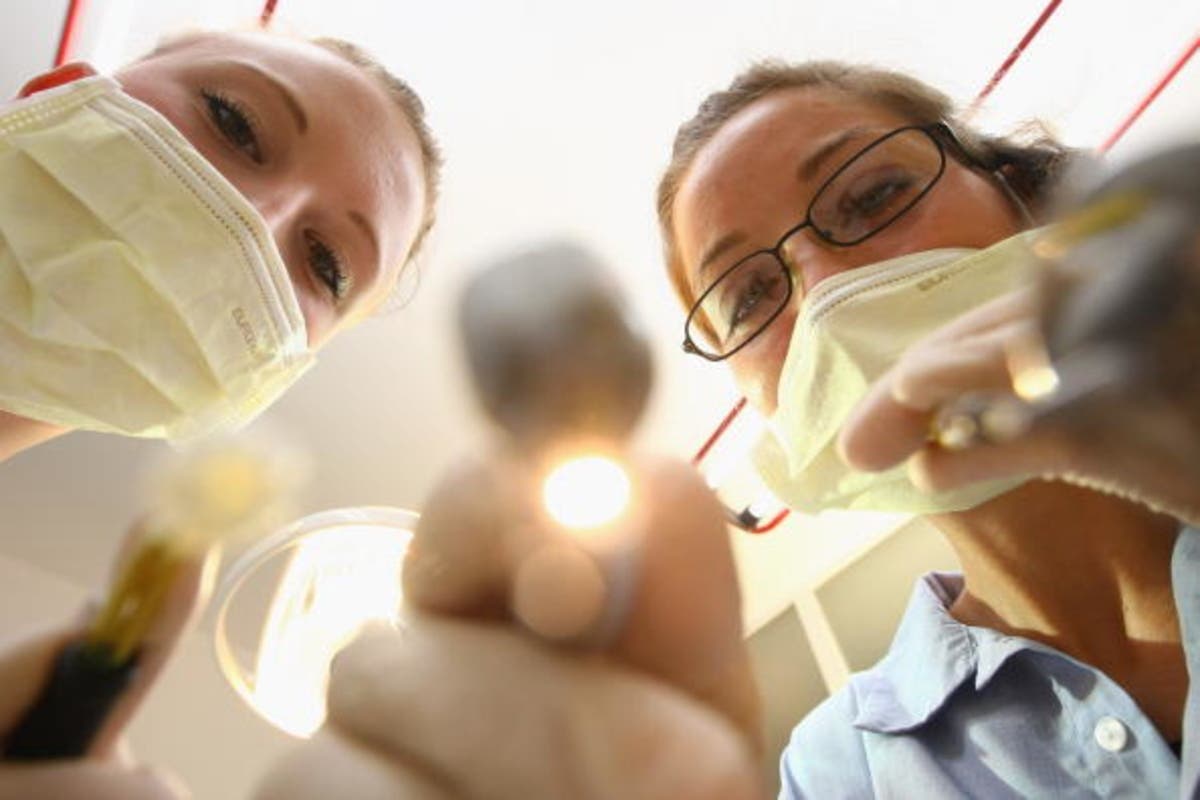
Getty Images file photo: A dentist and her assistant prepare to clean a patient's teeth in this photo illustration at a dentist's office on October 12, 2009 in Berlin, Germany.. (Photo Illustration by Sean Gallup/Getty Images)
Get more local news delivered straight to your inbox. Sign up for free Patch newsletters and alerts.