Community Corner
New Data On Health, Diversity Of Arlington's Urban Forest
New data is helping the City of Arlington, which has nearly 100 parks, better understand the diversity of its urban forest.

By Susan Schrock, Office of Communication
Posted on Friday, February 07, 2020
Find out what's happening in Arlingtonfor free with the latest updates from Patch.
New data is helping the City of Arlington, which has nearly 100 parks, better understand the diversity of its urban forest and the potential risk from insect and disease threats to our native shade trees.
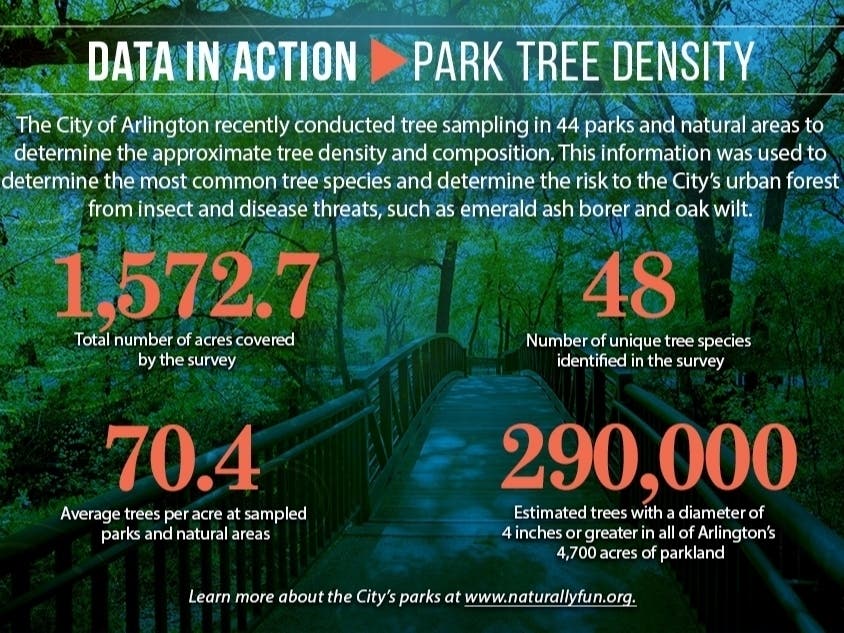
Last summer, the City conducted tree sampling in 44 of the 99 parks to determine and analyze tree density and the composition. The research found that 95 percent of the estimated 110,740 trees in the sampled parks were native trees, and that the three most common trees are sugarberry, post oak and cedar elm. This and other data gathered in the study will help guide the City in future tree planting decisions and has led to the creation of an interactive map that allows the public to view tree data by individual park.
Find out what's happening in Arlingtonfor free with the latest updates from Patch.
Click here to read more about Arlington park trees or to view the interactive Tree Finder Map.
Overall, 48 unique tree species were identified throughout the 44 park sites included in the study. Of those, 30 species are considered shade tree species that are highly beneficial in providing heat island reduction, air pollution removal, and stormwater runoff control. Some of the most common are American elm, live oak, eastern redcedar, boxelder, pecan, osage orange, mesquite, and Shumard oak.
Additionally, the research found limited risk in the City’s parks from known insect and disease threats, including emerald ash borer and oak wilt.

This press release was produced by the City of Arlington. The views expressed here are the author’s own.