Business & Tech
Cedar Park Rocket Company To Blast Satellites In 'Suicide' Missions
Firefly Space Systems was awarded the contract to develop a launcher for small satellites.


Take what you think you know about satellites and throw it out the window.
A Cedar Park space startup, Firefly Space Systems, just won a $5.5 million launch contract to develop a rocket that could launch up to 15 to 30 satellites at once.
That must be a huge rocket, right? Wrong.
Find out what's happening in Cedar Park-Leanderfor free with the latest updates from Patch.
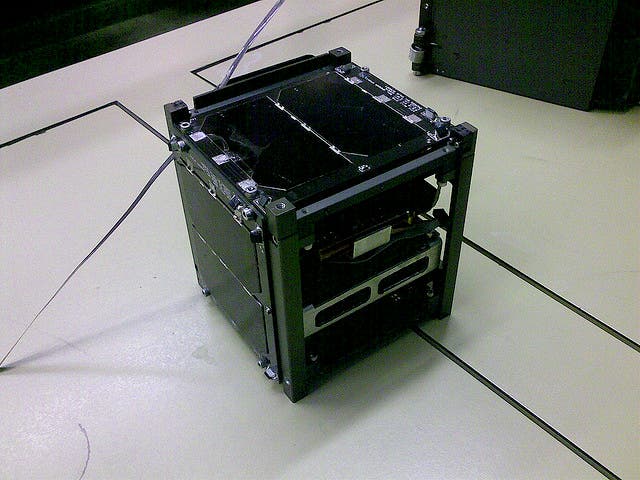
The rocket is launching satellites that can fit in the palm of your hand.
Cedar Park’s Firefly Space Systems is becoming a key contributor into what NASA calls the CubeSat launch initiative. CubeSats are miniature satellites, at times as small as a four-inch cube, that are much less expensive than traditional satellites, according to a NASA press release.
Find out what's happening in Cedar Park-Leanderfor free with the latest updates from Patch.
- Want more Cedar Park and Leander news? Click here for our daily newsletter and news alerts.
These CubeSats can be used for test-runs and gather data that would help prepare launches for larger satellites that can be ten times more expensive to make. Due to their small size, CubeSats can be fitted onto larger spacecraft, and used for ”suicide” missions. Basically, they get shot out into areas too dangerous for a larger ship, and they don’t come back.
“Emerging small launch vehicles have great potential to expand the use of small satellites as integral components of NASA’s Earth science orbital portfolio,” said Michael Freilich, director of NASA’s Earth Science Division, in the press release. “Today’s CubeSat technology fosters hands-on engineering and flight research training; with the addition of reliable, affordable, and dedicated access to space on small launchers.”
The contract Firefly won is called a Venture Class Launch Services contract, and demonstration CubeSat launches could occur as soon as 2017. The first phase of launches is expected to be complete in 2018.
The reason why Firefly won this contract: The Firefly Alpha.
Besides looking really cool — the rocket can support a payload of up to 880 pounds, giving it the ability to launch several smaller satellites at the same time.
“Being recognized by NASA with a Venture Class Launch Services contract is a tremendous honor for the Firefly team,” Thomas Markusic, Firefly’s chief executive officer, told NASA. “We have worked tirelessly during the last 18 months to develop Firefly Alpha, a vehicle that will be different from anything that has come before it. NASA’s vote of confidence in our technology and team is a significant boost to our efforts of making space for everyone.”
[Photo courtesy of Waifer X]
Get more local news delivered straight to your inbox. Sign up for free Patch newsletters and alerts.