Politics & Government
How Raise The Wage Act Helps Dallas' Congressional Districts
A new interactive map shows how many workers would benefit from raising the federal minimum wage.

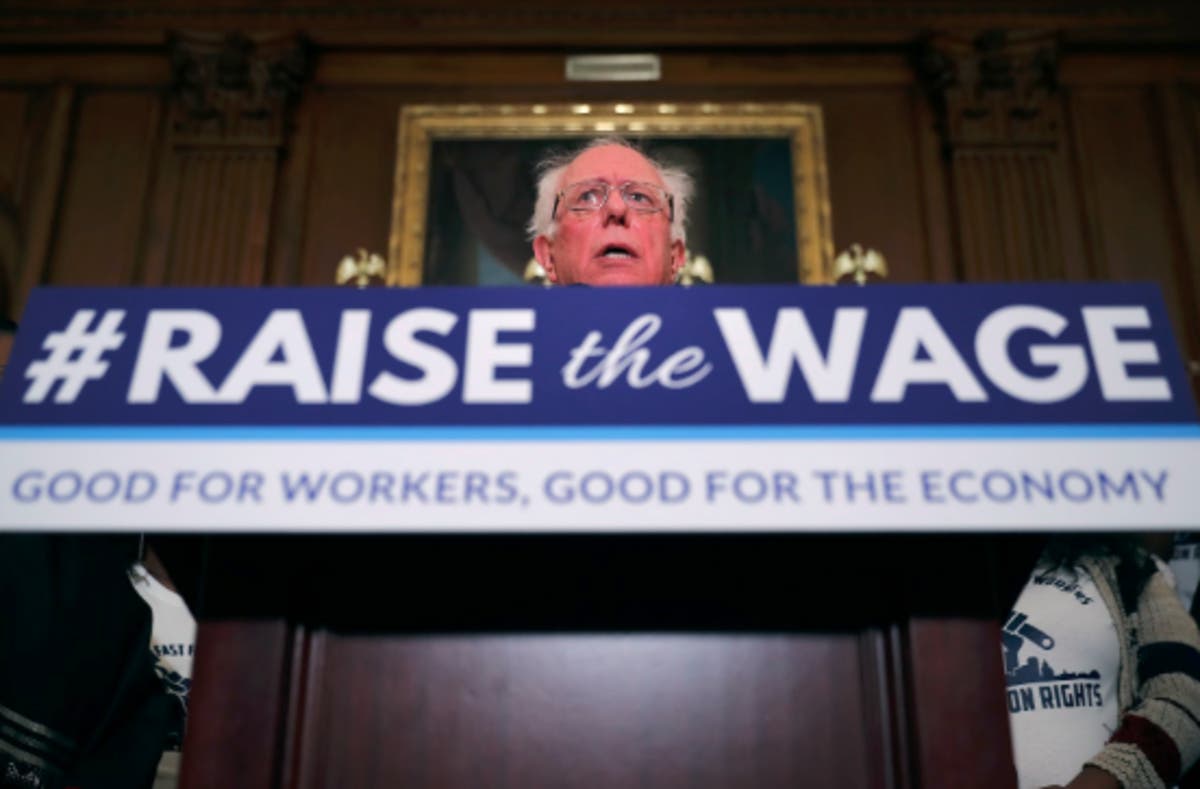
A new interactive map shows how workers around Dallas-Fort Worth would see a pay bump if federal lawmakers pass the “Raise the Wage Act of 2019.” The map, released Wednesday by the Economic Policy Institute, a liberal-leaning think tank, shows that a significant percent of workers would be impacted by legislation that would raise the federal minimum wage to $15 an hour by 2024 for nearly 40 million workers.
The map also breaks down the share of workers who would benefit by age, gender and race. Here’s what would happen in:
5th Congressional District:
Find out what's happening in Dallasfor free with the latest updates from Patch.
- Total wage increases for all affected workers (thousands, 2018 dollars): $514,129
- Change in average annual earnings among all year-round affected workers (2018 dollars): $3,900
- Percent change in average yearly earnings among all year-round affected workers: 18 percent
24th Congressional District:
- Total wage increases for all affected workers (thousands, 2018 dollars): $456,978
- Change in average annual earnings among all year-round affected workers (2018 dollars): $3,900
- Percent change in average yearly earnings among all year-round affected workers: 17.7 percent
30th Congressional District:
Find out what's happening in Dallasfor free with the latest updates from Patch.
- Total wage increases for all affected workers (thousands, 2018 dollars): $580,044
- Change in average annual earnings among all year-round affected workers (2018 dollars): $4,000
- Percent change in average yearly earnings among all year-round affected workers: 18.2 percent
32nd Congressional District:
- Total wage increases for all affected workers (thousands, 2018 dollars): $465,231
- Change in average annual earnings among all year-round affected workers (2018 dollars): $3,800
- Percent change in average yearly earnings among all year-round affected workers: 17.7 percent
33rd Congressional District:
- Total wage increases for all affected workers (thousands, 2018 dollars): $758,418
- Change in average annual earnings among all year-round affected workers (2018 dollars): $4,000
- Percent change in average yearly earnings among all year-round affected workers: 18 percent
David Cooper, senior economic analyst at the think tank, said in a release that the map gives shows a “detailed picture” of where congressional action can “help the most people.”
“Lawmakers have let the federal minimum wage erode to the point where today’s low-wage workers earn significantly less than their counterparts did 50 years ago,” he said.
The federal minimum wage was established in 1938 as part of the Fair Labor Standards Act. The goal of the legislation was to ensure workers were fairly compensated and that regular employment would lead to a “decent quality of life,” according to the EPI. Lawmakers in Congress thus periodically have to increase the wage so that workers in the lowest-paying jobs can still make ends meet and share in the rewards when the economy sees improved productivity, wages and quality of life.
But that hasn’t happened since the 1960s. While inflation has continued to climb, the minimum wage has stagnated, leaving low-wage workers with less buying power. The federal minimum wage in 2018 was $7.25 — that’s 14.8 percent less than when it was last raised in 2009 after adjusting for inflation, the EPI wrote. Even more distressing — it was 28.6 percent below its peak value in 1968. That means low-wage workers now have to work more hours just to attain the bare-minimum standard of living from a half-century ago.
“Since the 1960s, the United States has achieved tremendous improvements in labor productivity that could have allowed workers at all pay levels to enjoy a significantly improved quality of life,” the EPI wrote. “Instead, because of policymakers’ failure to preserve this basic labor standard, a parent who is the sole breadwinner for her family and who is earning the minimum wage today does not earn enough through full-time work to bring her family above the federal poverty line."
The rising wage floor would generate $118 billion in additional wages, said EPI economist Ben Zipperer. That would be much needed shot in the arm that would benefit low-wage workers, their families and their communities, he added.
“Workers all across the country will soon need $15 in order achieve a modest but adequate standard of living for their families,” said Zipperer.
Patch national staffer Dan Hampton contributed to this report.
Get more local news delivered straight to your inbox. Sign up for free Patch newsletters and alerts.