Community Corner
Austin Central Library Among 'World's Greatest Places'
There were plenty of ooohs and aaahs from members of the public attending the October grand opening. Now, that awe is official.


AUSTIN, TEXAS — When the main branch of the Austin Public Library opened in October, there were plenty of ooohs and aaahs from members of the public attending the grand opening. Ten months later, accolades for the structure — all six floors, rooftop garden, and nearly 400,000 books of it — have reached new heights after being named among the "World's Greatest Places," according to Time magazine.
Replacing the old, outdated space off Guadalupe Street across from the University of Texas at Austin campus, the new Central Library at 710 W. Cesar Chavez St. at West Avenue is indeed awe-inspiring. In its nascent life, it's already been singled out before the Time honor, tapped this summer as one of five finalists for the 2018 Public Library of the Year.
In that prior honor, Austin's book repository was the sole U.S. library to make the finalists' cut joining Villa-Lobos Park Library in Sao Paulo, Brazil; KopGroep Bibliotheken in Den Helder, Netherlands; Deichman Biblo Toyen in Olso, Norway; and Tampines Public Library in Singapore.
Find out what's happening in Austinfor free with the latest updates from Patch.
Austin Central Library has been selected as one of TIME Magazine's 2018 World's Greatest Places: https://t.co/QyymLVIao4. pic.twitter.com/nJlGIa9vZP
— AustinPublicLibrary (@AustinPublicLib) August 23, 2018
In determining its list of the world's greatest places, magazine officials culled from more than 1,200 editor and expert nominations from around the world. To be considered, the chosen destinations had to be groundbreaking in their nature, leading industry trends and offering visitors an extraordinary experience.
Solicited nominations ran the gamut across a variety of categories – museums, parks, restaurants and hotels among them – and based each one on various key factors: Quality, originality, innovation, sustainability and influence.
Find out what's happening in Austinfor free with the latest updates from Patch.
A portal to knowledge via its hundreds of thousands of volumes, the 198,000-square-foot library imparts such wisdom not just via the traditional tactile experience gained from reading books but through cutting-edge technology, extensive print and digital collections and dynamic and enriching programming for the community it serves. The building was designed to adapt to new technology and the needs of future generations, library officials wrote on the website. It incorporates flexible and blended spaces that focus on the electronic delivery of information, officials added.
The crown jewel of the library system was designed by renowned regional architecture firm Lake|Flato along with national design firm Shepley Bulfinch. The project anchors the Seaholm EcoDistrict, ensuring sustainability commitments made by the city prior to its construction in reclaiming 40,000 square feet of the former brownfield site and converting it to the prominent community gathering space it represents.
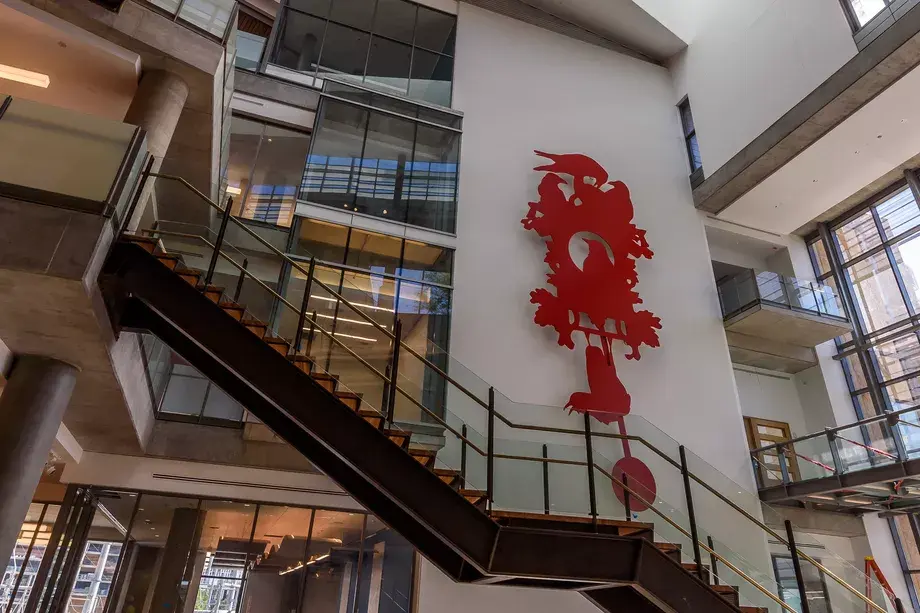
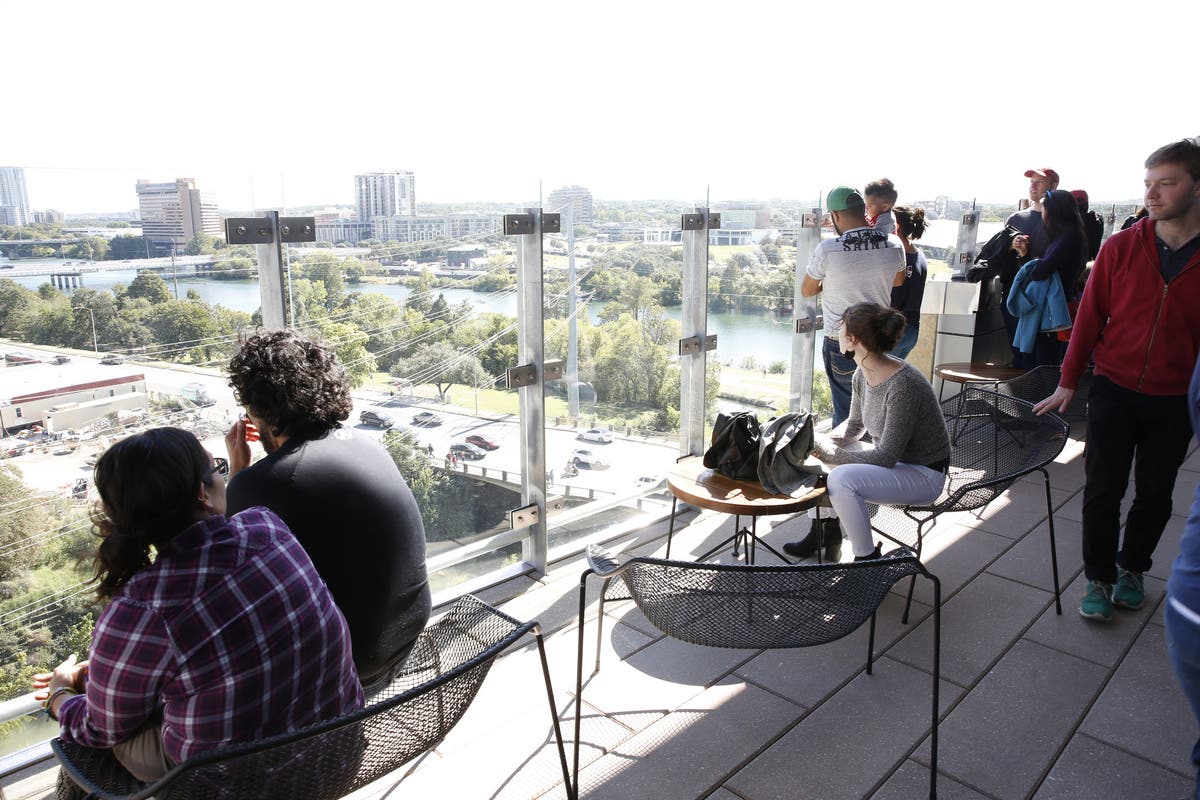
A view from inside the Central Library, via Austin Public Library
"Cozy areas for reading and shared learning rooms that can be used for classes and workshops, as well as expansive areas for community gatherings and events, have been incorporated into the design," officials described. "Customers can read the latest bestseller or get some work done on their laptops while enjoying the fresh air and breathtaking view from the reading porches overlooking Shoal Creek and Lady Bird Lake."
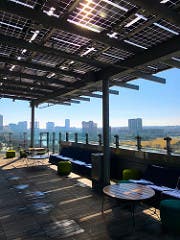
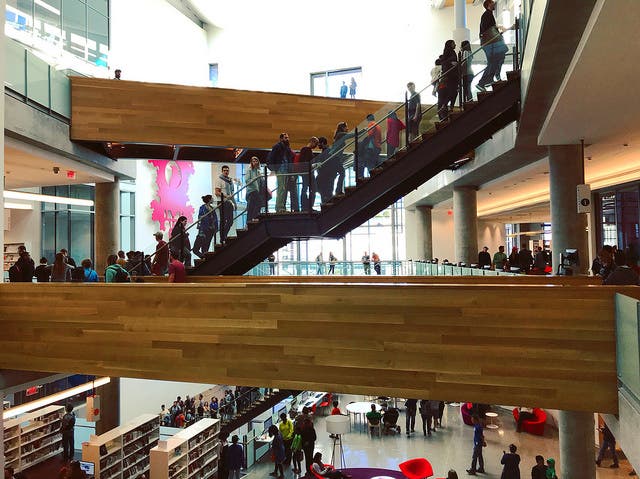
Clearly, this is not your grandfather's library. Among the collections of volumes, there's a sunlight-suffused atrium, reading porches overlooking the Lady Bird Lake and Shoal Creek and event a cookbook-themed coffee shop. The design is in the "Central Texas modernism" style that has earned Lake|Flato considerable praise and recognition.
Yet the site has earned rave reviews not just for the aesthetics of its architecture, but its environmentally conscious design as well. Last month, the Central Library was awarded LEED® Platinum status under the most widely used green building rating system in the world. The LEED rating system, developed by the U.S. Green Building Council (USGBC), is the foremost program for buildings, homes and communities that are designed, constructed, maintained and operated for improved environmental and human health performance.
Any level of LEED status is tough to achieve given the rigors of its requirements, much more so the Platinum designation that's the highest level of recognition awarded secured through a score of 80 or better on the LEED 110 point rating system. Library officials said sustainability has been one of the guiding design principles since the inception of Austin's Central Library, with the goal of achieving a LEED designation.
In securing the highest LEED imprimatur, the Central Library is the first City of Austin building to achieve the prestigious Platinum designation. While Austin boasts 274 LEED-certified structures, only six commercial buildings have received the highest level Platinum designation.
"During the preliminary design phase, all of the project participants - City of Austin staff, consultant architects and engineers and the construction contractors - committed to creating the greenest, most sustainable central library for our community that could be achieved," John Gillum, Facilities Process Manager, Austin Public Library, said at the time the designation achievement was announced. "Austin's New Central Library being certified as a Platinum LEED building is a testimony to the tireless efforts of the entire project team to be environmentally responsible, use resources efficiently, and provide the citizens of Austin with the best building to house their central library that was within our capacity to design and construct."
The Central Library achieved LEED Platinum certification for implementing practical and measurable strategies and solutions aimed at achieving high performance in sustainable site development, water efficiency, energy efficiency, materials and resources use, indoor environmental quality, and innovation in design. Top scores form the Library's scorecard include:
- Development Density and Community Connectivity.
- Access to Alternative Transportation.
- Water Efficient Landscaping.
- Wastewater Technologies.
- Water Use Reduction.
- Green Power.
- Construction Waste Management.
- Regional Materials.
- Recycled Content.
- Daylight and Views.
- Bicycle Network Storage.
See the full list of the World's Greatest Places by clicking here:
Get Patch's Daily Newsletters and Real Time Alerts
>>> Photos courtesy of Austin Public Library
Get more local news delivered straight to your inbox. Sign up for free Patch newsletters and alerts.