Community Corner
Austin Ranked No. 1 City In Which To Live According To National Survey
In its annual rankings, U.S. News & World Report took into account a variety of attributes in achieving its Top 100 list.


AUSTIN, TX — U.S. News & World Report has made official something those of us living in the "live music capital of the world" already held on faith was an indisputable fact: Austin is the best city in the U.S. in which to live.
Sorry, rest of Texas, but it's true. Or so says the reputable magazine's researchers, who examined the 100 most populous metro areas in the country to assign grades on various metric, including the job market and affordability. The various categories were given different weights and were combined to come up with the final ranking.
While Austin scored well on the various categories, affordability is not an attribute for which Austin is known. As scores of people descend on the city — throngs lured by the abundant high-tech jobs and laid-back lifestyle — property rates continue to go up year after year. Many longtime residents have been priced out as a result, forced to move to the city's outskirts where tax rates are lower.
Find out what's happening in Austinfor free with the latest updates from Patch.
Median home sales prices also are now well above average as a result of the influx, making affordability more elusive for many residents. Offsetting that upward trend, however, are the lack of personal or corporate income taxes coupled with low state and local tax rates, as researchers studying the market discovered in compiling the rankings.
In a prepared statement reacting to the city's strong showing, Mayor Steve Adler celebrated the results while acknowledging innate challenges of affordability and mobility referenced in the study. The same influx of residents has exacerbated traffic woes in Austin, making some stretches of its highway infrastructure among the nation's most congested.
Find out what's happening in Austinfor free with the latest updates from Patch.
"We celebrate what we’re doing right to be ranked first, recognizing it also highlights the accompanying affordability, equity, and mobility challenges that our city faces," Adler said Tuesday morning after the rankings were released. "Inherent in that ranking is the strength to manage growth so we can preserve Austin's special spirit.”
In a separate study released last week solely focused on traffic, Austin emerged as among the nation's most congested cities. According to the American Transportation Research Institute, the stretch of Interstate 35 running through town is ranked 28th overall in terms of traffic congestion nationwide — a dubious distinction to be sure, but far less in terms of bottlenecks than Dallas and Houston where its highway stretches made the Top 20 list with various road stretches there listed among the nation's busiest.
Among the favorable factors cited in the study is the average annual salary in Austin of $49,560 that compares favorably to the $51,939 national average (per U.S. Census data).
The publication's research in compiling the municipal rankings was exhaustive if not altogether accurate. Take our weather, for example: "Summers in Austin take some getting used to, with temperatures often reaching the mid-90s," researchers wrote. "The metro area experiences mild weather throughout the rest of the year, though temperatures have been known to drop into the 30s in the winter."
Try upper 90s in the summer. And don't get us started about winter weather, which is is incongruous to the characteristics one normally associates to the season. This week, for example, temperatures are expected to reach record highs for this time of year. According to the National Weather Service, the afternoon high on Tuesday — ironically the same day of the city rankings' release — is expected to reach 87 degrees.
That's two degrees above the record high set on this date in 2013. Bulletin: It's February, people. Officially, we're still in the season known as "winter." 87 degrees?!?! What is happening?
The research also errs in describing the influx of humanity descending upon Austin from elsewhere in the country and throughout the world: "About 50 people move to Austin every day, drawn to the Texas capital's music, outdoor spaces and cultural institutions."
That total is actually at least double that, and increasing each year. In 2014, Austin demographer Ryan Robinson calculated Austin sees 110 "net arrivals per day." By 2016, that number grew even more, to 157 per day. That's greater than 50 new arrivals per day.
Some of the historical facts also get a bit muddled in the reckoning, although that provenance doesn't figure into the overall rankings. But, still, it's worth clarifying. "Originally named 'Waterloo,' Austin remains rich in history, from the bronze statue of Stevie Ray Vaughan that greets visitors near the river, to the stately Capitol that anchors downtown, to the LBJ Presidential Library at the University of Texas at Austin," researchers detail.
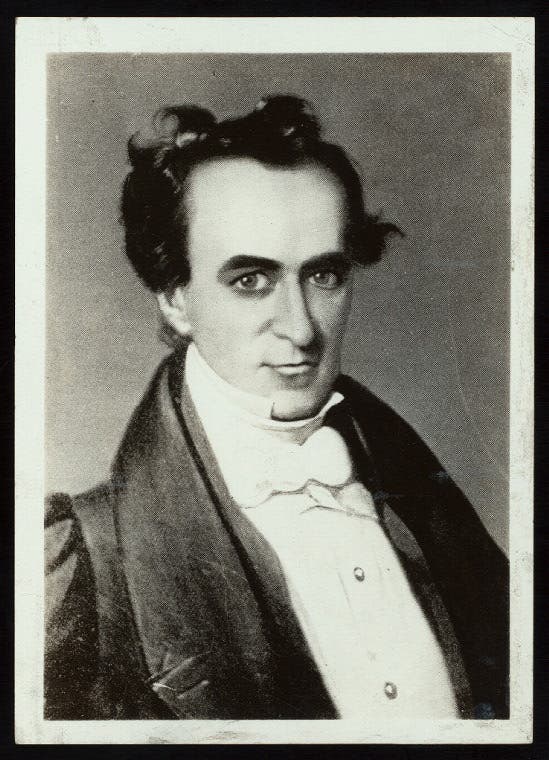
Well, not entirely. The site dubbed "Waterloo" was already in existence by the time it was purchased, but the area was promptly re-named in honor of Stephen F. Austin upon purchase of those original lots in 1839. So while it's true there was a community known as "Waterloo" at one point, the inference it was named that by city founders is not an accurate historical extrapolation.
"The site of Waterloo was purchased for the capital of the Republic of Texas in March 1839 and renamed in honor of Stephen F. Austin. On August 1, 1839," according to the Austin History Center. "The first city lots were sold at auction. The city was officially incorporated on December 27, 1839. The capital of Texas was named in honor of Stephen F. Austin at the site of the small community that was formerly known as Waterloo."
But this is another matter entirely. Back to the rankings.
Despite the aforementioned affordability hurdle, Austin still fared well enough in the reckoning to achieve an overall score of 7.8 out of a possible 10. Quality of life and a robust job market were among the metrics offering a counterbalance to the lack of overall affordability.
Austin achieved the No. 1 spot this year by vaulting over Denver, which was last year's top city according to the publication's calculations. In your face, Denver. Other Texas cities making the list include the Dallas-Fort Worth metroplex (ranked 15th overall); Houston (ranked 20th); San Antonio (23rd); El Paso (ranked 76th); and McAllen (94th).
If you're curious as to how other cities fared in the rankings and the key attributes of each municipality that figured in the calculation, below are the top ten places in which to live, according to U.S. News & World Report:
1. Austin, TX
2. Denver, CO
3. San Jose, CA
For those wanting to delve into further research, Adler provided a number of links:: "This morning U.S. News unveiled the 2017 Best Places to Live list which put Austin in the top spot, up one from last year. Here's a link to the press release and a link to the methodology. The full listings are here, and Austin's profile page is here."
That's very helpful, Mr. mayor. Thanks, and congrats on the ranking.
Image: Austin, Texas; via Ed Schipul, Flickr; used under Creative Commons
Get more local news delivered straight to your inbox. Sign up for free Patch newsletters and alerts.