Community Corner
Austin Woman Describes Dog's Death At Algae-Infested Lake
Crews have taken measures to prevent more canine deaths from toxic algae, but it all came too late for beloved pet dog 'Ollie.'


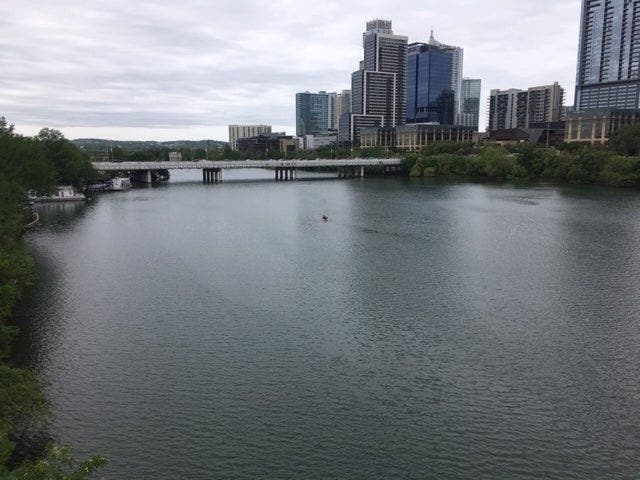
AUSTIN, TX — A third dog is believed to have died after swimming in algae-infested Lady Bird Lake, as city officials close a portion of the waterway most contaminated with deadly toxins released by the aquatic plant.
In a lengthy post on Facebook, Brittany Stanton in Austin wrote a tribute to her dog, Ollie, after the canine's death following a recent swim at the lake. City officials previously issued a warning to residents not to take their pets to the lake — a community focal point invariably packed by nature lovers each weekend — given the presence of a toxin released by a type of blue-green algae that is toxic to animals.
On Wednesday, city crews closed the Red Bud Isle portion of the popular lake — the watery ground zero of the algae scourge — as they continue tests to assess water quality. Reports indicate a third dog has died at the lake after the initial two canine deaths that prompted the municipal warning and closures.
Find out what's happening in Austinfor free with the latest updates from Patch.
Related story: Dogs' Deaths Led To Animal Ban At Lady Bird Lake In Austin
But those municipal actions came too late to save Ollie, whose owner now seeks to prevent other pet owners from experiencing loss and heartache. "I’ve been searching for inner strength to write," she conveyed in a long Facebook post. "Not only as a tribute to my sweet baby Ollie, but as a way to provide CRUCIAL information to the public. Information that would have changed my actions, if I only knew."
Find out what's happening in Austinfor free with the latest updates from Patch.
She recounted how she woke up excited about taking her golden retriever to the lake, a popular spot for kayakers, sightseers and those walking on trails along the expansive waterway's edges. "He swam for the first time last summer, and became instantly addicted," Stanton wrote.
But some 30 minutes after the swim, the dog's legs gave out while walking. Then, came the heavy panting. Finally, the dog collapsed altogether with a weak pulse and shallow breathing before it died. "I would have NEVER ever ever brought him if I knew that was a risk," Stanton wrote. "No signs are posted. No nothing in the news until now. I’m not from Austin and I don’t know if I would have learned this information any other way. It’s not fair and it’s not okay."
In her grief, she advised other pet owners: "Please educate yourself and keep your pets safe… and away from water until more information is released," she wrote before signing off with "I love you for all of time, baby Ollie. Love, your momma."
A Patch reader going by the handle of "J. Miles" reached out to Patch, wondering if another beloved pet met the same fate from the toxic algae in another nearby area last Saturday: "We lost our lab[rador] last Saturday in what the vet called a 'freak drowning' at the dog park at Auditorium Shores," Miles wrote. "The symptoms match the speed and cause of his death."
And another pet owner, Claire Saccardi, told Spectrum News of her dog's death after swimming at Lady Bird Lake last Thursday — the first time the two had visited the park. The woman told the news station her dog had been frolicking with dogs at the lake that afternoon before becoming ill about an hour later once they returned home. After the dog, Harper, lost use of her legs, Saccardi took the animal to an emergency veterinarian clinic where it died minutes after arrival, she told the station.
The way Stanton described her dog's death closely matches a description provided by John Faught, chief medical officer at Firehouse Animal Health Center that has five Austin-area locations including sites in Leander and Round Rock. In a telephone interview with Patch, Faught described the quick onset of illness among animals ingesting water suffused with a toxic neurotoxin released by blue-green algae at the lake. A less benign toxin release causes liver disease, but is eminently treatable.
Faught noted one can actually see the algaes' release, looking like a layer of green paint floating above the surface of the lake. He said pet owners' should heed city warnings until the water clears. Such algae typically blooms in late summer, he noted.
Get more local news delivered straight to your inbox. Sign up for free Patch newsletters and alerts.