Traffic & Transit
Here’s How Bad Austin Drivers Really Are
Allstate has released its annual 'best drivers' report. See how Austin fared, and try not to indulge in reading-article-online-rage.


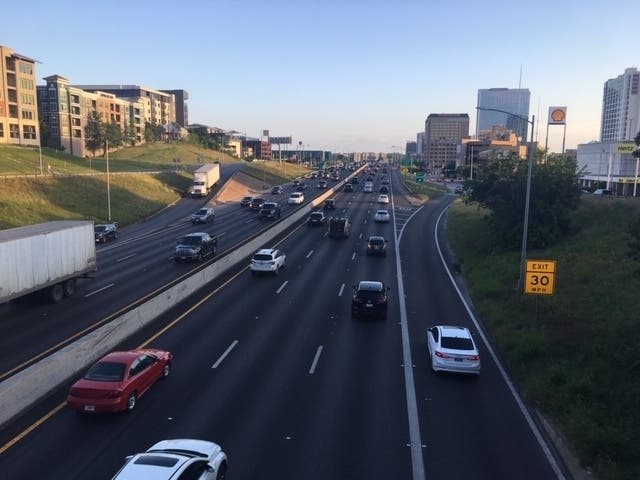
AUSTIN, TX — Prepare to be enraged maybe. Austin drivers are the 160th safest driving city in the U.S. out of the 200 largest cities in the U.S., meaning it's not great. That's according to Allstate's annual "best drivers" report released on Tuesday.
Those living in Austin are painfully aware of this distinction that is, with hope, more a function of traffic congestion in our ever-expanding city than driver neglect or rudeness. We hope it's the latter, anyway.
But we digress. To reiterate: Austin landed in the 160th ranking in terms of the "best" drivers, a position near the cellar portion of the compilation meaning that local drivers are not that great. Released on Tuesday ahead of the dangerous July 4 holiday, the list ranks cities based on crash frequency using the insurer's internal claims data.
Find out what's happening in Austinfor free with the latest updates from Patch.
Drivers in Austin landed just ahead of North Las Vegas and one notch below the North Texas city of Mesquite. Neighboring San Antonio didn't fare too well either, landing in the 138th slot among the 200 cities studied. Remember the Alamo? More like remember to drive carefully, right?
Another Texas town, Brownsville, took top honors as the nation's safest for the second year in a row. Things are considerably less hectic in the South Texas town of Brownsville, averaging about 15 years between insurance claims — better than 11-year average nationally.
Find out what's happening in Austinfor free with the latest updates from Patch.
Data on the number of hard-brakes for Brownsville drivers per 1,000 miles wasn’t available. The insurer said it found hard-braking correlates with crash frequency. Cities where drivers don’t hard-brake as often tend to see fewer property damage claims, according to analysts.
Two other border towns, Laredo and McAllen, fared well as the nation's fifth and ninth safest cities for driving, respectively, as outlined by Allstate.
Some measure of solace can be taken in seeing other Texas cities lower on the list than Austin. Take the North Texas city of Arlington, for example, coming in two notches below the capital city. Or consider Dallas, ranked as the 172nd safest driving city. Just outside of the Big D are the suburbs of Garland and Irving in the 175th and 180th slots, respectively.
At the other end of the driving spectrum, Baltimore, Maryland, drivers were named the least safe in the nation, with the average crash claim filed about every four years. Baltimore drivers also hard-brake more than 30 times every 1,000 miles, far more than the national average of 19.
Below are the 10 cities with the least safe drivers, in descending order, according to the Allstate findings:
- Baltimore.
- Washington, D.C.
- Boston
- Worcester, MA
- Glendale, CA
- Los Angeles
- Springfield, MA
- Providence, RI
- Alexandria, VA
- Oakland, CA
As part of their methodology, Allstate researchers scrutinized reported property damage claims from January 2016 to December 2017. A collision referred to any auto crash resulting in a property damage claim, researchers noted. Moreover, hard-braking data (unavailable for multiple cities) was based on customers who voluntarily participated in Allstate's so-called “Drivewise” program in 2016 and 2017, according to the report.
Ken Rosen, the company’s chief claims officer, said in a news release that the report aims to make roads safer and potentially save lives: "Each of us needs to ask how we can do our part in our day-to-day lives and for our communities,” Rosen said. “And beyond that, this country needs to come together to address pressing safety issues, such as rebuilding our roadway infrastructure to reduce risky conditions on America's roads.”
To see the full list, click here.
Patch national staffer Dan Hampton contributed to this report.
Get more local news delivered straight to your inbox. Sign up for free Patch newsletters and alerts.