Community Corner
Iceberg That Broke Off In Antarctica Last Week Would Cover The Whole Of Austin
Austin-based Sparefoot Inc., a firm that lists storage units, calculates sheer size of the chunk of ice, making it less of an abstraction.


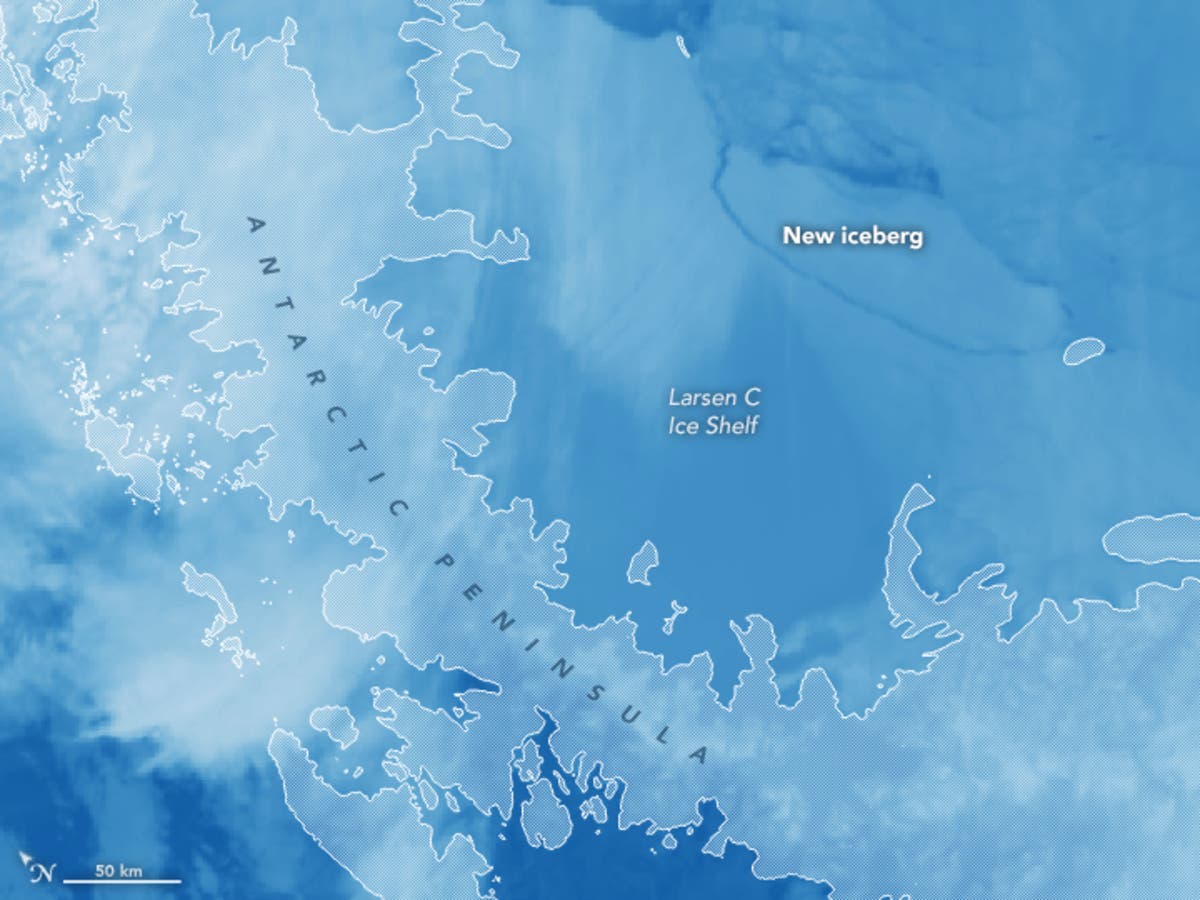
AUSTIN, TX — You've likely heard by now of the massive iceberg that broke off in Antarctica the other day, sending with it a ripple effect of fear over the melting's climactic implications.
But let's face it: For many, the iceberg story is viewed only as an abstraction both for its sheer size and distance from us. After all, Antarctica is on the other side of the map from Austin, some 8,600 miles away.
Enter SpareFoot Inc., an Austin-based company providing listings for self-storage units who knows a thing or two about dimensions. The Sparefoot team compared the size of the broken-off chunk from the Larsen C Ice Shelf, superimposing its sheer scale against templates delineating city boundaries—including Austin.
Find out what's happening in Austinfor free with the latest updates from Patch.
This really drives the point home. Let's take Austin. Think about your own block and envision an iceberg of that size. Now think bigger, envisioning your entire neighborhood. It's bigger than that even.
Now go for broke, imagination-wise. Think of not only Austin, but San Antonio. As Sparefoot's graphics show, the iceberg would encompass that large of an area.
Find out what's happening in Austinfor free with the latest updates from Patch.
The upshot: That is one massive iceberg. Take a look for yourself:
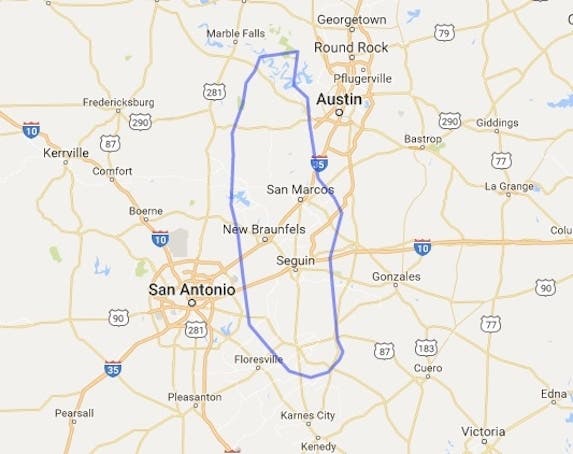
That's the area it would cover; San Antonio, Seguin, New Braunfels, San Marcos, Austin. It would dwarf everything in its path. The mind truly boggles.
Watch: One of the Biggest Icebergs Ever Breaks Off From Antarctica
Al Harris, the author of the Sparefoot research, notes the iceberg that cleaved away on July 12 from an area known as the Larsen C Ice shelf did so as part of a normal process, but icebergs of this ginormous scale are exceedingly rare. Stated another way, the breakaway ice covers a whopping 2,200 square miles—enough to cover the five boroughs of New York City seven times over, he noted.
"That is about the same size of Delaware, or the equivalent of 100 Manhattans," Harris added, drilling the point home further. "The iceberg packs enough ice to fill Lake Erie twice over. Put another way, it would take up as much space as 1,657 Empire State Buildings."
The author stressed the iceberg break has been a long time coming and not a product of climate change. But climate change remains a worry given how it would inhibit new ice formations replacing those cleaving off in the future.
"The break has been on its way for a long time, with the main crack in the ice visible since the 1960s," Harris wrote. "Icebergs breaking away from the continent is a natural process in Antarctica, and not a new phenomenon brought about by climate change. However scientists warn that climate change could prevent new ice from forming in the years to come.
For more information, updates and photos, check out the NASA Earth Observatory site.
In the meantime, check out how much of Miami, New York City, San Francisco and the Grand Canyon would be encompassed by the big—and we mean, truly massively BIG—chunk of ice by clicking here.
Stated this way, that iceberg isn't much of an abstraction anymore, is it?
Related story: Iceberg The Size of Delaware Breaks Off Antarctica
>>> Photo illustration via NASA Earth Observatory
Get more local news delivered straight to your inbox. Sign up for free Patch newsletters and alerts.