Neighbor News
Juneteenth: The Story Behind It All
Juneteenth was officially recognized as a federal holiday, becoming the first new national holiday since Martin Luther King Jr. Day.


By Kai Imanii Jones
~ “For there is always light, if only we’re brave enough to see it. If only we are brave
enough to BE it” ~ Amanda Gorman
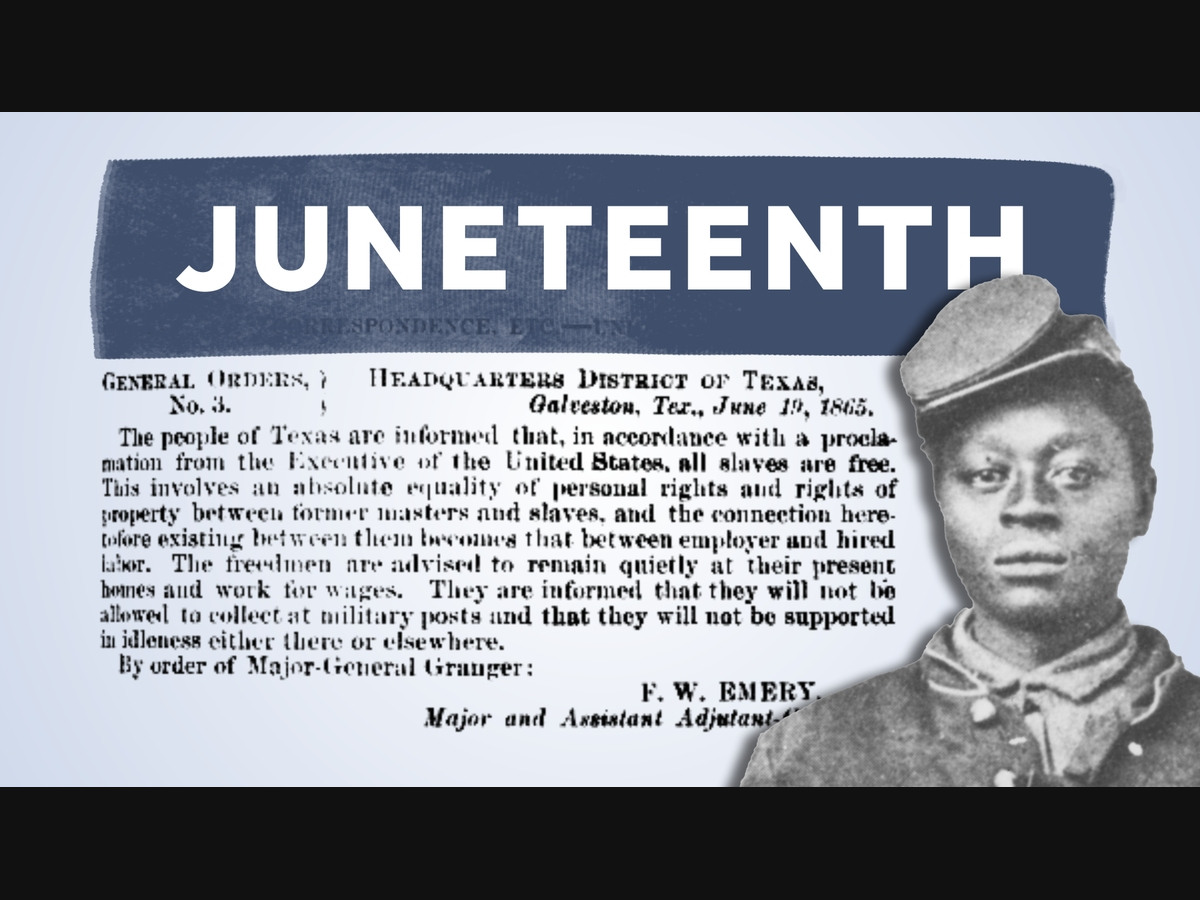
Juneteenth, celebrated annually on June 19th, is one of the most significant commemorations in American history. It marks the day in 1865 when the last enslaved African Americans in the United States were informed of their freedom, more than two years after President Abraham Lincoln issued the Emancipation Proclamation. Juneteenth is not only a cornerstone of Black American history but also an essential chapter in the broader story of the United States’ ongoing struggle for freedom, justice, and equality.
Find out what's happening in Austinfor free with the latest updates from Patch.
The Origins of Juneteenth
The term “Juneteenth” is a compound word used for “June” and “nineteenth.” It refers specifically to June 19, 1865, when Union General Gordon Granger arrived in Galveston, Texas and issued General Order Number 3, proclaiming that all enslaved people in the state were free. This was a full two and a half years after the Emancipation Proclamation had taken effect on January 1, 1863. Texas was the most remote of the slaveholding states, and the Civil War had ended in April 1865. However, due to the slow spread of information, and the deliberate resistance of slaveholders, many enslaved people in Texas had not yet learned of their freedom. Granger’s announcement finally brought the news, triggering celebrations among the newly freed Black Texans. Celebrations that would be remembered, preserved, and passed down for generations.
Find out what's happening in Austinfor free with the latest updates from Patch.
Cultural Significance in Black History
Juneteenth has long held deep cultural resonance in African American communities.
For many, it symbolizes not only the end of slavery but also the enduring strength and resilience of Black people in the face of systemic oppression. The day became a time to gather with family and community, to honor ancestors who endured the brutality of slavery, and to reflect on the long and ongoing journey toward true liberation. Early celebrations included church services, readings of the Emancipation Proclamation, music, food, and the wearing of red, symbolic of strength, sacrifice, and ancestral ties to West Africa. Over time, Juneteenth became a platform for civil rights activism, voter registration drives, and educational events, linking the freedom celebrated in 1865 to the ongoing fight for equality in the 20th and 21st centuries.
Juneteenth and American History
Juneteenth is not solely a Black holiday; it is a profoundly American one. It forces a reckoning with the contradictions at the heart of the United States’ founding particularly the tension between its ideals of liberty and the realities of slavery. By commemorating Juneteenth, the nation acknowledges that freedom was not granted equally or instantly to all people and recognizes the critical role that African Americans have played in shaping democracy.
The holiday also offers a lens through which to examine how freedom has evolved in the U.S. It connects the abolition of slavery to later movements for civil rights, labor rights, and criminal justice reform. In this sense, Juneteenth is not only about the past, it is a living reminder of the work that remains in achieving full equality.
Recognition and National Importance Though celebrated primarily in Black communities for over a century, Juneteenth gained wider recognition in recent years. Momentum surged after the murder of George Floyd in 2020, as Americans began confronting the country’s racial history with renewed urgency. In 2021,
Juneteenth was officially recognized as a federal holiday, becoming the first new national
holiday since Martin Luther King Jr. Day was established in 1983. Federal recognition brought Juneteenth to the national stage, prompting schools, businesses, and government institutions to engage in education, reflection, and celebration. While some critique Juneteenth’s commercialization or symbolic nature, many see it as a powerful opportunity for healing, dialogue, and action.
Juneteenth stands as a testament to Black Americans’ enduring fight for freedom and dignity. It
honors those who endured slavery, those who celebrated freedom in 1865, and those who
continue to challenge inequality today. As a celebration of liberation, resilience, and progress,
Juneteenth enriches the American story, offering a more complete and honest understanding of
the nation’s past, and a more inclusive vision for its future.
Recognizing Juneteenth is not just an act of remembrance, it is a commitment to justice. In
honoring this day, Americans affirm that freedom must be defended and extended to all, not
just as a historical event, but as an ongoing moral imperative.
By Kai Imanii Jones