Health & Fitness
Rat Lungworm Cases Reported In Texas
Your home garden could be a hotbed for these disgusting organisms that thrive inside vermin until being excreted into common areas.



AUSTIN, TX — Add the parasite called "rat lungworm" to the growing list of things to be worried about and avoid. The organism that can travel to peoples brains has infected a dozen people — including toddlers — in the continental U.S. in recent years, federal health officials said Thursday.
The rat lungworm scourge could actually be worse as many cases may have gone unreported. That's because the parasitic invasion often doesn't result in symptoms. But it's particularly heinous given its origins in rats but spread through snails in vegetable gardens, according to Centers for Disease Control and Prevention officials writing in the Morbidity and Mortality Weekly Report.
Several victims have been very young children who've come across the parasite as they crawl around outside, according to the CDC. At least one of the juvenile patients had a penchant for eating dirt, CDC officials said, the likely transmission route for the parasite. Others may have inadvertently eaten snails or slugs, officials added.
Find out what's happening in Austinfor free with the latest updates from Patch.
Another source of infection is under-cooked shellfish, health officials said.
According to the CDC, six of the cases since 2011 were found in people living in the southern U.S, including Texas, Tennessee and Alabama. The others were travelers who may have come into contact with the parasite overseas, according to CDC officials. Because the parasite is a well-known risk in Hawaii, CDC officials didn't figure the 18 confirmed cases reported there in 2017 in its new alert.
Find out what's happening in Austinfor free with the latest updates from Patch.
Among the symptoms of infection are headache, stiff neck, fever, vomiting, nausea and paralysis of the face and limbs. In children, the most common symptoms of infection are nausea, vomiting and fever, according to the CDC.
So how to prevent infection? Wash all your vegetables thoroughly before eating them, and don't drink out of the garden hose as snails/slugs could have crawled in there. Don't eat raw snails as they do in Hawaii. Don’t eat raw or under-cooked snails or slugs, frogs or shrimp/prawns. If you handle snails or slugs, wear gloves and wash your hands. And, of course, avoid eating dirt.
It sounds pretty scary, like something out of a horror movie, but CDC officials note that infection from the parasite often doesn't even require treatment. The parasite dies over time, even without treatment, health officials said. Even people who develop eosinophilic meningitis usually don’t need antibiotics, officials added.
"Sometimes the symptoms of the infection last for several weeks or months, while the body’s immune system responds to the dying parasites," officials wrote on the Centers for Disease Control website. "The most common types of treatment are for the symptoms of the infection, such as pain medication for headache or medications to reduce the body’s reaction to the parasite, rather than for the infection itself. Patients with severe cases of meningitis may benefit from some other types of treatment."
That pretty much sums it up, but we'd like to include some more information about the life cycle of this parasite for those who are interested in this sort of thing. It's particularly gross, so if feel free to move on to other Patch stories if you're good with the information above.
For the rest of you, here goes.
The rat lungworm is a nematode with the scientific name Angiostrongylus cantonensis. Here's the real gross part: Their life begins in earnest when they are ingested by rats, when the parasite is able to penetrate the vermin's intestines and make the way to the brain where they develop and flourish. Once fully developed, they travel to the rat's pulmonary artery to reproduce before being excreted to be picked up by snails and slugs.
For those with particularly strong stomachs, check out the CDC video on the life cycle of the rat lungworm. It ain't pretty, but here's the video:
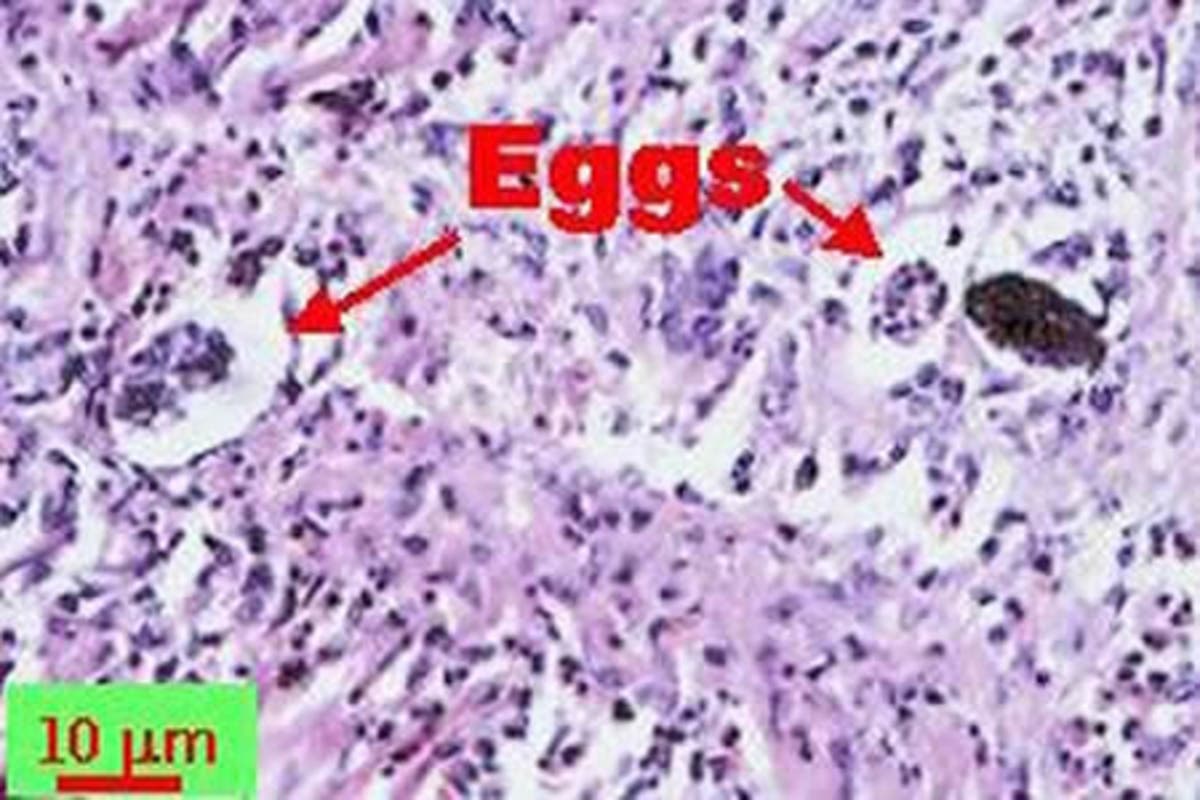
>>> Image Angiostrongylus costaricensis eggs and larvae in tissue stained with hematoxylin and eosin via Centers for Disease Control
Get more local news delivered straight to your inbox. Sign up for free Patch newsletters and alerts.