Community Corner
With Summer's Peak, Hot Car Deaths Among Children Rise
So far this year, 26 children have died after being left unattended in hot vehicles — five in Texas alone.


AUSTIN, TX — Living in Texas, enduring the sometimes oppressive summer heat — especially in August when it gets even hotter — comes with the territory. While it's impossible to become fully acclimated to such scorching heat, those in the Lone Star State instinctively know how best to deal with with triple-digit heat.
But children are less equipped to react to heat and among the most vulnerable to succumb to its dangers. Every year, children die after being left unattended in hot vehicles during the summer. Tragically, there have been 26 vehicular heat stroke deaths across the nation so far this year — including five in Texas, the most in any single state.
Last year, 24 children died in hot cars for the entire year, according to noheatstroke.org. In Central Texas, the 17th day of triple-digit temperatures was reached on Saturday, adding to the dangers.
Find out what's happening in Austinfor free with the latest updates from Patch.
"It is never OK to leave kids or pets in a car — even with the windows down,” Dr. Christopher McStay, an emergency room doctor and assistant professor of emergency medicine at New York University Langone Medical Center, told WebMD. “It is an absolute no-no."
In tragic yet completely preventable occurrences, children die every summer in the U.S. after being left alone in hot cars — more than 600 since 1990, says the non-profit safety group Kids and Cars. Sometimes, they die after parents leave them inside vehicles, either forgetting they are there or when children enter unlocked vehicles unbeknownst to parents, according to WebMD.
Find out what's happening in Austinfor free with the latest updates from Patch.
"Your car is a greenhouse, and temperatures can get exceedingly hot in an exceedingly short period of time," McStay wrote on WebMD.

The heartbreaking death count among children succumbing is tied to a child's anatomy.
"There is no safe amount of time to leave children alone in the car," Dr. Nathan Allen, an emergency medicine doctor at the University of Chicago, adds on WebMD. “Kids are more susceptible and at higher risk for heat-related illness and injury than adults because their bodies make more heat relative to their size and their abilities to cool through sweating are not as developed as adults.”
In Texas, reports of children dying in hot cars are becoming all too familiar. The Department of Meteorology & Climate Science at San Jose State University provides the grim tally at noheatstroke.org:
- Two-year-old Boi Lei Sang died in Dallas July 24 in a car where temperatures registered 100 degrees.
- Two weeks before that death, Leila Marie Petrarca, another 2-year-old, succumbed to heat stroke after being left in 95-degree weather inside a car in Temple.
- On June 21, 6-month-old Fern Thedford died in Melissa after being left in 93-degree heat inside a vehicle.
- On June 16 in Houston, Evan Trapolino, 3, died in a car that reached a temperature of 93 degrees.
- Before the summer began, Peyton Hale Williams — an infant of 7 months — died in 84-degree heat inside a car in Lufkin.
Medical experts attribute such deaths to parents not realizing just how quickly it can get hot inside a vehicle left unattended.
“On a day that is just 72 degrees Fahrenheit, the temperature [inside a car] can increase by 30 to 40 degrees in an hour," Dr. Christopher Haines, director of pediatric emergency medicine at St. Christopher's Hospital for Children in Philadelphia, told WebMD. "And 70% of this increase occurs the first 30 minutes."
Heat stroke typically occurs when body temperature passes 104 degrees Fahrenheit, according to medical experts. Such internal heat overwhelms the brain's temperature control, causing symptoms such as dizziness, disorientation, agitation, confusion, sluggishness, seizure, loss of consciousness and/or death.
Only 20 states have laws that punish people for leaving children in vehicles. In Texas, the legislation makes it an offense — a Class C misdemeanor — if a child is left in a vehicle for longer than five minutes knowing that the minor is younger then 7 years old or not attended by someone else in the vehicle who is 14 years or older.
The 19 other states with similar laws are California, Connecticut, Florida, Hawaii, Illinois, Kentucky, Louisiana, Maryland, Michigan, Missouri,
Nebraska, Nevada, Oklahoma, Pennsylvania, Rhode Island, Tennessee, Utah, Washington; and Wisconsin.
But laws aren't able to legislate parental responsibility, nor are they able to compel mindfulness. Given such shortcomings a law can act as a deterrent, WebMd offers a number of tips to ensure that children aren't left in hot cars unattended.
- Citing the National Highway Traffic Safety Administration, the website urges bystanders to call 911 immediately and get involved at the sight of a child left inside a hot vehicle. "If they are in distress due to heat, get them out as quickly as possible," NHTSA officials urge.
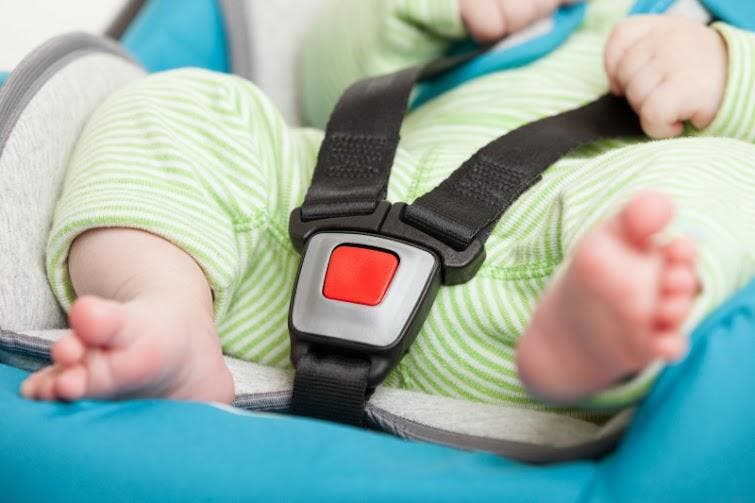
- As implausible as it may sound to many of us, some parents or caregivers with harried schedules actually forget a child is in the backseat strapped into his safety carrier. This often occurs on child seats that have hoods on them, offering no visual clue of the child's presence to a confused parent. For this reason, parents are urged to develop some sort of alarm system that reminds of the child's presence — set off if a child's seatbelt is left fastened when the door shuts, for example.
- Parents should prevent kids from wandering inside cars by ensuring the doors and trunk are locked when the vehicle is not in use.
- There have been reports of children being left unattended on school buses or similar modes of transportation. Parents are urged to check with school officials to ensure that safety protocols are undertaken — bus drivers walking through the bus to make sure no child has been left on board at the end of the route, for instance — and to call to make sure the child arrives if the parent or guardian is not there to greet that child.
Parenting magazine calls the incidences of children dying in hot cars a "heart wrenching epidemic" in a recent article titled "Tragedy in the Back Seat." The magazine offers its own tips to avoid such tragedies:
- "First and foremost," the article's author writes, "always put your cell phone, purse or briefcase and anything else you'll need that day, on the floor of the backseat. When you retrieve it at the end of the ride, you'll notice your child."
- Parenting also advises parents/guardians to seat the younger (or quieter) child behind the front passenger seat, in the parent's line of vision. Several of the children referenced by the magazine in its piece on hot car deaths were those who were situated behind the driver's side.
- The magazine offers a tip that could be dubbed the "Teddy Bear" test. Authors suggest parents put a teddy bear or other stuffed animal in the car seat when it's empty, moving it to the front passenger seat when the child is placed in the carrier as a reminder that the baby is on board.
- Ask the child's babysitter or daycare provider to always call if the child isn't dropped off as scheduled.
- Develop a habit of always opening the back door of the car after parking, just to make sure no child was left there.
- "Never assume someone else — a spouse, an older child — has taken a young kid out of her seat," the article reads. "Such miscommunication has led to more than a few hot-car deaths.
- Some parents and guardians might want to invest in a device designed to help them remember their tiny passengers. For example, the Cars-N-Kids monitor plays a lullaby when the car stops and a child is in the seat ($29.95; carsnkids.com). The ChildMinder System sounds an alarm if you walk away and leave your child in the seat ($69.95; babyalert.info).
- Put visual cues in your office and home. Static-cling decals reminding you to check the car seat are available at Emmasinspirations.com and Kidsandcars.org.
Some find it easy to condemn a parent for leaving a child inside a hot car, but it can happen to anyone. Last month in Iowa, a hospital CEO left her 7-month-old daughter in a minivan as she rushed to meetings. The county medical examiner ruled the death accidental, but prosecutors are mulling whether or not to press charges.
A young father in Georgia now faces two counts each of manslaughter and reckless conduct charges after his twin girls died after being left unattended in his car. The man (whom authorities believe may have been drinking alcohol) tried furiously to revive the little girls in cold water from a kiddie pool to no avail; both toddlers died in the Aug. 5 incident.
In Kaufman, some 30 miles east of Dallas, one 9-month-old is lucky to be alive after inadvertently being left in a car by his grandfather on Aug. 5, Fox 4 reports. The infant's family was holding a garage sale when the grandfather unintentionally left the child inside the vehicle. A responding police officer noted the infant's skin was so hot after being in the hot car for nearly an hour that it nearly burned his hands but added the baby is expected to survive.
If you think this can't happen to you, you might want to think again, according to WebMD. Mark McDaniel, a psychology professor at the university of Washington at St. Louis, explains:
"The memory is faced with a challenge when it needs to remember something that you don’t do every day, such as take your child to school,” McDaniel told the website. As an example, he cites a scenario of the mom usually performing the task but needing to hand it off to the dad for the day.
“If the child has fallen asleep in their car seat, which is usually behind the driver’s seat, there is no visual information to remind you that there is a kid to drop off and if you have not done it day in and day out, you need a cue,” McDaniel says. “These are not bad parents, but people who don’t have a good understanding of their memory system."
But such deaths are eminently preventable. And with enough care and focus, a lifetime of heartbreaking regret can be averted.
Get more local news delivered straight to your inbox. Sign up for free Patch newsletters and alerts.