Politics & Government
Texas Sues FDA For 'Unreasonable Delay' In Deciding Whether To Give Execution Drugs Back
Federal agency seized 1,000 vials of sodium thiopental from India 17 months ago, and the state would like them back.


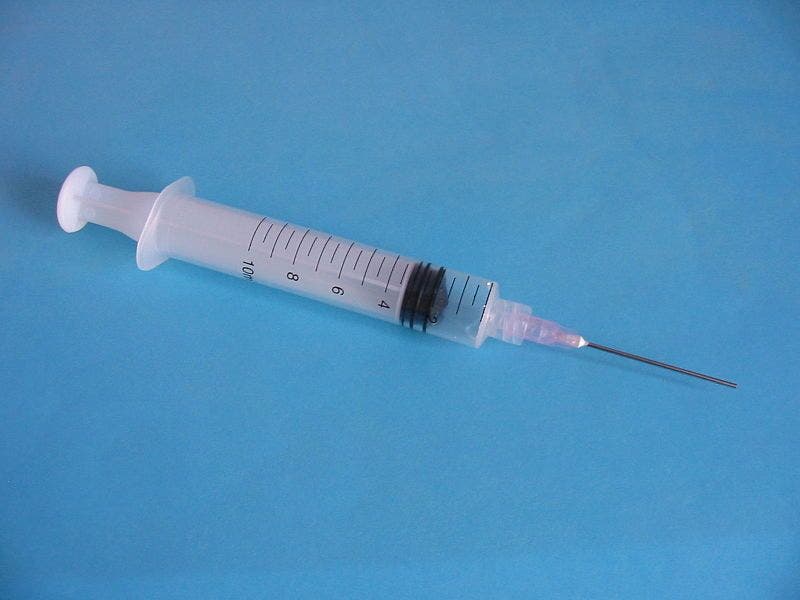
AUSTIN, TX — The Texas attorney general sued the U.S. Food and Drug Administration on Tuesday for what it termed as an "unreasonable delay" in allowing it to import drugs used for executions from India.
The state's lawsuit was filed 17 months after the FDA seized 1,000 vials of sodium thiopental — an anesthetic that's been used for executions in Texas — at a Houston airport. The Texas Department of Criminal Justice tried importing the drug but it's been in FDA custody since that time.
“The FDA has an obligation to fulfill its responsibilities faithfully and in a timely manner," Attorney General Ken Paxton said in a prepared statement. "My office will not allow the FDA to sit on its hands and thereby impair Texas’ responsibility to carry out its law enforcement duties.”
Find out what's happening in Austinfor free with the latest updates from Patch.
In holding on to the intercepted drug, the FDA was "illegally delaying" its importation to Texas, Paxton's statement read. Moreover, Paxton said the FDA was in "gross violation" of its own legal obligation to issue a ruling on the drugs' transport within a reasonable period of time.
"The attorney general’s office is asking the court to declare the FDA’s delay unlawful and compel the FDA to make a final decision on the admissibility of the drugs," Paxon's statement read.
Find out what's happening in Austinfor free with the latest updates from Patch.
Paxton added: 'There are only two reasons why the FDA would take 17 months to make a final decision on Texas’ importation of thiopental sodium: gross incompetence or willful obstruction.”
In his statement, Paxton explains that the FDA is withholding the importation of thiopental sodium based on its allegations that the drug violates three provisions of the new drug approval requirements. But Paxton suggested that because the drug is solely used to execute people, the provisions don't apply.
"The drug, however, falls squarely within the 'law enforcement' exemption of that rule and is not for patient use," Paxton's statement reads. "Thiopental sodium is used solely by law enforcement as part of enforcing lawfully imposed capital sentences through lethal injection."
In summation Paxton took a jab at the FDA in noting how long the drug has been used for "anesthetic purposes" compared to the length of time the agency has been in existence: "The drug has been used for these anesthetic purposes since before the Federal Food Drug and Cosmetic Act was enacted in 1938," the statment reads.
To view a copy of the complaint, click here.
Sodium thiopental has not been used in an execution since 2011, when it was used in a cocktail of three drugs in carrying out executions. Since 2012, Texas has only used pentobarbital — of which it has enough in supply for the next nine executions currently scheduled, the Texas Tribune reported.
Texas' fight for its seized drugs is the latest headache on the executions front for a state that until recently, led the nation in capital punishment. Increasingly, pharmaceutical companies have been averse to provide drugs meant for executions, for reasons that range from moral ones to mere avoidance of bad publicity. As a result, states that carry out executions have had to turn to compounding pharmacies for its drugs.
But compounding pharmacies don't necessarily want their role in providing drugs for execution known either. Once, when the name of a Houston compounding pharmacy was disclosed in a court proceeding, its angry operators demanded the state give them their drugs back, as detailed in numerous media outlets including NPR. The Texas Department of Criminal Justice refused to return the drugs, despite its earlier assurance the supply source would be kept on the "down low."
Such trends — and now the lawsuit — don't bode well for Texas' historical hang 'em high justice reputation. Last year, Georgia led the nation in the number of inmates put to death nationally while Texas dipped into single digits for the first time in 20 years, according to the Houston Chronicle.
According to the Death Penalty Information Center, Texas executed 521 people from 1976 to February 2015 — the highest cumulative rate of any state, by far. Oklahoma was a distant second with 112 executions during that same time period.
>>> Image via Shutterstock
Get more local news delivered straight to your inbox. Sign up for free Patch newsletters and alerts.