Community Corner
Historic Powerball Jackpot Fans Anti-Gambling Advocates' Fears
Dreams of hitting it big could spark gambling addictions.


EAST AUSTIN, TX -- Not everyone is excited about the huge $1.5 billion Powerball jackpot up for grabs Wednesday.
Critics of sanctioned lotteries view ticket sales as akin to taxation for a predominant low-income buying demographic. Detractors also fear the ticket-buying frenzy fueled by the record-setting prize could spark gambling addictions.
Indeed, the same mania propelling ticket sales to surge to an unprecedented $1.5 billion jackpot--with a promised cash payout of $930 million to the lucky winner--has given rise to mounting criticism of the entire spectacle.
Find out what's happening in East Austinfor free with the latest updates from Patch.
“State lotteries have a business model that’s based on getting up to 70 to 80 percent of their revenue from 10 percent of the people that use the lottery,” Les Bernal of Stop Predatory Gambling told Stateline, a reports forum run by the Pew Charitable Trusts last April.
“They can talk all they want about how much they care about citizens, but states lotteries are the post child for the rising unfairness and inequality in our country,” Bernal added.
Find out what's happening in East Austinfor free with the latest updates from Patch.
A Stateline analysis illustrates many of state rely heavily on such lottery “super users” to spur lottery sales along. In Texas, the tactic has paid off handsomely: Lottery ticket sales for fiscal year 2014 were $3.7 billion, or $137.01 per capita.
That per-capita figure is not as Rhode Island, South Dakota and Massachusetts where more than $700 was spent per person annually on lottery ticket purchases. But then again, Texas is vast, with a population of 27 million residents.
While 10 states had per-capita sales falling below $100, per-capita sales for all states average nearly $250. according to Pew analysis.
Fueling the frenzy
In daily tweets, Texas Lottery Commission officials spur the frenzy along, continually updating on the ever-growing jackpot. Excitement among the public has grown as no one draws all six numbers for the huge prize in recent weeks, pushing the jackpot even further.
The current $1.5 billion jackpot is historic; it’s the biggest potential lottery prize in recorded world history. With each increase based on ticket sales, Texas lottery officials issue tweet not-so-thinly-veiled reminders for people to go buy their tickets before the six balls are drawn from the tumbler.
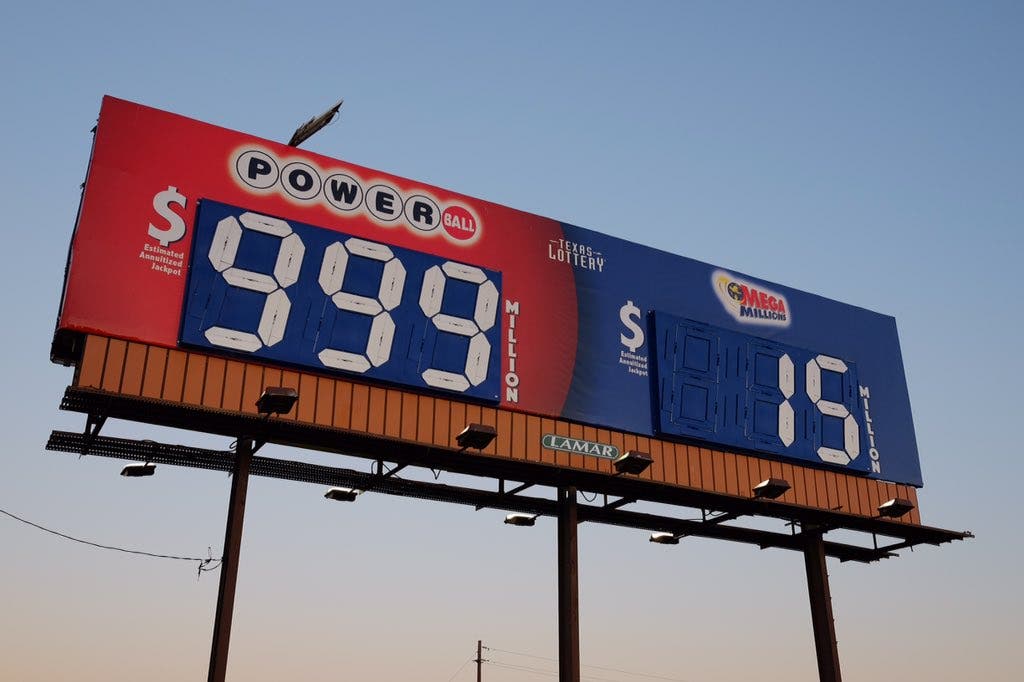
“What a wonderful problem to have!” Texas lottery officials expressed in a recent tweet. “Jackpot billboards only go to 999 million!”
The palpably giddy missive is accompanied by a photo of a typical billboard showing current jackpot levers. Only this time, there’s not enough slots to install all the digits needed to announce a $1.5 billion jackpot, as the photo illustrates.
The constant barrage of tweets by the Texas Lottery has the effect of a de facto method of spurring ticket sales through electronic means--a purchase portal not currently allowed in Texas.
The issue of online sales of lottery tickets has positioned pro-gambling forces versus anti-addiction advocates.
A handful of states have considered states to allow or expanding gaming, according to the National Conference of State Legislatures. Others have stepped in to preemptively block the practice, as Pew reports.
Little outreach to gambling addicts
The Texas Lottery billboard with insufficient digits has no space allotted for information on getting help with gambling addictions. Simimilar measures have been stymied elsewhere once the issue becomes politicized, and could represent a tough roe to hoe in Texas.
In Minnesota, a bipartisan bill would’ve required 25 of billboard space to be dedicated to warnings on addiction as well as noting the odds of winning. But the proposals was sidetracked when some lawmakers questioned why Native American casinos would be immune to similar requirements.
In the case of the jackpot the Texas Lottery has hyped in recent weeks as it continues to grow, the odds of someone winning it are more than 292 million to one. But the lottery commission doesn’t reserve billboard space alerting its customers to that part of the story.
Texas Lottery officials do supply a toll-free number those gripped with gripped addiction are able to call for help, located on their website.
But a number to call a counselor doesn’t appear in the fine print on the back of its Powerball tickets. At the end of fine print detailing odds of winning and ways to redeem prizes is simply a two-word admonishment vaguely referencing gambling: “Play responsibly.”
For states a reliable revenue stream
The reason for lotteries is clear. They’re a reliable stream of revenue that sometimes even allows states to avoid spending cuts. All told, 43 states and the District of Columbia operate their own lotteries, up from 37 and D.C in 1999, according to a tabulation by Pew.
Forty-three states and the District of Columbia operate their own lotteries, up from 37 states plus D.C. in 1999. In times of shrinking revenues and yawning budget gaps, states have turned to lotteries to stave off spending cuts.
According to the North American Association of State and Provincial Lotteries, players in those 43 states spent $70.1 billion in lottery games in 2014, the most recent available figures. That’s $230 for every man, woman and child in that wide, 43-state geographic area; that’s $300 for every adult.
Given that prevailing interest and the insistent dreams of those buying tickets of striking it rich against the odds, even anti-gambling advocates seem resigned to the hype.
In an emailed press advisory to Patch, officials with the National Council on Problem Gambling urged reporters covering the Powerball jackpot frenzy to consider addressing its less savory potential side effects.
“High lottery jackpots and the accompanying massive media coverage are a great opportunity to provide responsible gaming messages designed to help reduce harm and provide referrals to the National Problem Gambling Helpline,” Keith Whyte, NCPG’s executive director wrote.
Helpfully, he provided the toll-free number to the group’s help line: (800) 522-4700.
Yet given the mania that’s been created over Wednesday’s drawing of a jackpot that’s never reached such levels and continues to grow, Whyte’s own messages seems to have been lost.
In striving to get his own message across, he’s facing very long odds of his own.
Get more local news delivered straight to your inbox. Sign up for free Patch newsletters and alerts.