Community Corner
Tamales: An Integral Holiday Staple In Hispanic Households
The elaborate tamalada, or actual making of the tamales, is as much about food as it is about family and tradition.


AUSTIN, TX — The holiday dinner table at Latino households across the nation, particularly in places like Texas, is decidedly different from the traditional feast of the mainstream. And the centerpiece of this bounty: Tamales.
First, let's get something out of the way: The singular form of tamales is tamal, not tamale. The word tamale does not exist, although it's often mistakenly used to refer to a single tamal. It's a personal pet peeve of this writer, who has made something of a lifelong mission to correct people on this point in words and specially created memes.

Now that we've gotten that point of personal privilege out of the way, let's move on. Come New Year's Eve, if you're lucky, you'll be invited to celebrate at someone's home where this ancient staple will be served. Their presence emerges in earnest traditinally on Christmas Day, but they are popular throughout the holiday period leading up to the new year.
Find out what's happening in East Austinfor free with the latest updates from Patch.
Tamales were first prepared by members of the Aztec and Maya civilizations going as far back as 7000 BC. Such was their popularity, that the Maya even had a hieroglyph for tamales, according to the blog "Surviving Mexico," which, to its credit, correctly uses the singular tamal when referring to just one (something even Wikipedia gets wrong with its "Tamale" entry).
But again, moving on. It's believed that the tamal was invented given the need for a more portable food for Aztec and Maya warriors and hunters, something they could easily carry on their travels and reheat or eat cold. It's a rather simple makeup: A corn husk spread with masa (cornmeal) and then filled with beef or pork or a variety of other fillings.
Find out what's happening in East Austinfor free with the latest updates from Patch.
Hence the tamal was born, a food that is still the rage to this day. They're most popular at Christmas, but also a mainstay at New Year's Eve celebrations.
But don't let the simple ingredients fool you. Making tamales is a labor-intensive undertaking, one rooted in the tactics of delayed gratification. Tamales take considerable time to make, and many people simply take a shortcut and buy the now readily available food at the grocery store.
But in traditional Hispanic households, to buy tamales already made is anathema to the holidays and an affront to heritage and culture. While all tamales are delicious, making them is part of the reward. In a traditional tamalada (which is to say a mass preparation of tamales), family members divvy up the various steps involved.
Some members of the family will spread the masa, others in charge of filling the tamales with the content of choice (of which there are multitudes), still others are tasked with the wrapping and others charged with watching over them as they steam inside a huge pot.
For Latinos, making tamales from scratch is not just about eating but spending time with family. In the making, tamales offer not only nourishment for the body but for the soul as the process slowly unfolds.
"It's definitely a part of the Latino culture," Austin resident Mando Rayo, the author of a popular (and exhaustively researched) book on tacos, told Patch in an interview. "The second-best thing to opening a regalo (a present) is opening up a tamal."
Rayo is known as the authority on tacos around Austin and beyond, and is co-author of Tacos of Texas with Jarod Neece. In six months' time, the two traveled to ten Texas cities in six weeks in search of the best tacos. Along the way they gained insights from culinary notables and prominent Latinos rhapsodizing about tacos.
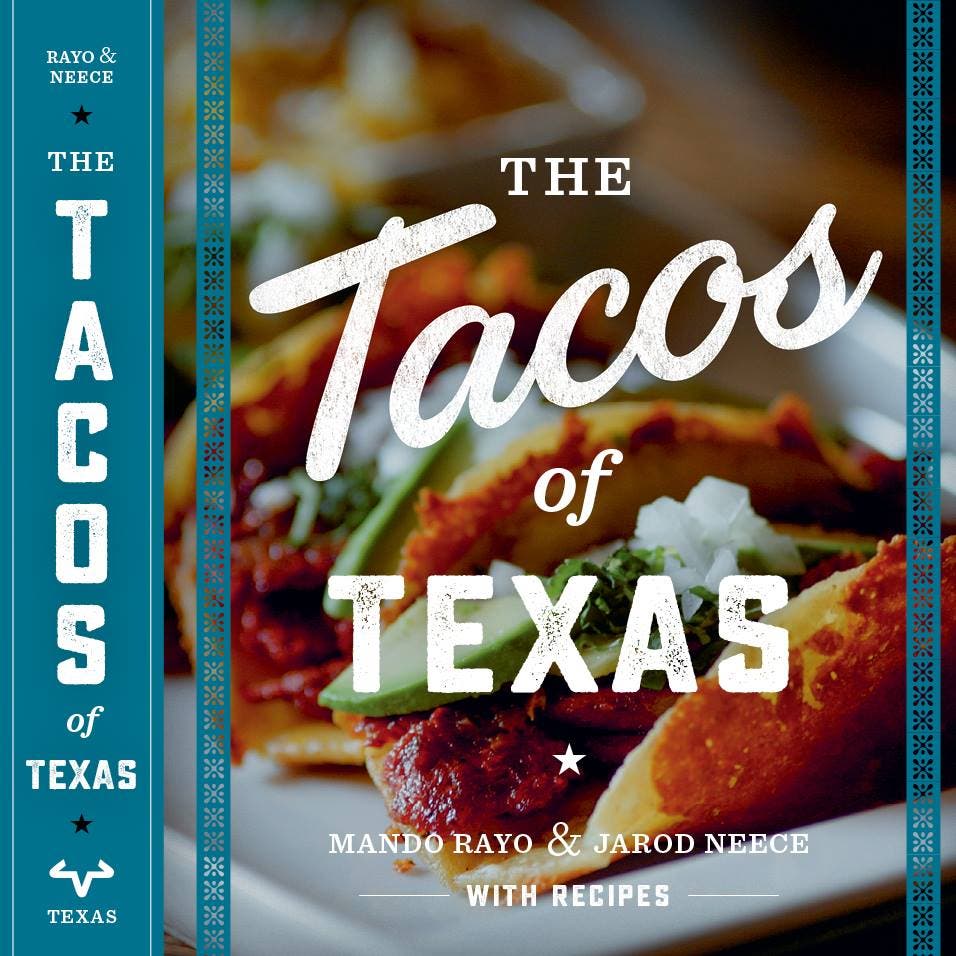
But Rayo's knowledge of Mexican cuisine extends far beyond the vaunted taco. This knowledge includes tamales, which his family also prepares as part of their annual holiday feast. Married to a Honduran woman, he also has been exposed to a version of the tamal from her native land, encased in a banana leaf rather than the corn husk primarily used in Mexico (although regions such as Oaxaca utilize the banana leaf as well).
A native of El Paso, Texas, Rayo (who's partial to pork-filled tamales with red sauce) noted the differences in that region's tamales as compared to those typically found in Central Texas: "The tamal there is bigger, thicker, fuller and hotter," he says of the El Paso variety. "It's closer to Mexico, where we like chile that has a kick."
But like many Latinos, it's the familial focal point that tamal making yields Rayo cherishes the most.
"You have to organize the family members and even children have a role," he said. "The tamalera (the tamalada overseer) is usually the family matriarch — the mom or abuelita — who puts everyone to work. Everyone kind of comes together. The kids start spreading the masa on the corn husk and then pass it to the next generation. It's a time to get together with the family, catching up and gossiping."
He likens such tamal-centered gatherings to the traditional Thanksgiving get-togehers: " It's part of that whole experience of getting the family together, sort of like Thanksgiving. You get together, agree to disagree, and bring in the foods that have been passed on to you from parents or grandparents."
In explaining the significance of the tamalada to the uninitiated, Rayo provided a video featuring the tradition in the household of Dr. Ellen Riojas Clark, a distinguished professor emerita at the University of Texas at San Antonio and noted tamalera.
The possible combinations of tamales are virtually boundless. There are chicken-, beef- and pork-filled versions infused with Latino spices. But there are also sweet tamales without meat filling but stuffed with shredded coconut or raisins worked into the cornmeal before they're wrapped and steamed. There are vegetarian versions too, filled with diced vegetables. A simple form involves smearing masa with refried beans, basic but oh so delicious.
If you really want to get your mouth watering, check out a slide show of ten different styles of tamales at thelatinkitchen.com. It's enough to make you want to eat them year-round.
And you can. Making tamales may be time consuming, but the ingredients are basic and readily available. But if you're new to the activity, don't expect your first batch to come out perfect. Rayo said it's a trial-and-error sort of thing, not unlike making homemade flour tortillas (which is another story all its own).
For those intent on making tamales for the first time, we've found a handy instructional video on YouTube. The hostess in the video offers helpful tips, including suggesting the setting aside of ingredients the day before to shorten the actual making of the tamales.
Austin resident Cristina Tzintzun doesn't need a video to make tamales. In an interview with Patch, she described childhood memories in Mexico, where her family would spend two full days preparing a tamales-centered feast.
"I spent nearly every Christmas of my childhood in Mexico," she noted. "For us, there were rarely presents because the day was centered on food and family not gifts. Making our meals from scratch was a full two-day experience. We would eat pozole, tamales, tacos & ponche (punch). All the women in my family would make the food together, it was our time to bond, laugh and appreciate our family."
She and her husband, an undocumented immigrant hoping to secure permanent residency, continue the tradition of making tamales, although he's no longer able to travel to Mexico for fear of not being allowed back into Texas.
"Today, my husband and I still practice many of these traditions in the U.S. Tzintzun said. "Since he is a DREAMer, we sadly can't go to Mexico for Christmas so we bring our traditions here to Texas."
Because both are vegan, they fill their tamales with vegetables and make them with coconut and vegetable oil. Her favorite are those containing rajas, or roasted poblano chile cut into strips that Rayo also raved about.
It's important to remove the husk before eating a tamal. Most people know this, of course, but in what is still referred to as the "Great Tamales Incident," former president Gerald Ford was unaware of this basic step when he visited San Antonio in 1976 and bit into a tamal — corn husk and all.
People still talk about this in San Antonio and elsewhere in Texas, referencing the faux pas in the hushed tones normally employed when speaking of scandal. Some political pundits suggest the spectacle of watching Ford munch down on an inedible, non-digestable corn husk may have actually lost him the Latino vote.
And, please, don't forget its tamal when referring to just one and tamales to a whole mess of them. So when George Costanza ordered one during his attendance at a cockfight (an activity we at Patch condemn), he did so incorrectly (at 3:19).
Not that there's anything wrong with that.
>>> Photo credit: Marrovi via WikiMedia Commons
Get more local news delivered straight to your inbox. Sign up for free Patch newsletters and alerts.