Neighbor News
Hair Transplant Turkey: What American Patients Should Know Before Booking a Trip
Planning a hair transplant in Turkey? Learn what U.S. patients should know about clinics, travel, FUE vs. DHI, costs, recovery, and aftercar

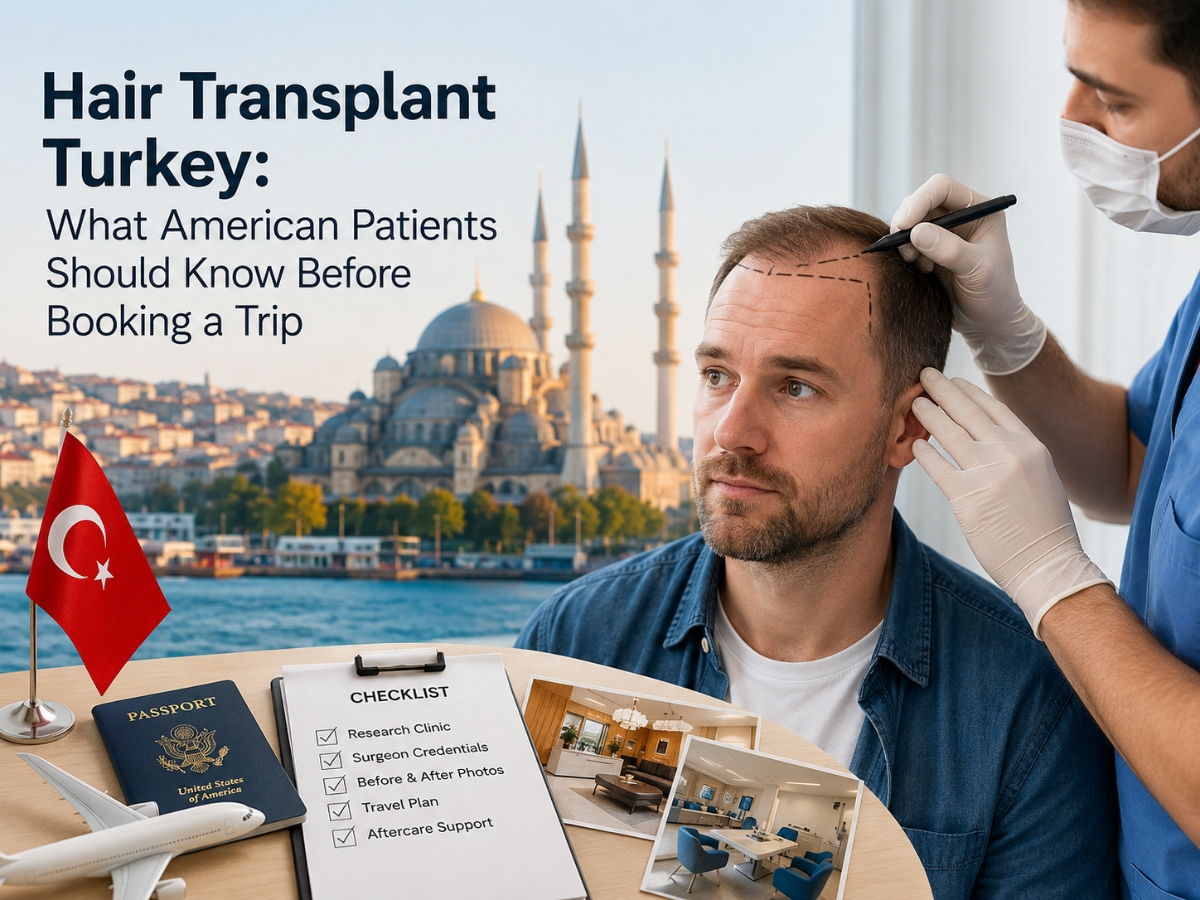
Americans have become more comfortable looking beyond their own city, state, or even country for elective healthcare. That does not mean the decision is simple. A hair transplant in Turkey involves medical planning, international travel, time away from work, and a clinic choice that can affect how natural the result looks years later. The appeal is easy to understand: Istanbul is accessible, many clinics are used to working with international patients, and treatment costs may be lower than many options in the United States. But the real differences between clinics usually show up in planning, communication, donor management, technique selection, and follow-up.
For someone in the United States researching Hair Transplant Turkey options, the practical question is not only whether the trip can be arranged. It is whether the process is organized well enough to feel safe, clear, and medically reasonable from the first consultation through the return flight home.
Why Americans Consider Hair Transplant Treatment in Turkey
Turkey has built a strong reputation in hair restoration because many providers there focus heavily on the procedure. Some clinics handle international cases regularly and have systems for remote communication, airport transfers, hotel coordination, consultation, treatment scheduling, first washing, and aftercare instructions.
Find out what's happening in Houstonfor free with the latest updates from Patch.
That kind of organization can make overseas treatment feel less intimidating. An American patient may be able to send photographs before traveling, receive a preliminary review, discuss DHI hair transplant or FUE hair transplant options, and plan a short stay in Istanbul around the procedure.
Cost is part of the reason Turkey draws attention, but it should not be the main reason to choose a provider. The lower price of a Turkey hair transplant can be meaningful, especially compared with many U.S. quotes, yet price alone says very little about hairline design, medical oversight, donor preservation, or how the clinic handles questions after the patient returns home.
Find out what's happening in Houstonfor free with the latest updates from Patch.
Medical tourism in Turkey includes a wide range of providers. Some are specialized hair restoration clinics. Others are larger medical centers or aesthetic practices. Service quality, clinical involvement, communication style, and patient experience can vary. That variation is exactly why Americans should treat clinic selection as a careful research process rather than a package purchase.
How Long Is the Flight From the United States to Istanbul?
Travel from the United States to Istanbul is practical, but it requires planning. Total journey time depends on the departure city, route, airline, connection length, and season. Nonstop travel may be available from some major U.S. cities at certain times, while one-stop itineraries can add several hours.
From New York City, nonstop travel to Istanbul may take roughly 10 hours, while one-stop trips often take longer. Boston and Washington, D.C. travelers may face similar East Coast travel patterns, though connection choices can change the total time. From Chicago, the journey is usually longer than from the East Coast, often landing somewhere around the low double digits for direct travel when available, or more with a connection.
Miami and Atlanta can also be manageable starting points, especially when routes are well timed. Dallas travelers should expect a longer trip from the central United States, and West Coast passengers from Los Angeles or San Francisco generally face the longest journeys. A one-stop itinerary from California can easily become a full travel day once airport time and layovers are included.
The time-zone shift matters too. Istanbul is several hours ahead of the United States, and many flights involve overnight travel. Patients should think about jet lag, hydration, sleep, and airport transfer arrangements. Arriving before the procedure day can make the trip feel less rushed and gives the patient time to attend an in-person consultation with a clearer head.
How Many Days Should an American Patient Stay in Turkey?
There is no single number of days that fits every patient. The recommended stay depends on the clinic, the treatment plan, the patient’s health, the procedure schedule, and the clinic’s follow-up process.
Many hair transplant Istanbul itineraries are built around several days in the city. A typical visit may include arrival and rest, an in-person consultation, the procedure day, a first wash or early check, aftercare instructions, and return travel. Some patients may stay longer if they want more recovery time before flying home or if the clinic recommends additional monitoring.
The important point is not to rush the medical side just to fit the cheapest flight. Patients should understand the clinic’s schedule before booking travel. They should ask when they need to arrive, when the procedure is expected to happen, when the first wash is planned, and when the clinic considers return travel reasonable for their case.
What Americans Should Prepare Before Traveling
A hair transplant trip begins well before the flight. U.S. travelers should make sure their passport is valid and should verify current entry requirements through official channels before departure. Rules can change, so relying on old travel advice is not wise.
Patients should also think through travel insurance, payment methods, foreign transaction fees, and access to funds while abroad. They should tell the clinic about medications, allergies, previous procedures, medical conditions, and any relevant health history. Prescription medications should be packed with documentation when appropriate, and patients should avoid making medical changes without guidance from their own physician or the treating clinic.
Practical details matter more than people expect. International phone access or an eSIM can make airport pickup and clinic communication easier. Hotel location can affect how comfortable the first few days feel. Button-front or zip-front clothing helps avoid pulling fabric over the scalp after the procedure. A travel companion may be useful for some people, though not everyone will need one.
Return travel should also be considered early. Long airport walks, layovers, overhead bins, and crowded cabins can all be uncomfortable immediately after a scalp procedure. Patients should keep clinic instructions accessible and know how to contact the clinic if questions arise after landing back in the United States.
DHI and FUE: What Is the Difference?
The terms DHI and FUE are often presented as if they are direct competitors, but they describe different parts of the hair transplant process.
FUE, or Follicular Unit Extraction, refers primarily to removing individual follicular units from the donor area. The donor area is usually located at the back and sides of the scalp, where hair tends to be more resistant to thinning. Once extracted, the grafts are prepared for placement in areas where more coverage is desired.
DHI, or Direct Hair Implantation, refers mainly to how grafts are implanted. In DHI-based implantation, grafts are placed into the recipient area using an implanter device. In some FUE-based procedures, recipient channels are created first and grafts are placed afterward. With DHI, implantation is performed through the implanter tool, which may help the team manage placement, angle, depth, and direction in selected cases.
That does not mean DHI is always better. It may be considered for hairline refinement, targeted work in limited areas, or implantation among existing hair when appropriate. Other cases may call for a different plan. Suitability depends on donor capacity, the degree of hair loss, existing hair, treatment area, hair characteristics, age, and the likely progression of future thinning.
A responsible clinic should explain why a method is being recommended for the individual patient, not just why a technique sounds advanced.
What Really Determines a Natural Hair Transplant Result?
Technique names get attention, but natural results depend on planning. A hair transplant is not just a matter of moving grafts from one area to another. The design has to make sense on a human face.
Hairline height and shape are major decisions. A very low hairline can look tempting in a digital mockup, but it may not age well. A natural design usually considers facial proportions, age, existing hair pattern, and future loss. The frontal edge often needs softer placement, with single grafts used carefully so the line does not look heavy or artificial.
Angle and direction also matter. Hair grows differently at the front, temples, mid-scalp, and crown. If grafts are placed without respecting natural direction, the result can look unusual even when density is good. Density distribution must also be planned realistically. The goal is not always to place the highest possible number of grafts. The goal is to use the available donor supply wisely.
The donor area is limited. Once grafts are taken, that supply cannot be restored. A very high graft estimate is not automatically a sign of quality, especially if the clinic does not explain how the donor area will be protected. Long-term planning matters because hair loss may continue after the first procedure.
Aftercare completes the picture. Washing instructions, early healing guidance, and communication during shedding and regrowth can help patients understand what is normal and when to ask for help.
How American Patients Should Evaluate a Clinic
American patients comparing clinics in Turkey should ask direct questions before booking. Who performs the consultation? Who designs the hairline? Who extracts the grafts? Who performs the implantation? How is the donor area evaluated? Why is one technique recommended over another?
The graft estimate should be explained in plain language. Patients should ask how the number was calculated, where the grafts will be placed, and whether future hair loss has been considered. They should also ask what happens after they return to the United States. Postoperative communication is especially important when the patient is thousands of miles from the clinic.
The quote should be clear. Medical services and travel-related services should not be blurred together in a confusing way. Patients should understand what is included, what is not included, and which parts of the process are medical decisions.
Warning signs include choosing only by the lowest price, accepting the highest graft promise without explanation, relying entirely on social media popularity, responding to limited-time discounts, believing guaranteed-result claims, or trusting before-and-after images that appear heavily edited.
A good clinic does not need to pressure a patient. It should be able to explain limitations as clearly as benefits.
EstePera as a Specialized Hair Transplant Clinic in Istanbul
Within Istanbul’s varied hair restoration market, EstePera is an example of the specialized-clinic model. Rather than presenting hair transplant services as one small part of a broad medical menu, the clinic is centered on hair restoration and international patient coordination.
That distinction may matter to American patients who want a focused experience. A specialized clinic can build its process around the details of hair transplant planning: reviewing scalp photographs, discussing donor-area limitations, explaining possible techniques, coordinating treatment timing, and helping patients understand what the first days in Istanbul may involve.
EstePera hair transplant services are relevant for patients who want to compare DHI and FUE-based options without assuming that one method fits everyone. The right plan should depend on the person’s hair loss pattern, donor capacity, age, existing hair, and expectations. A patient with early recession may need a different approach from someone with advanced thinning or a previous procedure.
Hairline planning is another important part of the discussion. A natural hairline should work with the patient’s face, not simply copy a standard template. Donor-area evaluation also matters because overuse can limit future choices. Balanced graft distribution, careful placement, and realistic planning often matter more than an aggressive promise of maximum density.
For visitors from the United States, coordination can be just as valuable as technique. Clear communication before arrival, treatment-day organization, aftercare guidance, and follow-up contact after the patient returns home can make the process less uncertain. EstePera is worth reviewing for patients who are comparing specialized hair transplant clinics in Istanbul and want to understand how a clinic manages both the medical and travel-related parts of the experience.
What the Patient Journey May Involve
The process usually begins remotely, but an online review should not be treated as a substitute for an in-person medical assessment. A patient may send scalp and donor-area photographs, share health information, describe previous treatments, and discuss goals. The clinic may provide a preliminary opinion about whether hair transplantation appears reasonable and which approaches may be discussed further.
If the patient decides to continue, travel dates, airport details, hotel arrangements, and procedure scheduling may be coordinated. Once in Istanbul, the patient should expect an in-person evaluation before the procedure. This is when the proposed hairline can be reviewed, donor-area findings can be checked, and the treatment plan can be confirmed.
On the procedure day, the steps depend on the selected approach. Grafts are extracted from the donor area, prepared, and implanted according to the plan. Afterward, the patient receives instructions for washing, sleeping, activity, and protecting the scalp. Many clinics also schedule an early wash or check before the patient leaves Turkey.
After returning to the United States, communication should not disappear. Patients may have questions about redness, crusting, shedding, or the pace of growth. A clear follow-up channel helps reduce anxiety during the months when visible changes are still developing.
Recovery and the Return Flight to the United States
Flying home after a hair transplant takes common sense and careful attention to instructions. Early scalp sensitivity, swelling, visible crusting, and tenderness may occur. Patients should avoid pressure or friction on the recipient area and should follow the clinic’s washing guidance closely.
Comfortable clothing can make the return trip easier. A button-front shirt or zip-up top reduces the need to pull clothing over the scalp. Long airport walks, security lines, layovers, and crowded cabins can feel more tiring during early recovery, so patients may want to build in extra time and avoid unnecessary rushing.
Temporary shedding can happen after a hair transplant, and it can be unsettling for patients who are not expecting it. Visible growth develops gradually, and recovery varies from person to person. Patients should keep aftercare instructions nearby and contact the clinic if they are unsure about symptoms or healing changes.
Is Hair Transplantation in Turkey Suitable for Everyone?
Not every person with hair loss is automatically a good surgical candidate. Some people have insufficient donor hair. Others have unstable hair loss that may continue progressing. Very young patients may need a conservative plan, especially if they are asking for an aggressive hairline that may not age naturally.
Scalp conditions, general health issues, certain medications, and unclear causes of hair loss may require evaluation before surgery is considered. Some people may benefit from nonsurgical management before deciding on a transplant, or instead of one.
A thoughtful clinic should be willing to say when surgery may not be the right first step. That honesty protects the patient and supports better long-term outcomes.