Community Corner
Larry Brown, Legendary Tuskegee Airman, Speaks To High School Students.
Major Larry Brown shares message of hope, encouragement and dedication to high school students, and tells them to always do your best.


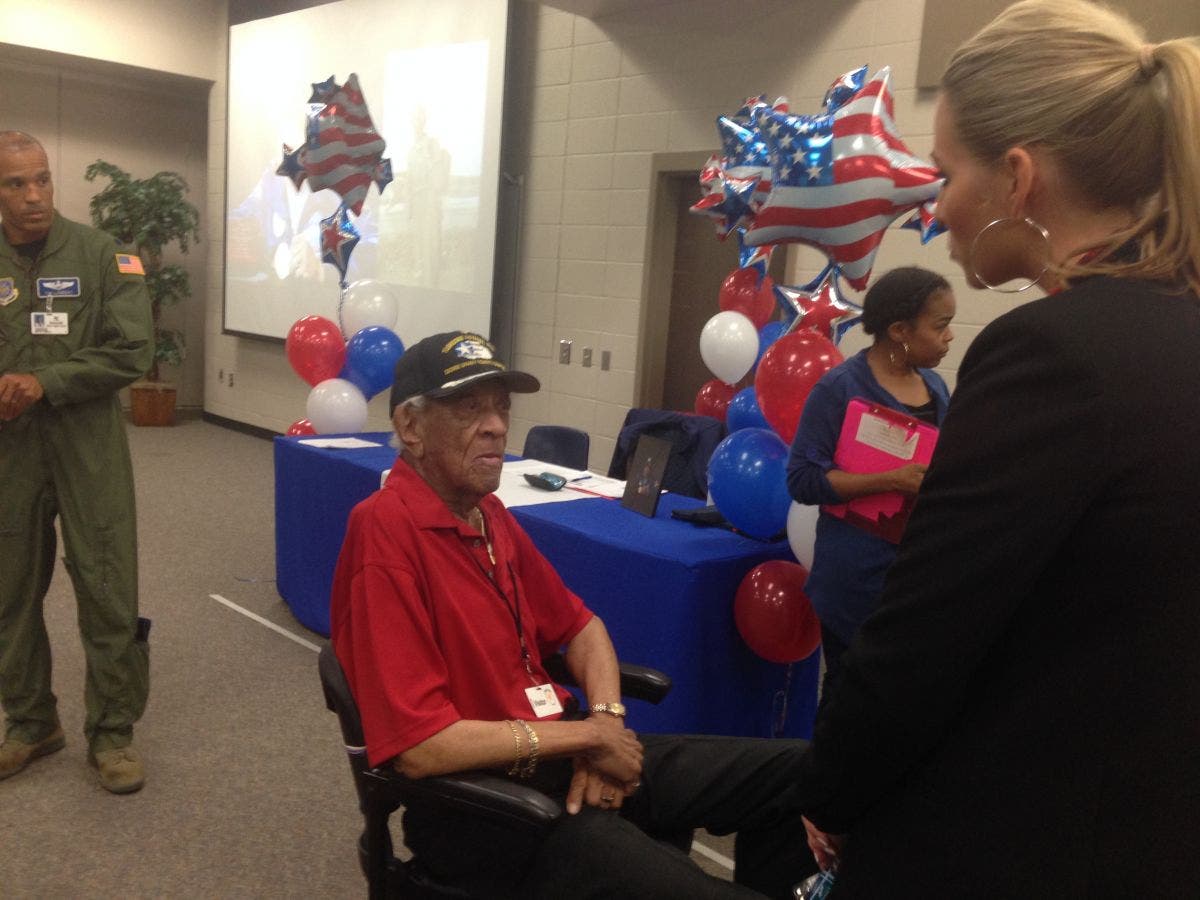
KLEIN, TX -- Larry Brown, Jr. has never considered himself a living legend, and in 1940, at the age of just 17, he never thought he’d become a significant part of American history.
More than 70 years have passed since the Tuskegee Airmen began to take shape at the start of World War II, and some of those pilots who broke color barriers and made significant contributions to the war effort, particularly in Europe, are still around.
On Wednesday, more than 100 students and faculty waited in the conference room as Brown rolled through the double doors at Klein High School, with the goal of sharing his experiences and encouraging students to follow their dreams, and to strive to excellence.
Find out what's happening in Houstonfor free with the latest updates from Patch.
Brown was introduced by Lt.Col. Tim Lambert, Klein High School’s Air Force JROTC Instructor, whose wife is related by marriage to Brown.
“He loves to talk to the kids,” Lambert said. “When he talks to them, he tells them... they weren’t allowed to fail. That is what pushed them to achieve what they were achieving. The message to these kids is that they can do whatever they want to do.”
Find out what's happening in Houstonfor free with the latest updates from Patch.
Brown, who was the only man accepted into the program who did not have a college degree, began the flight training program at Tuskegee, Alabama, where he would ultimately learn to fly the P-51 Mustang -- the United States’ premier fighter aircraft at the time -- an aircraft that still makes Brown crack a grin some 70 years later.
“I knew that I really wanted to fly, so that’s exactly what I did,” Brown said. “I grew up in an era that if it were not for older folks. I’d have never gotten into flying. I wouldn’t have gotten into some of the professions I’d gotten into.”
KLEIN, TX -- Larry Brown, Jr. has never considered himself a living legend, and in 1940, at the age of just 17, he never thought he’d become a significant part of American history.
More than 70 years have passed since the Tuskegee Airmen began to take shape at the start of World War II, and some of those pilots who broke color barriers and made significant contributions to the war effort, particularly in Europe, are still around.
On Wednesday, more than 100 students and faculty waited in the conference room as Brown rolled through the double doors at Klein High School, with the goal of sharing his experiences and encouraging students to follow their dreams, and to strive to excellence.
Brown was introduced by Lt.Col. Tim Lambert, Klein High School’s Air Force JROTC Instructor, whose wife is related by marriage to Brown.
“He loves to talk to the kids,” Lambert said. “When he talks to them, he tells them... they weren’t allowed to fail. That is what pushed them to achieve what they were achieving. The message to these kids is that they can do whatever they want to do.”
Brown, who was the only man accepted into the program who did not have a college degree, began the flight training program at Tuskegee, Alabama, where he would ultimately learn to fly the P-51 Mustang -- the United States’ premier fighter aircraft at the time -- an aircraft that still makes Brown crack a grin some 70 years later.
“I knew that I really wanted to fly, so that’s exactly what I did,” Brown said. “I grew up in an era that if it were not for older folks. I’d have never gotten into flying. I wouldn’t have gotten into some of the professions I’d gotten into.”
Taking the torch from the generation that taught him, Brown said he wants to do the same for the younger generation today that the older generation did for him when he was their age.
The students listened quietly as Brown stood from his wheelchair and shared pieces of his life as a black man in 1940s America, the drive instilled in him by his father, who was a baseball player in the early Negro Leagues, and those others in his life who took the time to tell him that he could do whatever he wanted.
He trained and took his solo flight at Tuskegee and recalled that first flight scared him to death.
“Get me down was the first thing I said,” he recalled. “It was scary as hell.”
But, he ended up loving being in the cockpit.
“I’d do it now if you asked me to,” he said.
Unlike some of his peers, Brown didn’t see action in World War II, and with the war ending before he completed flight training, he was discharged before he flew any combat missions.
He entered the Air Force Reserves in November 1945, and re-entered active service in September 1951 in the U.S. Air Force Medical Corps after becoming a licensed pharmacist, and served during the Korean Conflict, the Cuban Missile Crisis, and the Vietnam War.
Brown retired from military service in September 1971, and worked in in the civilian sector in the healthcare industry until his retirement in 1991.
In March 2007, Brown was awarded the Congressional Gold Medal by President George W. Bush at the White House.
“I wanted to do something that was meaningful in life,” he said.”I just wanted do something for society and this was a way of doing it.”
Taking the torch from the generation that taught him, Brown said he wants to do the same for the younger generation today that the older generation did for him when he was their age.
The students listened quietly as Brown stood from his wheelchair and shared pieces of his life as a black man in 1940s America, the drive instilled in him by his father, who was a baseball player in the early Negro Leagues, and those others in his life who took the time to tell him that he could do whatever he wanted.
He trained and took his solo flight at Tuskegee and recalled that first flight scared him to death.
“Get me down was the first thing I said,” he recalled. “It was scary as hell.”
But, he ended up loving being in the cockpit.
“I’d do it now if you asked me to,” he said.
Unlike some of his peers, Brown didn’t see action in World War II, and with the war ending before he completed flight training, he was discharged before he flew any combat missions.
He entered the Air Force Reserves in November 1945, and re-entered active service in September 1951 in the U.S. Air Force Medical Corps after becoming a licensed pharmacist, and served during the Korean Conflict, the Cuban Missile Crisis, and the Vietnam War.
Brown retired from military service in September 1971, and worked in in the civilian sector in the healthcare industry until his retirement in 1991.
In March 2007, Brown was awarded the Congressional Gold Medal by President George W. Bush at the White House.
“I wanted to do something that was meaningful in life,” he said.”I just wanted do something for society and this was a way of doing it.”
Image: Bryan Kirk, Patch Staff
Get more local news delivered straight to your inbox. Sign up for free Patch newsletters and alerts.