Politics & Government
Actress Katherine Heigl Advocates For Utah Wild Horse Population
The "Grey's Anatomy" star lives in Utah, and she is calling on the U.S. government to cancel its removal of Onaqui wild horses in the state.


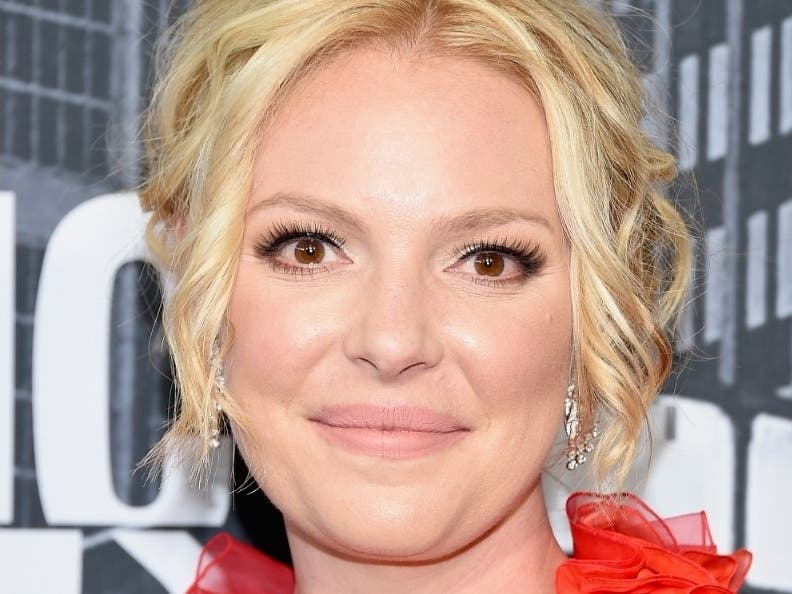
SALT LAKE CITY, UT— Actress Katherine Heigl, who starred in the television show "Grey's Anatomy" and in movies like "Knocked Up," is lending her name and voice to a cause near and dear to her heart: the plight of the Onaqui wild horses living in western Utah.
Heigl, 42, who keeps a home in Summit County, Utah, and has horses at her ranch in the Kamas Valley, began appearing on billboards in Salt Lake City and on social media this week in support of the cause.
The billboards feature a photo of Heigl and an Onaqui mare and foal with the words "Save the Onaqui." Heigl's name is attached and the website SavetheOnaqui.org is listed.
Find out what's happening in Across Americafor free with the latest updates from Patch.
HUGE NEWS: We’re teaming up with @KatieHeigl to #SaveTheOnaqui & END inhumane roundups by @BLMNational. This summer, BLM will round-up 3/4ths of Onaqui #wildhorses. Any horse who shows illness or injury will be shot. WE CAN STOP THIS! https://t.co/HOYmlx9ZKZ pic.twitter.com/IjqO52lCkT
— Animal Wellness Action (@AWAction_News) May 24, 2021
Heigl becomes the face of a campaign supported by multiple animal advocacy groups, who are appealing to U.S. Interior Secretary Deb Haaland and the Bureau of Land Management to stop the proposed mass round-up and removal of perhaps 80 percent of the estimated 500 Onaqui wild horses, according to a release.
The Onaqui, the release states, are descended from horses used by pioneers and native tribes in the late 1800s, are known for their robust beauty and their ability to thrive in harsh environments, and are favorites among wild horse photographers and enthusiasts.
Find out what's happening in Across Americafor free with the latest updates from Patch.
"With their historic place on the public lands of Utah, the Onaqui horses are living treasures that contribute to the beauty of the Great Basin Desert, as well as the economic vitality of nearby communities," Heigl said.
"Instead of cruel helicopter roundups, I call on the Bureau of Land Management to leave Onaqui horses on the land, manage them humanely with fertility control and limit livestock grazing to protect the ecosystem," she said.
Animal advocacy groups, like Animal Wellness Action and Animal Wellness Foundation, believe the roundups are being driven by pressure from ranchers, who would like to see more space for cattle and sheep grazing.
The Bureau of Land Management is responsible for oversight of grazing permits, and advocacy groups say those permits are biased against the wild horse population, claiming there are an estimated 4.3 million cattle and sheep on Western lands. That works out to 30 of the domesticated animals for every wild horse.
Earlier this month, the Salt Lake City Deseret News reported that the groups called on Haaland to put a freeze on grazing permits, much like what was done for oil and gas drilling.
However, the BLM insists there is an overpopulation of wild horses and burros, and it has created "The Path Forward," for the management of the horse and burro population. The plan, which has been endorsed only by the Department of the Interior thus far, seeks to remove as many as 20,000 wild horses and burros each year from public rangeland.
Evidence suggests wild horse overpopulation could, in fact, be a problem.
In October 2019, the Deseret News reported that nearly 90,000 wild horses and burros roamed in 10 Western states, and government range watchers said the number should be more like 27,000. With the horse population growing 15 percent to 20 percent every year, the population will double every four or five years.
But advocates for the horses are hopeful that under Haaland's direction, management of the population will focus on fertility control instead of removal. They hope that approach will begin with the Onaqui.
"(The Onaqui) occupy a special place in the history and culture of Utah and have captivated the imagination of admirers and advocates the world over," said Scott Beckstead, director of campaigns for Animal Wellness Action and the Center for a Humane Economy.
Beckstead continued: "They should be managed humanely on the range by the Bureau of Land Management, not chased down and trapped with helicopters."
I really need your help! I was horrified to hear that the federal government plans to round up Utah's iconic and beloved Onaqui wild horse herd. This will separate family groups, terrorize the mustangs, and injure or kill many horses during the traumatic trapping process. (1/2) pic.twitter.com/IIYvvgMHRA
— Katherine Heigl (@KatieHeigl) May 24, 2021
The roundup is cruel and unnecessary, as there is already a fertility control program in place to manage their numbers. Time is running out for these beautiful animals, please take action: https://t.co/RclIvRLOWw #saveonaqui (2/2) pic.twitter.com/0FLe6C1s6N
— Katherine Heigl (@KatieHeigl) May 24, 2021
Get more local news delivered straight to your inbox. Sign up for free Patch newsletters and alerts.

![Sexy Costumes, Politics And Booze At The Office Halloween Party [The Question]](https://patch.com/img/cdn20/shutterstock/790386/20261002/020904/styles/patch_image/public/shutterstock-2533780867___02140552316.jpg)