Sports
Anthem Protests: In Taking Stand, Roger Goodell Follows In Father's Footsteps
The NFL commissioner's father, appointed to take Robert F. Kennedy's Senate seat, lost it because of his opposition to the Vietnam War.


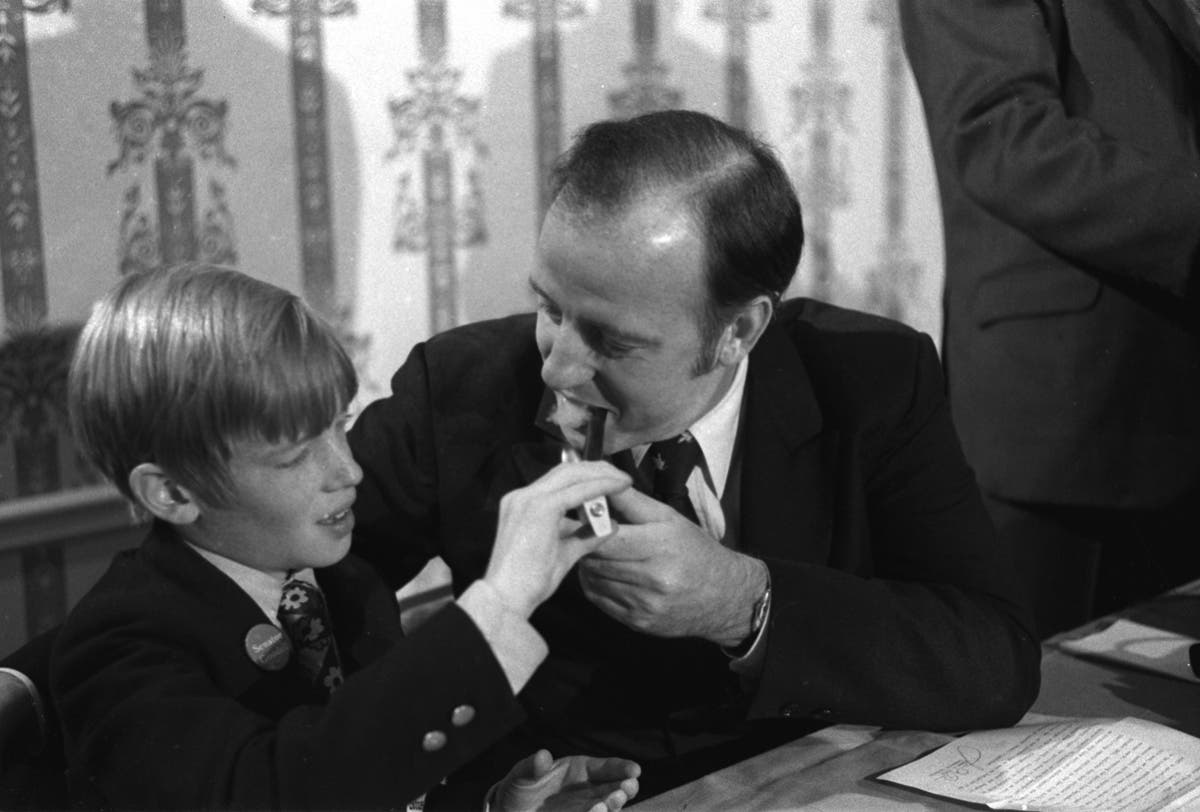
NFL Commissioner Roger Goodell was standing before the 2010 graduating class of the University of Massachusetts-Lowell. He was there with his brothers to accept a posthumous degree on behalf of his father, a former representative from western New York who was named to the Senate after Robert Kennedy was assassinated.
Goodell told them about how his father stood up against the Vietnam War even though he knew it would likely cost him his seat. He wanted them to know his story.
And to learn from it.
Find out what's happening in Across Americafor free with the latest updates from Patch.
"My father listened to others, felt his own pressures, stood up for what he believed in, and failed in a very public way," Goodell told the students. "He lost his reelection, he lost his political career he loved so very dearly,"
Goodell said that, in doing so, his dad held on to his "principles, his integrity, his character.
Find out what's happening in Across Americafor free with the latest updates from Patch.
"He established an important legacy. What did he retain? Something much bigger."
Almost 50 years later, Roger Goodell finds himself following in his father's footsteps, taking a stand that has drawn criticism and, like his father before him, puts him at odds with the president of the United States.
Goodell's father, Charles Goodell, served in the House of Representatives, representing the Jamestown area of western New York. A Republican who was once called the "egghead" of his party by President Nixon, he also had liberal leanings — supporting the Voting Rights Act and many other pieces of civil rights legislation.
In June 1968, after Senator Robert F. Kennedy was assassinated as he campaigned in Los Angeles, New York Gov. Nelson Rockefeller, also a Republican, named Goodell to fill the seat.
He went into the Senate as a supporter of the Vietnam War.
"My father originally supported the war in Vietnam," Goodell told the students. "He always supported our troops."
But, in part prodded by his staff who urged him to speak with students, Goodell's outlook started to shift.
"He spoke to many people," Goodell said. "Those voices had a tremendous influence on him. His views on the war and its goals evolved and eventually changed because he listened."
On Sept. 25, 1969, after having given the White House a heads up, Goodell took to the floor of the Senate and introduced legislation that would force the United States to pull out of Vietnam in one year; it would have withheld money for the war to make sure that happened.
Henry Kissinger, then Nixon's national security adviser, referred to Goodell's change of heart as "treason."
The shift not only earned Goodell a place on Nixon's "enemies list," but when he ran for reelection the following year, he also found himself the target of unrelenting attacks from Vice President Spiro Agnew.
The vice president repeatedly referred to him as a "radical liberal" and called him an "obstructionist" getting in the way of the president's agenda.
Goodell, who was being challenged from the right by James Buckley (older brother of William F. Buckley and the eventual winner), never struck back against Agnew or Nixon personally, choosing instead to strike a positive tone.
"I believe very deeply that the president needs progressives coming with ideas," he said at one point, going on to talk about the importance of speaking up, of protesting.
"The most ignominious death of all is when freedom dies in its sleep," he said. "I've tried to provide leadership to awaken our people."
It wasn't enough. Goodell lost, but in doing so, his son told students, he established a legacy — he continued to fight against the war, he represented Daniel Elssberg in the Pentagon Papers case — that the NFL commissioner has tried to follow.
"I'm proud of his accomplishments and his legacy," he said. "Having the courage to stick to his principles and do what's right, regardless of the consequences."
Now, the younger Goodell finds himself in a political fight, standing up for what he thinks is right.
When President Trump started lashing out at NFL players who were protesting racism by taking a knee during the national anthem, Goodell announced that he was standing with the players, that there was no place for Trump's statements.
"Divisive comments like these demonstrate an unfortunate lack of respect for the NFL, our great game and all of our players, and a failure to understand the overwhelming force for good our clubs and players represent in our communities," Goodell said.
"The NFL and our players are at our best when we help create a sense of unity in our country and our culture."
When Goodell spoke to the students, he made it clear that there was one lesson from his father that stood apart, one he implored them to follow.
"At the end of the day, a decision must be made, and it's about doing what is right," he said.
AP file photo from Oct. 31, 1970 shows Roger Goodell, 11, lighting his dad's pipe during a press conference at the Drake Hotel in New York.
Get more local news delivered straight to your inbox. Sign up for free Patch newsletters and alerts.