Health & Fitness
The Chilling Effects of Social Isolation
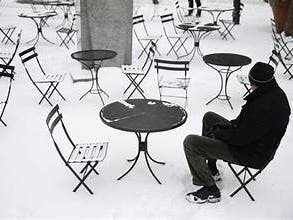
It turns out that social isolation chills the body as well as the soul. Isolation and loneliness are chilling.

It turns out that social isolation chills the body as well as the soul. Recent research by two University of Toronto psychologists demonstrated the physical effects of social rejection and acceptance. Chen-Bo Zhong and Geoffrey Leonardelli separated a group of subjects into two groups, while they sat in one room. The one group they asked to remember a time of feeling socially excluded or rejected. The other subjects they asked to remember the opposite: a time of feeling accepted by a group of others.
After a time, they asked the subjects to estimate the room temperature. Those remembering ostracism reported an average of 71 degrees Fahrenheit; those remembering the fuzzy feeling of social inclusion averaged an estimate of 75 degrees. This is a statistically significant difference.
Dr. Zhong said, “We found that the experience of social exclusion literally feels cold. This may be why people use temperature-related metaphors to describe social inclusion and exclusion.”
Find out what's happening in Across Americafor free with the latest updates from Patch.
Isolation and loneliness are chilling.
To further this point, these two researchers conducted a second experiment. Once again they divided the subjects into two groups. This time the participants played a computer ball-tossing game. During the game, some participants were tossed the ball more often than others, so some subjects felt included and others excluded.
Find out what's happening in Across Americafor free with the latest updates from Patch.
After the game, the subjects were offered food, such as hot coffee and soup, an ice-cold Coke, crackers and apples. Those feeling excluded were more likely to choose the hot coffee and soup than those having felt included.
Dr. Leonardelli said: “It’s striking that people preferred hot coffee and soup more when socially excluded. Our research suggests that warm chicken soup may be a literal coping mechanism for social isolation.”
The reason for this connection probably arises when we are infants. When we are close to a caretaker, there is going be greater warmth, generated not only by the other’s body, but also by the warmth of caring and conversation. Being distant is when coldness is more likely to hit.
I counseled a woman years ago who had been abandoned as a little baby. While discussing her memories, she began to shiver. She got so cold, she required two blankets. Yet the office temperature was over 70 degrees. What unfolded was her finally being able to remember an event she had either forgotten or suppressed: the event of her mother placing her in front of a total stranger’s door and abandoning her. Whatever the temperature may have been around her, she experienced bone-chilling rejection.
The connection between temperature and social inclusion is lifelong. For example, when you enter a room with 10 plus people, the ambient temperature is higher than when you are in the room alone.
I remember the initial meeting of the participants of the Oxford University Round Table in England a few years ago. We came from all over the United States, professors of religion and clergy from different denominations. As a group of thirty-six strangers, we had our introductory social event in a large hall at Lincoln’s College. I got there about the time it was to start. There were only five of us at that point. The room was a bit chilly; I was glad I was wearing a wool suit.
Yet as the participants slowly arrived, the room kept getting warmer, not just from body heat, but from expressions of sincere friendliness. I began to sweat in my wool suit. But my heart was warm with acceptance.