Politics & Government
Denying the vote to people convicted of felonies: Just or unjust?
The practice of stripping the right to vote from those convicted of a felony has a long history in the United States.


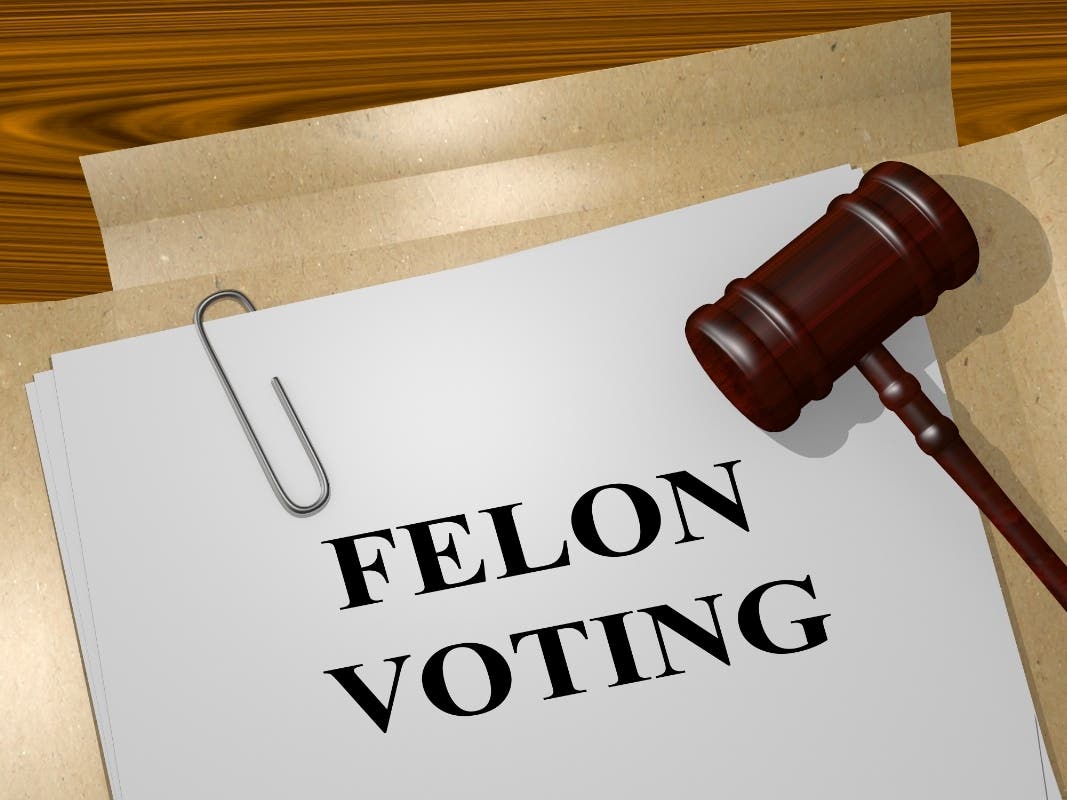
For a 12th year in a row, the U.S. House and Senate will be considering the Democracy Restoration Act, legislation that would restore the right to vote in federal elections to all Americans who have been convicted of felonies but have completed their sentences of imprisonment.
Support for re-visiting the longstanding policy of “felon disenfranchisement” has been growing across the country. In the past year, jurisdictions including California, Iowa, New Jersey, and Washington, D.C., all took action to reduce or remove denial of the vote to people convicted of felonies.
The practice of stripping the right to vote from those convicted of a felony has a long history in the United States. By the time of the Civil War, more than 20 states had enacted felon disenfranchisement statutes, and today 48 of the 50 states impose some kind of restriction on voting by convicted felons, either during the term of their incarceration, for a defined period afterwards as well, for life, or until their right to vote is restored by a governor’s pardon. Former Washington Secretary of State Sam Reed defended the practice by saying, “There is clearly no discriminatory intent. It is about a reasonable sanction we impose based on the person’s decision to commit a crime.’’
Find out what's happening in Across Americafor free with the latest updates from Patch.
However, one main reason felon disenfranchisement has become so controversial in recent years is the growing recognition of how it was exploited by Southern states during and after Reconstruction as a tool of racist subjugation, economic exploitation, and political disempowerment of Black Americans. Although the Thirteenth Amendment outlawed slavery, it allowed an exception for states to impose involuntary servitude onto those convicted of a crime—an exception that state after state exploited to create pretexts for arresting and convicting Black Americans, often on trumped-up charges, then leasing them out as “convict labor” in arrangements that often effectively recreated slavery.
Even after the Voting Rights Act of 1965, critics of felon disenfranchisement argue that because of the disproportionate number of Black and Latino Americans in our prison system and the impact of “mandatory minimum” and “three strikes” laws, the policy impacts Black potential voters disproportionately and functions in many states as a tactic of voter suppression. According to Sen. Ben Cardin (D-Maryland), a leading Democracy Restoration Act sponsor, as of 2016, more than 7 percent of the voting-age Black population was disenfranchised, compared to 1.8 percent of individuals of other races.
Find out what's happening in Across Americafor free with the latest updates from Patch.
Many advocates of felon voting rights restoration further argue that, racial discrimination aside, no one who has served their sentence should continue to be punished by losing their right to participate in democracy.
This past November, California voters approved by a 59-41 margin Proposition 17, which allows Californians who have been convicted of felonies but who are on parole the right to vote. This restored the franchises to an estimated 50,000 parolees. The City Council of Washington, D.C. passed legislation in July 2020 giving incarcerated felons the right to vote in November’s election. Also moving to restore voting rights for felons in 2020 were New Jersey, by legislation, and Iowa, through a gubernatorial executive order.
These votes came two years after 60 percent of Floridians approved 2018’s Amendment 4 restoring the vote to people convicted of felonies (other than murder or felony sexual assault) after completion of prison, parole, and probation—which put more than 1 million Florida citizens back on the voting rolls. Despite passing Amendment 4, legal battles in District and Circuit Courts required formerly incarcerated Floridians to pay off the Legal Fine Obligations (LFOs) before regaining the right to vote. Critics argue that the requirement to pay these fines before voting operates as a backdoor poll tax and is therefore unconstitutional.
A comprehensive list of voting rights for those convicted of felonies and state actions related to felon voting rights can be found at the National Council of State Legislatures websitehere.
Additional Resources
The Edward M. Kennedy Institute for the United States Senate is committed to educating the public not only about the U.S. Senate, but about how to be well-informed and engaged citizens. Felon disenfranchisement is just one of the many challenges to protecting and expanding voting rights in the United States:
- The Institute recently hosted a program discussing past and present efforts to lower the voting age. Senator Kennedy's leading role in the successful fight to lower the voting age from 21 to 18 was discussed, and contemporary activists spoke of ongoing efforts to lower the voting age in local elections to 16 years old. Similarities between these movements and other historic voting rights struggles were also discussed in “Lowering the Voting Age: Then and Now.”
- On the 55th anniversary of the passage of the Voting Rights Act, the Institute gathered former Congressional staff and grassroots organizations who helped ensure the passage of the law to discuss similar disenfranchisement in the United States. Hear from advocates and former legislators at our event, “Getting the Point on Voting Rights.”
- The Kennedy Institute has incorporated education and debate of the Democracy Restoration Act into our “Today’s Vote in the Classroom” educational resources. These free materials, and many others, can be accessed at https://todaysvote.org/