Sports
Muhammed Ali's Friend, Biographer Remembers
"We have lost someone who was the embodiment of goodwill," says Thomas Hauser.


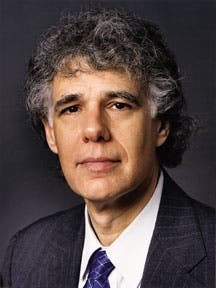
“I still have a very vivid visual of him in his terry cloth robe sitting in the dressing room answering questions,” says Thomas Hauser of the first time he met Muhammed Ali.
It was March 1967 and Ali was in Madison Square Garden. Ali he had just finished sparring with Jimmy Ellis.
He was getting ready for his fight with Zora Folley, who he would knock out in the seventh round for his 29th victory against no losses. It would also be his last fight in the ring for three years because of his decision to fight the draft.
Find out what's happening in Across Americafor free with the latest updates from Patch.
“It was a tough time for him, a dark period in his life,” says Hauser, who was a student at Columbia University where he worked for the radio station, WKCR. Ali gave him 10 minutes. “He was getting ready to refuse the draft. There were issues with Elijah Mohammed and the Nation of Islam.”
A month after Hauser and Ali spoke, Ali would refuse to be inducted into the U.S. Army. He was arrested, later that summer convicted. He was stripped of his boxing license.
Find out what's happening in Across Americafor free with the latest updates from Patch.
Ali would be forced to remain out of the ring for three years as he fought his conviction to the Supreme Court.
Where he won.
“He was a man of beliefs,” Hauser says. “He did not back down.”
Ali's death Friday night sent reporters to Hauser.
He has spent much of the weekend answering questions about the man he first met more than 40 years ago. There were television crews in and out of his living room. There were calls on his home phone, his cell phone.
A veteran reporter, Hauser spent years with Ali researching the book that became, “Muhammed Ali: His Life and Times.”
“One hundred years from now, all these athletes — Michael Jordan, Stephen Curry, Bill Russell — as great as they are, they will blur together,” Hauser says. “But Muhammed Ali will always remain distinct.
“He wasn’t just one of the greatest fighters ever. He was a great person. He traveled the world helping people who were oppressed. He transcended sports and was beacon of hope to people who had no other.”
Hauser says the big difference is that as famous as people like Jordan and Tiger Woods and others have been, they never moved people the way Ali moved people. He wasn’t just an athlete, he was a force.
“He wanted to help people,” Hauser says “He saw what was good in the world and wanted to make it better. He saw what was wrong and wanted to speak out about it.”
And he could be prescient.
Hauser recalled a dinner 20 years ago.
He was there with Muhammed. Donald Trump was there as well.
“At one point, Muhammed leans over to me and says, “he’s not as big as he thinks he is.”
One of the saddest things Hauser saw was Ali’s diminishment over the years as Parkinson’s Disease ravaged him.
“He lost his voice in more ways than one I think,” Hauser says. “I would read statements attributed to him that did not seem to be his words, his language, his way of thinking.
“He was one of the most charismatic people of our times, an original voice that could not be replicated.”
Hauser says that as powerful an image as Ali projected on television, he was much more powerful in person.
He has said that when he first sat down with Ali in 1988 to discuss writing the book, he still found him to be such a force that it was hard to look him in the eyes.
“That’s who he was,” he says. “He was a force.”
As much as a force as he was, he was not quite Superman.
“We were on a plane,” Hauser says. “The stewardess said to him, Mr. Ali, you need to put on your seatbelt. Muhammed said, Superman doesn’t need a seatbelt. The stewardess, without missing a beat, said, Mr. Ali, Superman doesn’t need a plane.”
Hauser told Patch that Ali told him he was not afraid to die, that he had done everything he could to live his life right, and that dying will bring him closer to God.
“He thought of life on earth as preparation for what comes next,” Hauser says. “Every day he tried to make sure that what he did was the right thing, that he was helping make the world a better place.
“It is very sad. We have lost someone who was the embodiment of pure goodwill.”
Get more local news delivered straight to your inbox. Sign up for free Patch newsletters and alerts.