Health & Fitness
Rejection Enhances Perception
Rejection enhances our capacity to intuit the motives of others. Those who have suffered rejection can more readily spot a fake.

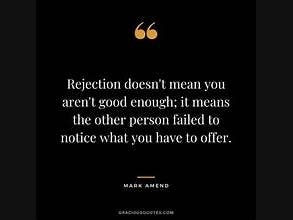
Though most unpleasant, it appears rejection enhances our capacity to intuit the motives of others. Recent research suggests that those who have suffered rejection can more readily spot a fake.
Researcher Michael Bernstein says the capacity to note a fabricated smile “seems to be a skill we’ve acquired through evolution.” He continues: “Living in groups several hundred years ago was extremely important to survival. Being kicked out of the group was like death, so they became very good at reading facial expressions and social ques.”
It turns out that those with a history of rejection distinguished fake smiles from real ones 80 percent of the time, compared with 60 percent for more accepted individuals. The “eyes” have it: rejected persons look harder at faces, especially at eyes. A real smile is shown by the eyes rather than the mouth.
Find out what's happening in Across Americafor free with the latest updates from Patch.
I sure study eyes, having had my share of rejection. My family moved around a lot during my school years. I went to nine schools before graduating high school, in four states, with four very different social environments: New York City, Des Moines, Detroit and Clearwater, Florida. Moving to the last destination as a northerner in 1959 was a major culture shock. What was difficult was figuring out what was really going on, what was really meant.
Moving to a new school is especially difficult on social life. Who will accept you; who will reject you; what bullies will appear to test you? You learn to study the faces and actions of those with whom you want to enter into a friendship, or at least a positive association. You look for social groups you want to join.
Find out what's happening in Across Americafor free with the latest updates from Patch.
It is very difficult to be an outsider, all the more so when you are “different” anyway. That being said, I got better at what to do and not to do when entering a new school for the first time. Go slow, don’t do anything to stand out, don’t make a fool of yourself, don’t brag or show-off, be patient and ever friendly—but not an “in-your-face” kind of friendly.
I discovered by the time I reached high school that you needed to determine even a single person who was popular with the group you wanted to hang out with. If you could develop a good relationship with that person, the doors to other relationships would swing open.
That being said, rejection is never far away in our schools. Relationships are fragile and ever-changing. Popularity comes and may quickly go. Gossip and back-biting are rampant. Most everyone is unsure of themselves, and so nobody wants to be found out as not being “cool.” A high school friend of mine used to sing, “I want to be a real cool cat; I want to be somebody.”
People are likely to reject what they don’t understand, especially if they fear it might negatively affect them, and possibly their social standing. So my senior year of high school, being an athlete, and finding some level of acceptance in that fellowship, I decided to venture into acting. This was before it was “cool” for jocks to be actors. But success there opened up more doors to welcoming relationships.
That said, I was concerned acting might alienate some of my tentative buddies. That was until my popular new-found friend, “Chip,” thought acting was neat—and joined me on stage. So high school finished on a positive note.
College would bestow more acceptance, as well as rejection. I learned to keep both at a tolerable distance.