Politics & Government
Here's What The Latest GOP Tax Bill Would Do
Republicans are gearing up to push through the latest version of their tax overhaul plan next week. Here are the latest details of the bill.

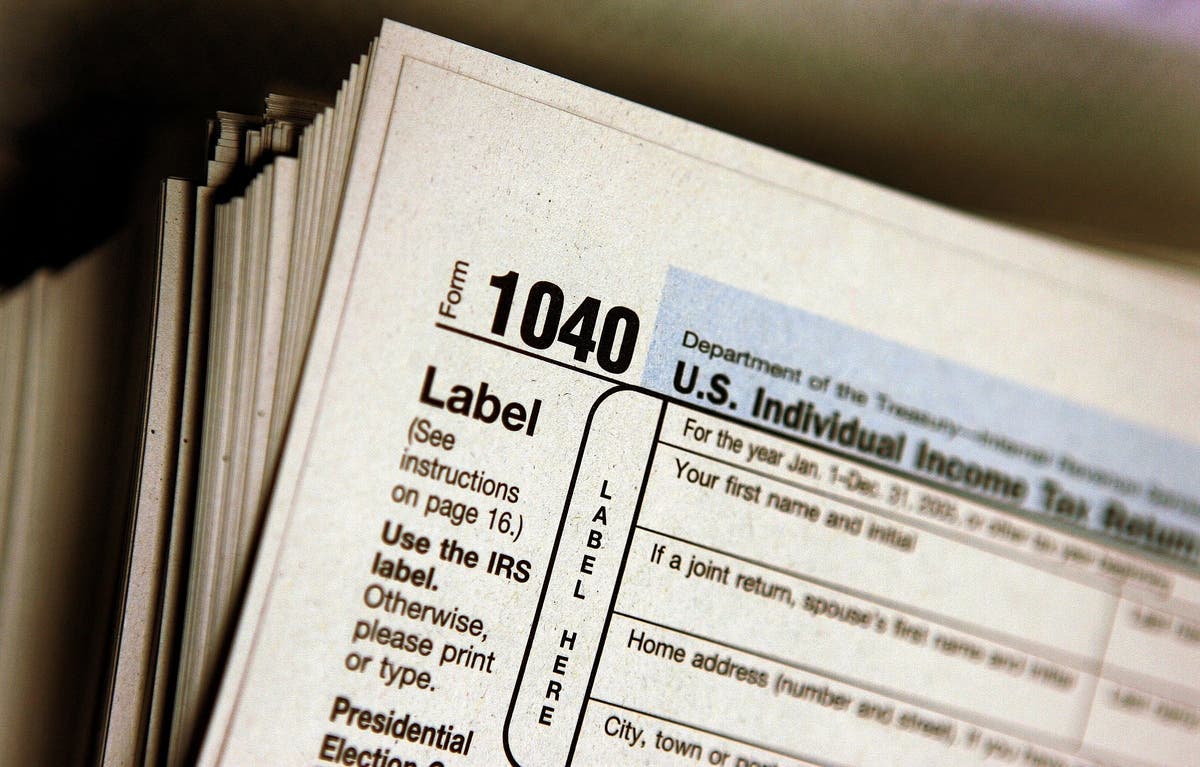
WASHINGTON, DC — Republicans appear to be in position to pass their long sought-after tax overhaul plan next week as key holdouts among their own caucus — including Sens. Marco Rubio, Bob Corker and Susan Collins — have expressed their support for the newest bill. The latest, and possibly final, version of the legislation is the outcome of negotiations over the bills passed by the House and Senate.
The GOP hopes to bring the bill to vote in the House next Tuesday and then to the Senate on Wednesday. If all goes according to plan, the measure will be on President Donald Trump's desk to sign before Christmas.
The fundamentals of the bill remain essentially the same:
Find out what's happening in White Housefor free with the latest updates from Patch.
- Corporations get a massive permanent tax cut from 35 percent down to 21 percent.
- Many individuals and families will see their tax rates fall at first, but these cuts expire before the 10-year horizon of the bill expires.
- Several larger personal deductions are cut, which will likely cause some families and individuals to pay higher rates overall, even in the short term.
- The Affordable Care Act insurance mandate is repealed, a move which the Congressional Budget Office thinks will raise premiums and cause millions more people to be uninsured in the coming years.
Here are other highlights and details of the legislation, which would make about $1.5 trillion in tax cuts:
Personal income tax rates: The bill retains the current number of brackets, seven, but changes them to 10, 12, 22, 24, 32, 35 and 37 percent. The top bracket for wealthiest earners, 39.6 under current law, drops to 37 percent. But it will kick in at a lower level, $600,000 per married couple, instead of the current $1 million.
The reductions in personal income tax rates are temporary, ending in 2026.
Find out what's happening in White Housefor free with the latest updates from Patch.
Standard deduction and personal exemption: Used by about 70 percent of U.S. taxpayers, currently $6,350 for individuals and $12,700 for married couples, the bill doubles those levels to $12,000 for individuals and $24,000 for couples, expiring in 2026. The bill ends the current $4,050 personal exemption.
State and local taxes: Ends the unlimited federal deduction for state and local income and sales taxes, allowing the deduction only for a total of up to $10,000 in combined property, income or sales taxes.
Tax credits: Doubles per-child tax credit to $2,000 for families making up to $400,000 a year. Up to $1,400 of the $2,000 credit is available as a tax refund to lower- and middle-income families with relatively small tax bills. The per-child credit expires in 2026. The bill also provides a tax credit for dependent care for children and older dependents; it retains the current adoption tax credit.
Home mortgage interest deduction: Limits the deduction to interest paid on the first $750,000 of a new loan for a first or second home. The current limit is $1 million.
Other deductions: Allows deduction for medical expenses not covered by insurance for 2018 and 2019 when expenses exceed 7.5 percent of adjusted gross income. That rises to 10 percent starting in 2020.
Individual insurance mandate: Repeals the requirement in Democrat Barack Obama's health care law that people pay a tax penalty if they don't purchase health insurance.
Alaska oil drilling: Bill opens Alaska's Arctic National Wildlife Refuge to oil and gas drilling.
Alternative minimum tax: The AMT is aimed at ensuring that higher-earning people and corporations pay at least some tax. For individuals, the bill increases the amount that can be exempted from the AMT. The tax is repealed for corporations.
Inheritance tax: Currently, when someone dies, the estate owes taxes on the value of assets transferred to heirs above $5.5 million for individuals, $11 million for couples. The bill doubles those limits and repeals the tax in 2025.
Corporate taxes: Bill slashes the current 35 percent rate to 21 percent starting Jan. 1.
Pass-through businesses: Millions of U.S. businesses "pass through" their income to individuals, who then pay personal income tax on those earnings, not corporate tax. The bill lets those people deduct 20 percent of the first $315,000 of earnings.
Businesses: Bill allows companies to immediately write off the full cost of equipment they buy.
Multinational corporations: Bill ends tax advantages for companies moving overseas.
Also See: Rep. Brady: New Tax Code For New Era Of Prosperity
Photo by Tim Boyle/Getty Images